

Get Your Wok Ready
Before you light the stove, make sure you have the right tools and a safe workspace. Carbon steel is thin and heats up fast, so the prep work matters more than you might expect. A few small adjustments to your kitchen setup will prevent warping, smoke alarms, and uneven seasoning.
Choose the Right Stove
Most carbon steel woks are designed for high-BTU gas burners. The flame needs to lick up the sides of the wok to create that signature wok hei, or "breath of the wok." If you only have an electric or induction cooktop, look for a wok with a flat bottom. Flat-bottom models distribute heat evenly across the surface, though they won’t achieve the same high-heat sear as a round-bottom wok on gas.
Gather Your Gear
You don’t need a professional kitchen to season a wok, but you do need specific items. Use a stiff nylon brush or a chainmail scrubber for cleaning—never soap during the initial seasoning phase. Have paper towels or lint-free cloths ready for applying oil, and keep a long-handled spoon or spatula handy. If you are using a gas stove, a wok ring can help stabilize a round-bottom wok, but be careful not to block the flame from reaching the sides.
Clear Your Space
Seasoning a wok produces smoke. Even with ventilation, you will likely set off your smoke detector if your kitchen is small or poorly ventilated. Open windows, turn on your range hood to high, and clear the area around your stove of flammable items like paper towels or plastic utensils. This is also a good time to check that your fire extinguisher is accessible and functional.
Season your carbon steel wok
Seasoning is the process of polymerizing oil onto the metal surface to create a non-stick, rust-resistant coating. For a new carbon steel wok, this means building up multiple thin layers. Think of it like tanning skin; you need gradual exposure to build a durable layer that won't peel off during stir-frying.
Step 1: Remove the factory coating
New woks come coated in machine oil to prevent rust during shipping. This oil is not food-safe and will burn off, creating acrid smoke. Wash the wok with warm water and dish soap, using a sponge or stiff brush. Rinse and dry it immediately on the stove over medium heat.
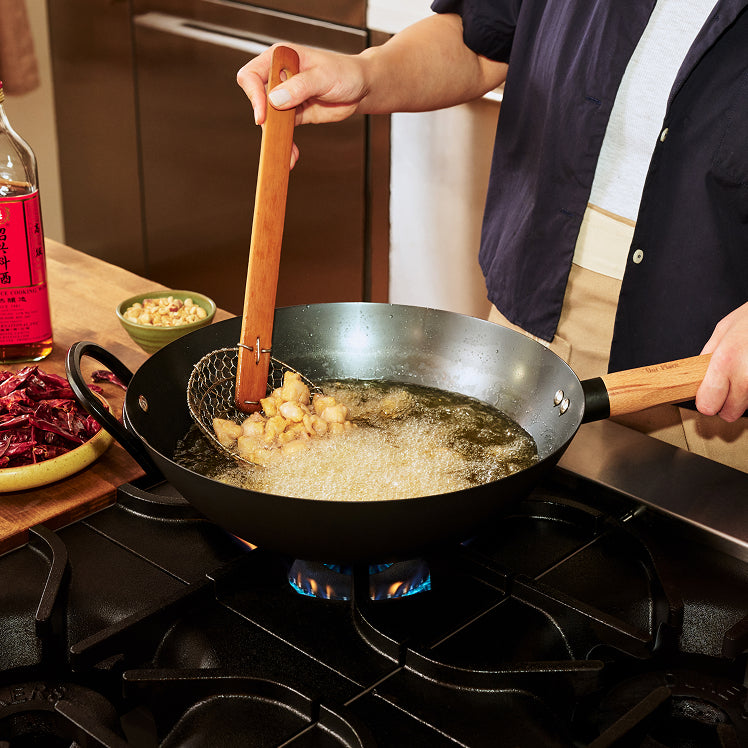
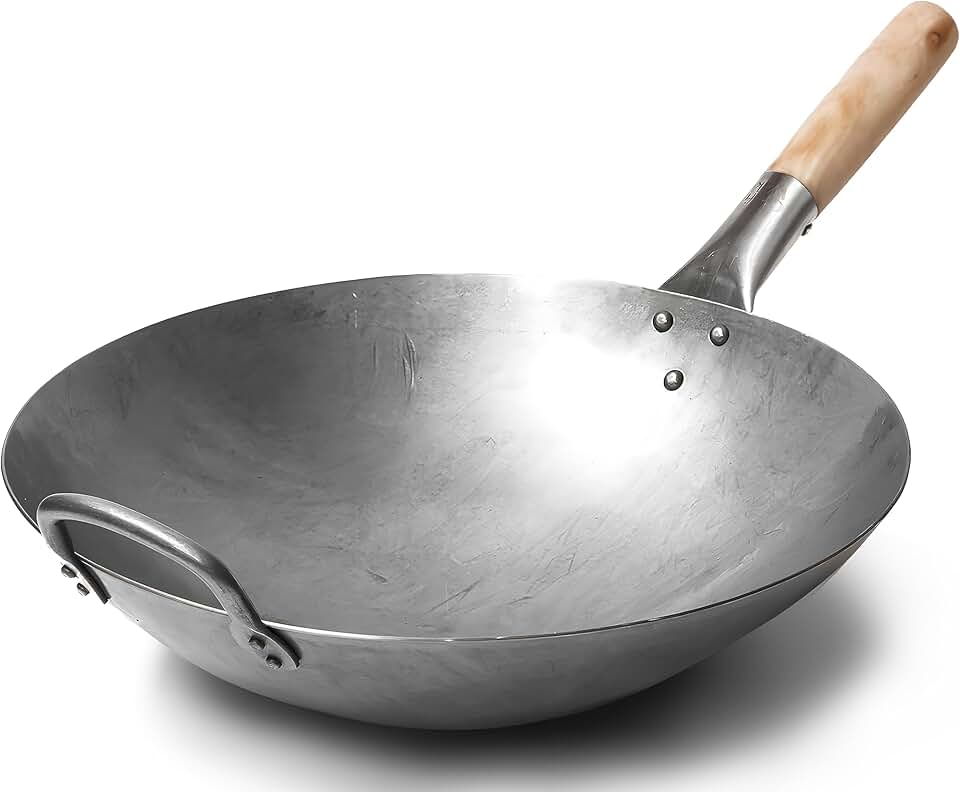
Use steel wool or an abrasive scrubber to remove the shiny factory coating. You are looking for bare, dull grey metal. This step ensures the new seasoning bonds directly to the steel rather than sitting on top of shipping oil.
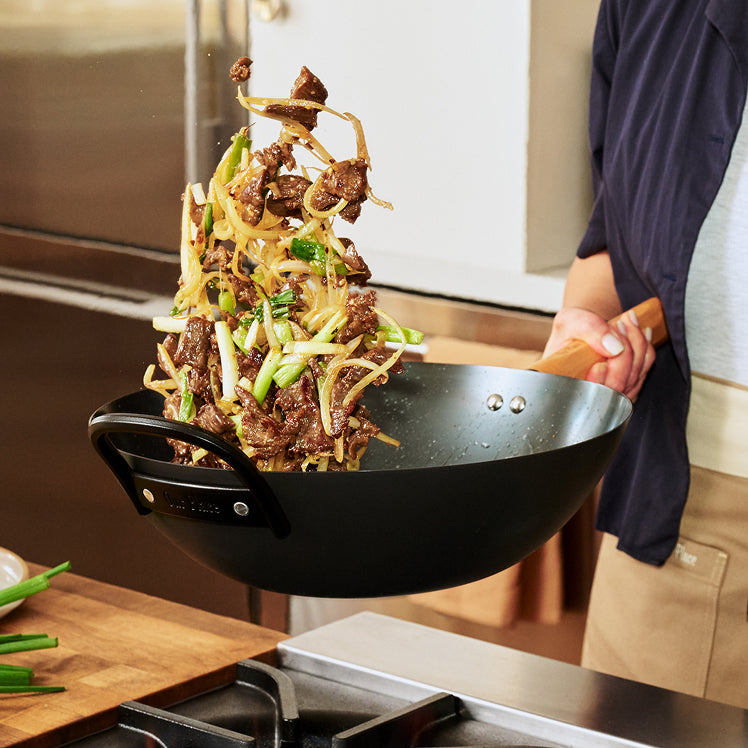
Heat the wok over medium-high heat until it changes color slightly. Apply a very thin layer of high-smoke-point oil, like flaxseed, grapeseed, or canola. Use a paper towel to wipe the oil into every crevice, then wipe out any excess. The wok should look almost dry. Heat until it smokes, then let it cool. Repeat this 3-5 times.

After the initial seasoning, cook fatty foods like bacon or pork belly. The rendered fat will fill microscopic pores in the steel. Season again after every few uses, gradually reducing the amount of oil you apply as the non-stick surface improves.
Step 2: Watch for common mistakes
The biggest mistake is applying too much oil. A thick layer will turn sticky and gummy instead of hardening into a smooth patina. If this happens, scrub the wok down and start the oil cycle again. Another error is neglecting the handle. Heat conducts up the handle, so ensure you oil and season it fully to prevent rust.
Step 3: Check your work
A well-seasoned wok should have a dark, semi-matte finish. If water beads up and rolls off like rain on a waxed car, your seasoning is effective. If water sticks or the surface feels tacky, you need more seasoning cycles. Test it by frying an egg with minimal oil; it should slide freely.


As an Amazon Associate, we may earn from qualifying purchases.
Fix common mistakes
Even with the right pan, seasoning fails when the process is rushed or handled incorrectly. Carbon steel is forgiving, but it demands precision during the initial build. These errors are the most common reasons a wok ends up sticky, patchy, or prone to rust.
Skipping the pre-seasoning wash
Most new carbon steel woks arrive coated in a thick layer of industrial oil to prevent rust during shipping. If you skip washing this off, you’re locking in that industrial residue. Seasoning requires a clean, bare metal surface to bond properly.
Use hot water and a stiff brush or abrasive sponge to scrub the entire interior and exterior until the water runs clear. Do not use soap if you want to preserve any factory coating, but most modern woks need a thorough degrease. Dry it immediately and completely on the stove to prevent flash rusting.
Using the wrong oil
Not all oils create a durable polymer layer. Oils with high water content or low smoke points, such as butter or extra virgin olive oil, will burn unevenly or remain sticky. You need a fat with a high smoke point and low moisture content.
Refined avocado oil, grapeseed oil, or flaxseed oil are the best choices. They break down at high temperatures to form a hard, slick coating. Apply the oil sparingly; a thin, even layer is better than a thick pool that will drip and create uneven patches.
Rushing the cooling cycle
Heat is only half the equation. The polymerization process requires the oil to cool slowly to bond with the metal. Removing the wok from heat too quickly or wiping it with a cold, wet towel can shock the metal and cause the seasoning to crack or peel.
Let the wok cool on the burner until it is safe to touch. If you need to speed up the process, move it to a heat-resistant surface and let it air dry naturally. Never rush this step; a properly cooled finish is harder and more durable than one that was cooled abruptly.
Woks 2026: what to check next
Carbon steel woks offer unmatched heat control, but they come with specific maintenance needs. Here are the practical answers to the most common questions before you buy.
No comments yet. Be the first to share your thoughts!