

Get the Wok Ready Before You Heat It
Seasoning a carbon steel wok is less about cooking and more about surface preparation. If you skip the setup, your first stir-fry will stick to the metal, and your polymerized oil layer will never form properly. Think of the seasoning process like priming a wall before painting: you need a clean, neutral base so the finish adheres evenly.
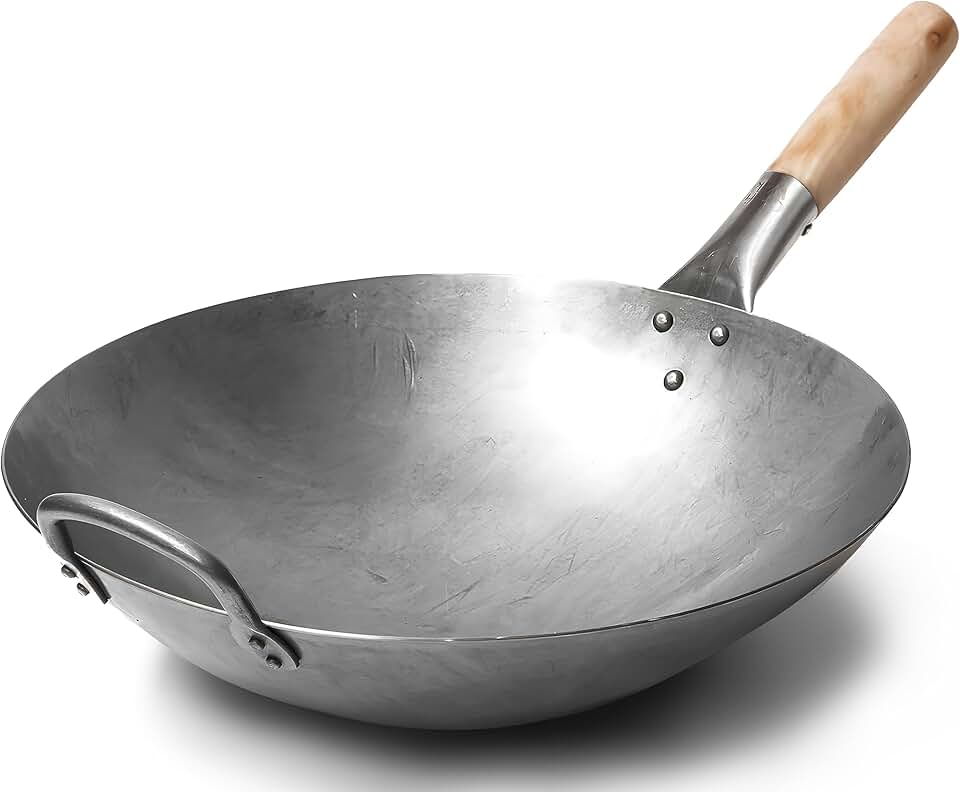
Start by removing the factory coating. New carbon steel woks arrive covered in machine oil or wax to prevent rust during shipping and storage. This industrial layer is not food-safe and will burn off with acrid smoke if you try to cook directly on it. You need to strip it away completely before applying your own seasoning.
Wash the wok with warm water and dish soap. Use a stiff scrub brush or non-abrasive scouring pad to remove the wax. Rinse thoroughly and dry immediately with a towel. Place the wok on a stove burner over medium-high heat for two to three minutes to evaporate any remaining moisture. Let it cool slightly before proceeding to the seasoning step.
Ensure your kitchen ventilation is active. Open windows and turn on your range hood. You will be heating oil to its smoke point, which produces visible vapor. Good airflow keeps the air breathable and prevents your smoke detector from triggering mid-process.
How to Season a Carbon Steel Wok
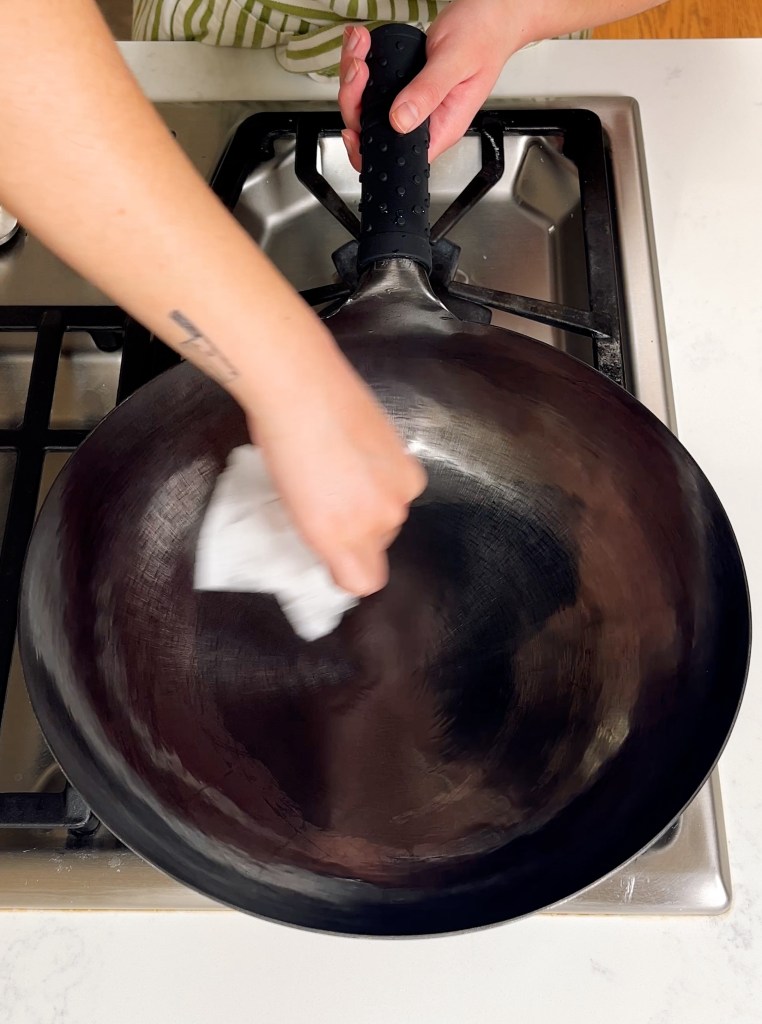
Seasoning a carbon steel wok is the process of polymerizing oil onto the metal to create a natural, non-stick surface. This layer protects the steel from rust and provides the foundation for wok hei—the distinct charred flavor achieved through high-heat cooking. A properly seasoned wok develops a dark, glossy patina over time, becoming more non-stick with every use.
Follow these steps to season your wok correctly.
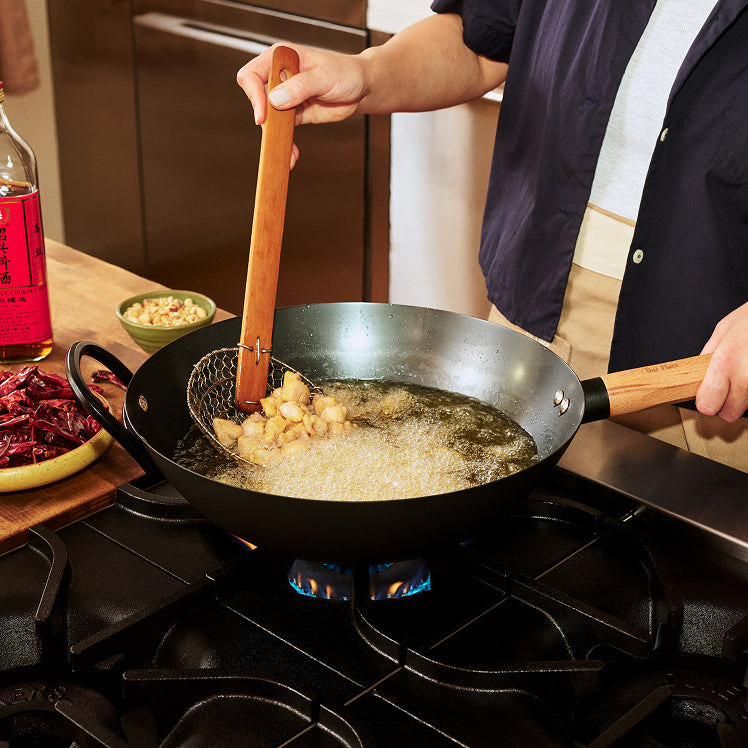
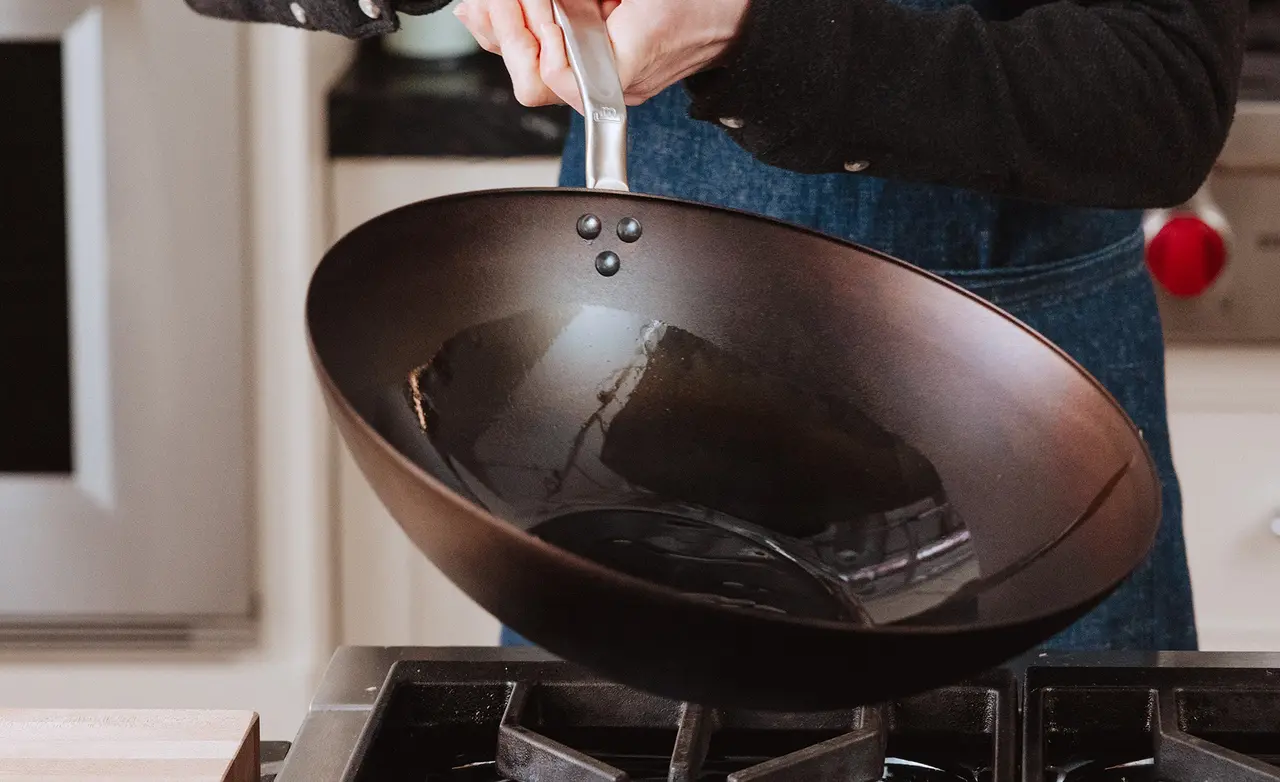
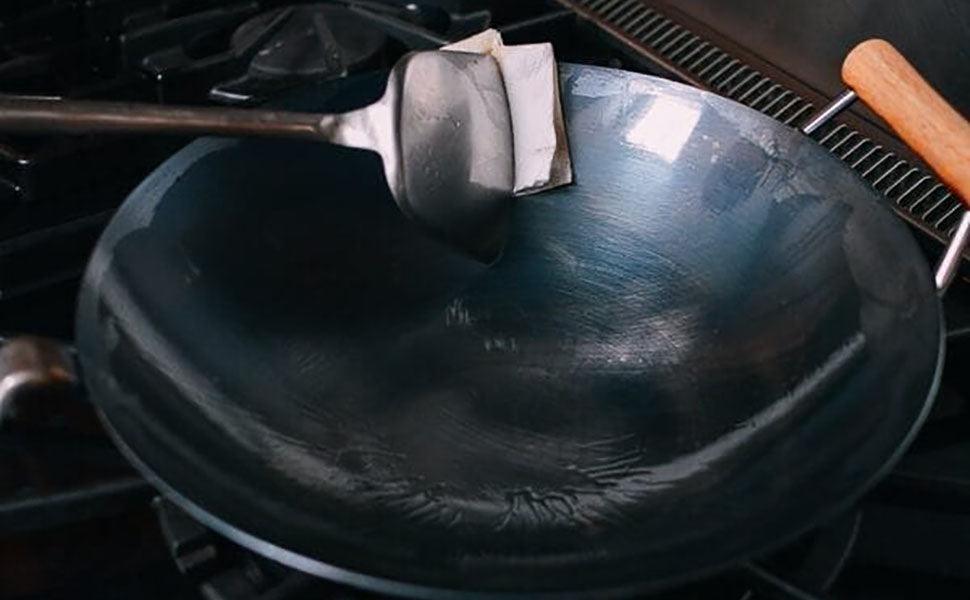
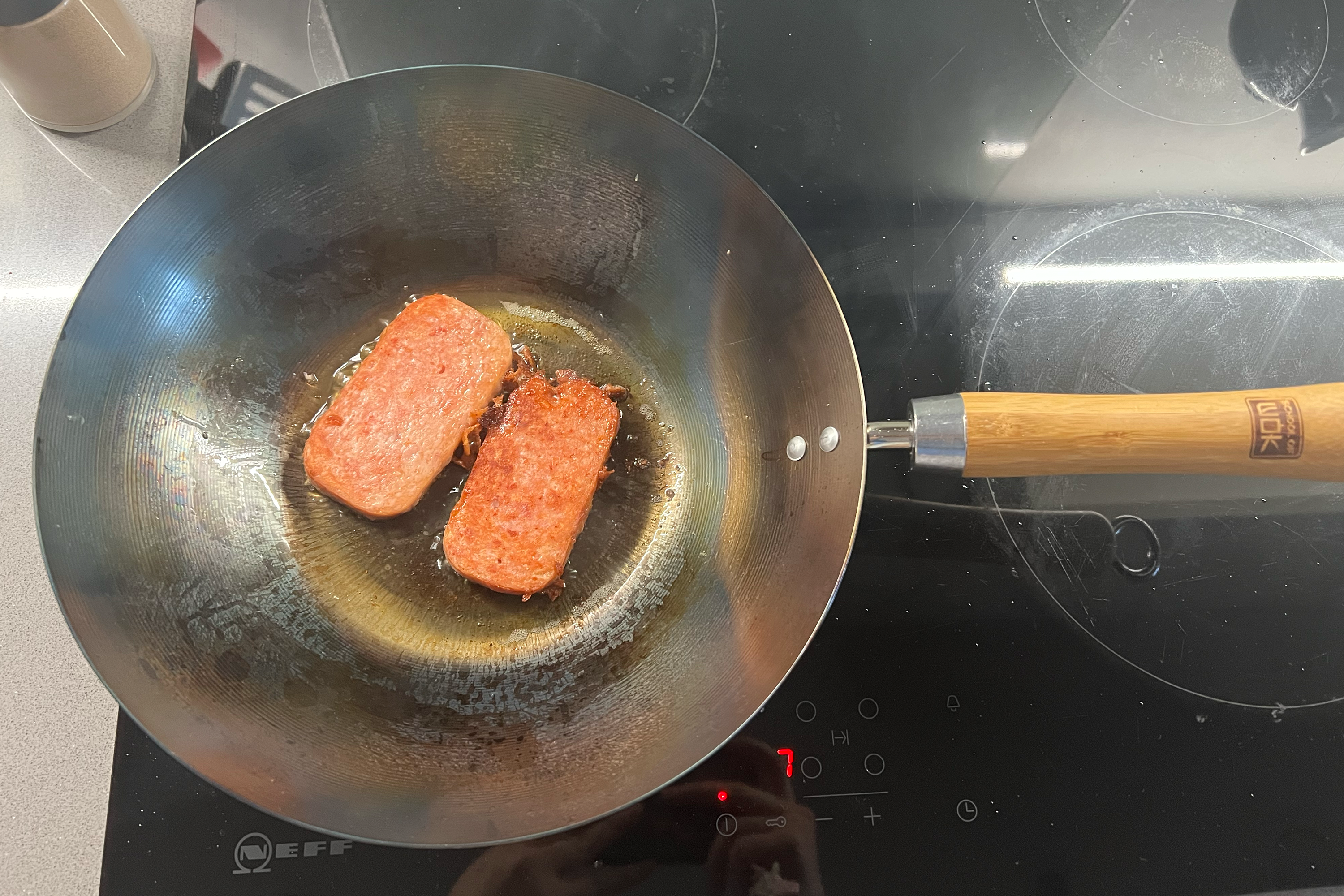

As an Amazon Associate, we may earn from qualifying purchases.
Common Mistakes to Avoid
- Using too much oil: Pooling oil creates sticky spots. Wipe out excess with a clean cloth.
- Skipping the bluing step: Failing to heat the wok until it changes color leaves the surface less receptive to oil bonding.
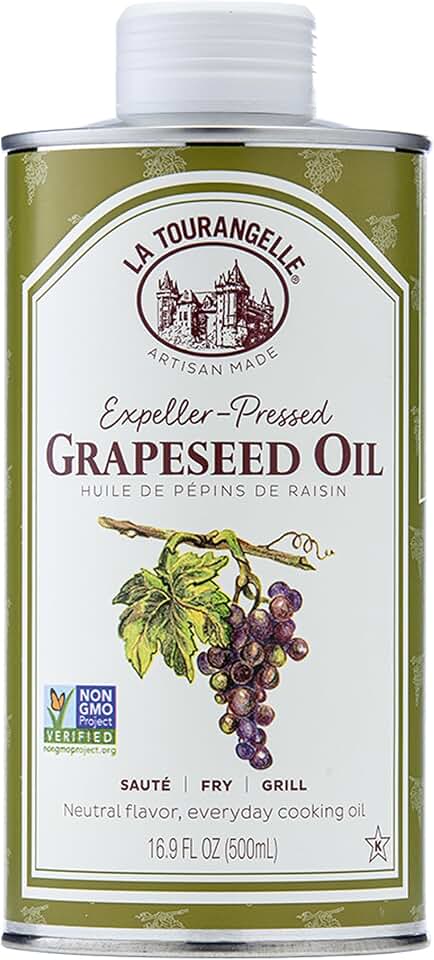
- Using low-smoke-point oils: Olive oil or butter will burn and create a bitter, uneven coating. Stick to grapeseed, canola, or flaxseed oil.
Proof Check
Your wok is properly seasoned when the interior is dark brown or black, glossy, and water beads up on the surface. If water spreads out and soaks in, the seasoning is incomplete. Cook a simple dish like scrambled eggs or stir-fried vegetables to test the non-stick performance. If food sticks, re-season the affected area.
Fix common mistakes
Most home cooks sabotage their seasoning before the first stir-fry. Carbon steel is forgiving, but it punishes impatience and bad habits. The goal is a polymerized layer that bonds to the metal, not a sticky film that flakes off into your food.
Here are the errors that keep your wok from developing that dark, non-stick patina.
Using soap on a new wok
You’ve heard the myth: never use soap on cast iron or carbon steel. This advice is outdated and actively harmful for new woks. Modern dish detergents are mild and do not strip seasoning. They remove the protective oil layer you applied during the initial seasoning process. If you wash a new wok with just water, you leave behind microscopic residues that prevent the oil from bonding evenly. The result is a patchy, uneven surface that rusts quickly. Use a drop of mild dish soap and a sponge. Rinse and dry immediately.
Heating the wok too fast
Seasoning requires controlled heat to polymerize the oil. If you crank the burner to high immediately, the oil smokes excessively and burns before it can bond. This creates a brittle, flaky layer that chips off during cooking. Instead, heat the wok over medium-high heat until it just begins to smoke. Then, reduce the heat to medium and add your oil. Let the oil spread and polymerize slowly. This process takes longer but creates a hard, durable finish that withstands daily use.
Skipping the "blueing" step
For brand-new carbon steel woks, the metal is often coated in a protective rust-preventative oil from the factory. If you skip cleaning this off, your seasoning will bond to the factory coating, not the steel. This layer will eventually peel away, taking your seasoning with it. Before seasoning, scrub the wok with hot water and a stiff brush or steel wool to remove the factory coating. You’ll know you’re done when the metal turns a uniform grayish-blue color. This oxidation step prepares the surface for proper bonding.
Neglecting the handle and exterior
Seasoning isn’t just for the cooking surface. If you ignore the handle and exterior, those areas will rust and stain. The handle gets hot, but it still needs protection. Apply a thin layer of oil to the entire wok, including the handle and outside. Heat it gently to polymerize the oil everywhere. This ensures a uniform appearance and prevents rust from forming on the parts that touch your hands or stove grates.
Season a wok: common: what to check next
Seasoning a carbon steel wok is straightforward if you follow the scrub, burn, oil, and smoke routine. Below are the practical answers to the most common objections and setup questions.
The goal is a uniform, dark surface that releases food easily. If your first attempt feels uneven, don’t worry—building a strong patina takes time and regular use.
No comments yet. Be the first to share your thoughts!