
Why seasoning matters for your wok
Raw carbon steel is porous and reactive. If you cook directly on it without preparation, food will stick instantly, and moisture will trigger rust within hours. Seasoning solves both problems by creating a polymerized layer—a thin, durable coating of hardened oil that bonds to the metal surface.
Think of this layer like a non-stick pan’s coating, but it is built from the food itself rather than applied by a factory. As you cook with oil and heat over time, these polymerized layers accumulate. This is why seasoning is not a one-time event; it is a cumulative process that builds with every use.
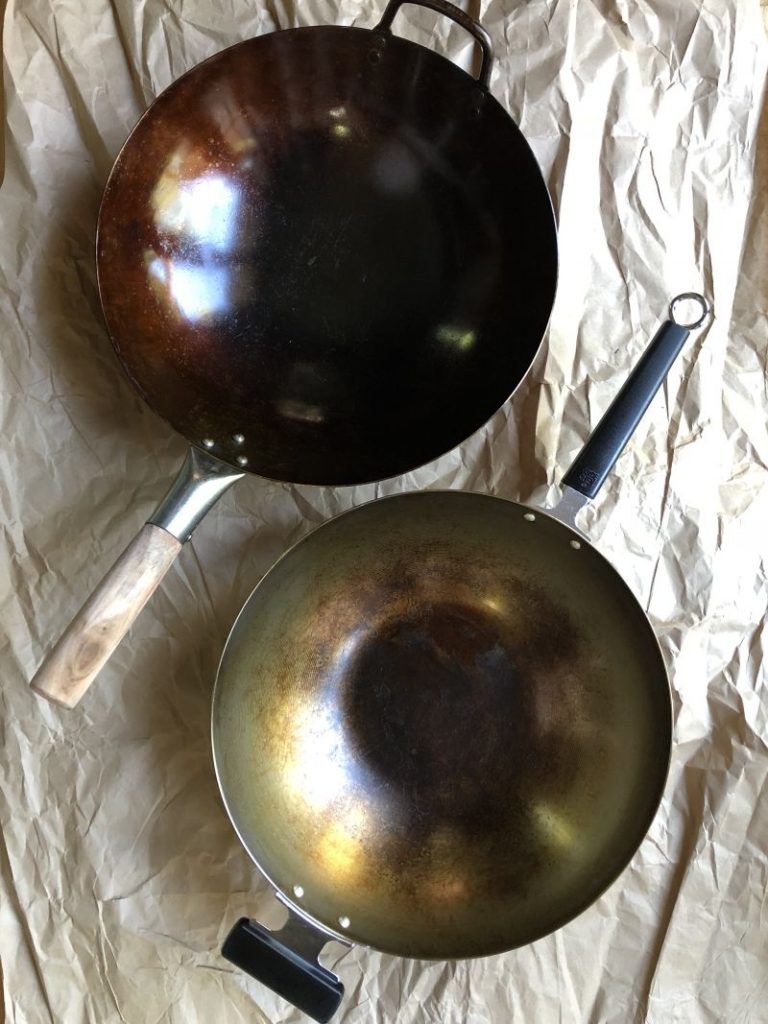
The result is a smooth, blackened cooking surface that releases food easily and protects the steel underneath. A well-seasoned wok feels almost ceramic in its slickness, yet it retains the heat responsiveness that makes carbon steel superior for stir-frying. Without this layer, you are fighting the metal rather than working with it.
Gather your wok seasoning supplies
Season a Carbon Steel Wok works best as a clear sequence: define the constraint, compare the realistic options, test the tradeoff, and choose the path with the fewest hidden costs. That order keeps the advice usable instead of decorative. After each step, pause long enough to check whether the recommendation still fits the reader's actual situation. If it depends on perfect timing, unusual access, or a best-case budget, include a simpler fallback.
The simplest way to use this section is to write down the real constraint first, compare each option against it, and choose the path that still works outside ideal conditions.
Step 1: Scrub off the factory coating
New carbon steel woks arrive covered in a thick layer of industrial oil or wax. This protective coating prevents rust during shipping and storage, but it also blocks the seasoning from bonding to the metal. If you skip this step, your first layer of polymerized oil will stick to the factory grease instead of the steel, creating a patchy, sticky surface that flakes off as you cook.
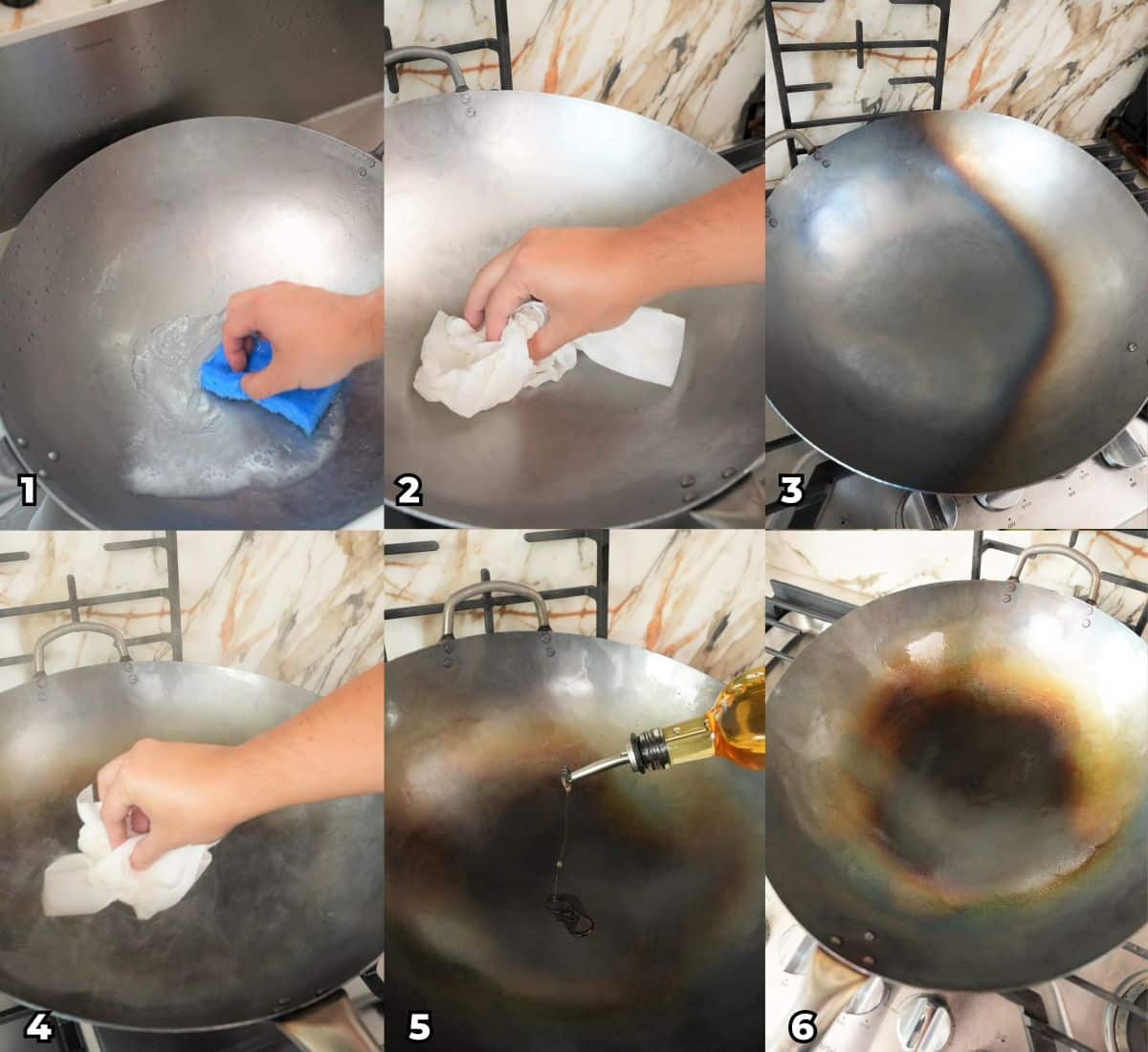
Start by filling your sink with hot water and adding a few squirts of standard dish soap. Use a stiff-bristled brush or a non-abrasive scrubbing pad to vigorously wash the entire interior and exterior of the wok. You are looking to remove the slick, waxy feel. The water will likely turn dark or cloudy as the factory coating dissolves. Keep scrubbing until the water runs clear and the metal feels like bare steel, not plastic.
Rinse the wok thoroughly with hot water to remove all soap residue. Soap can interfere with the seasoning process if left behind, so it is important to get it all off. Dry the wok immediately with a clean towel. Do not let it air dry, as carbon steel will rust within minutes if left wet.
Once the wok is completely dry, you are ready to move to the heating stage. The factory coating is gone, and the bare metal is exposed and ready to accept your first layer of seasoning.
Heat and blue the wok
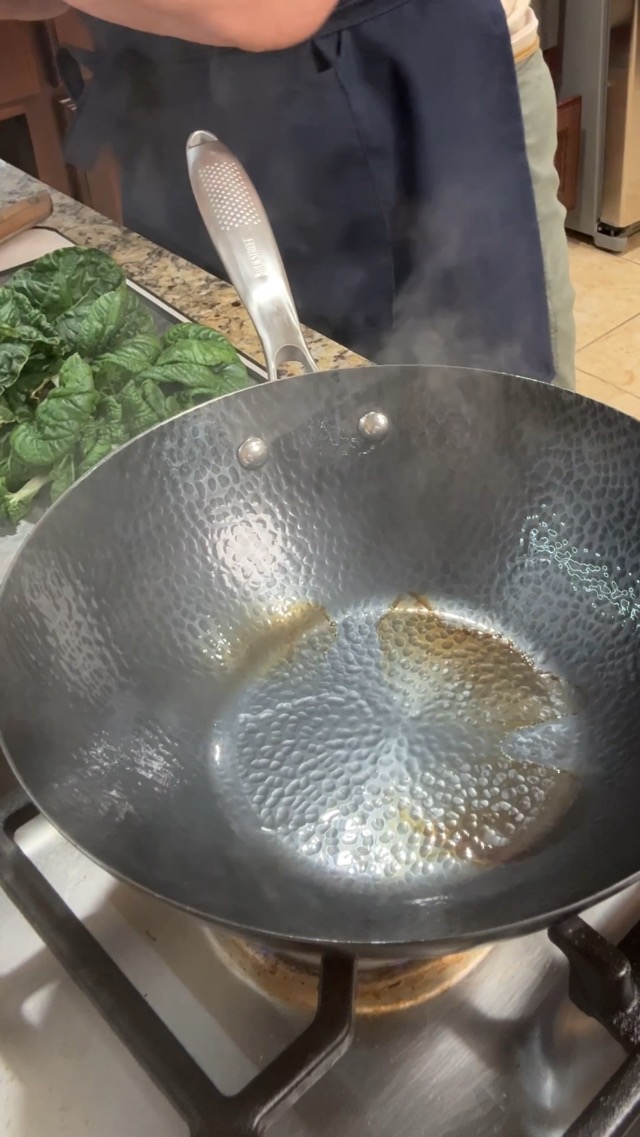
Place your clean carbon steel wok on the stove and turn the burner to its highest setting. If you have a gas stove, you can tilt the wok to heat the sides as well as the bottom. For induction or electric coils, simply let the entire surface reach temperature.
As the steel heats, it will begin to change color. You will see the metal shift from silver to gold, then purple, and finally to a deep blue. This process is called "bluing" and it creates a thin layer of iron oxide. This oxide layer protects the steel from rust and provides a better base for the oil to bond to during the seasoning phase.
Continue heating until the entire interior surface turns a uniform blue-grey. This typically takes 5 to 10 minutes. Once the wok has cooled slightly, it is ready for the oil application step.
Apply oil and polymerize
With the wok cooled from the initial burn-off, it is time to build the seasoning layer. This process creates the non-stick surface by polymerizing the oil into a hard, plastic-like coating. The goal is a thin, even film, not a thick glob of grease.
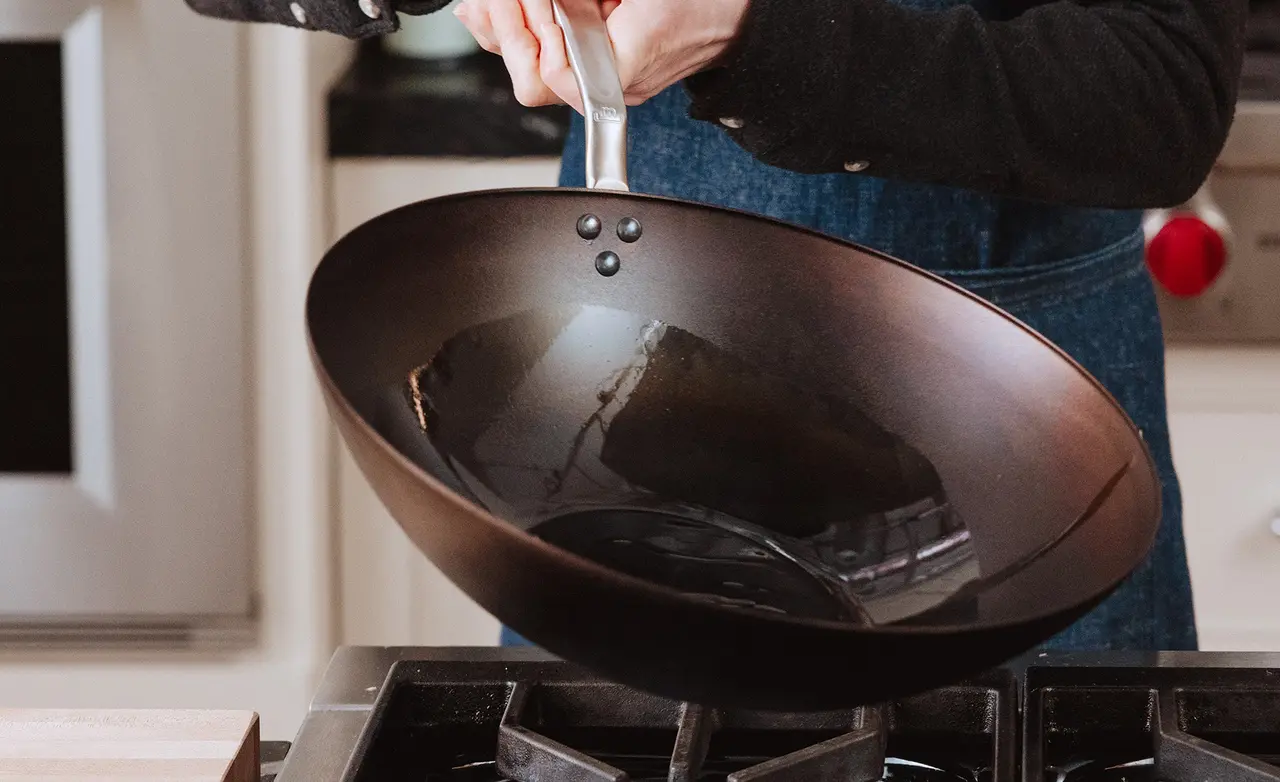
Turn the heat to low. Add about a tablespoon of high-smoke-point oil, such as avocado or peanut oil, to the center of the wok. Low heat prevents the oil from smoking excessively before you can spread it, reducing mess and ensuring even coverage.
Tilt and rotate the wok to coat the entire interior surface, including the sides. Use a paper towel held with tongs to wipe the oil into the metal. The surface should look barely shiny, as if you forgot to add oil. Any visible pooling will become sticky and tacky later.
Once the oil is distributed, increase the heat to medium-high. Watch for the oil to begin smoking lightly. This is the polymerization point where the oil bonds to the steel. Let it smoke for one to two minutes, then turn off the heat and let the wok cool completely. This first layer is fragile; treat it gently during the next cooking session.
Common seasoning mistakes to avoid
Even with the best oil, a carbon steel wok can turn out sticky or patchy if the process isn’t handled with care. Most seasoning failures come down to three simple errors: using too much oil, skipping the burn-off, or letting moisture linger.
Applying too much oil
The most frequent mistake is treating seasoning like a paint job. If you pour oil into the wok and leave it pooling in the bottom, it will polymerize into a sticky, gummy layer rather than a smooth, hard finish. This sticky residue attracts dust and food particles, creating a surface that is harder to clean than unseasoned metal.
The fix is simple: apply a very thin coat. Use a paper towel to rub a small amount of oil—about two teaspoons—for the entire interior surface, including the sides. Then, take a clean, dry paper towel and wipe the wok out as if you are trying to remove every trace of oil. The surface should look almost dry, not shiny or wet. This thin layer allows the oil to bond evenly with the steel during heating.
Skipping the initial burn-off
New woks often come with a factory-applied protective coating to prevent rust during shipping. If you skip the high-heat burn-off step, this industrial residue mixes with your seasoning oil, leading to an uneven patina and potential off-flavors. You need to remove this coating before building your own polymer layer.
To do this, heat the empty wok on your stove’s highest setting. You will see the metal change colors, shifting from silver to blue, purple, and eventually a matte grey or black. Tilt and turn the wok to ensure every part of the interior and exterior reaches this temperature. This process burns away the factory coating and opens the pores of the steel, preparing it to accept your seasoning oil.
Leaving moisture behind
Carbon steel rusts quickly when exposed to water and air. If you wash your wok and let it air dry, or if you store it while even slightly damp, rust spots will appear before your seasoning is fully established. Moisture interferes with the polymerization process, causing the oil to cure unevenly or not at all.
After washing, always dry your wok immediately over low heat on the stove until it is completely dry. For long-term storage, apply a final, extremely thin layer of oil to protect the surface. Store the wok in a dry place, and avoid sealing it in a plastic bag or container while it is still warm or damp, as trapped humidity will cause rust within hours.
Daily care and re-seasoning tips
Treat your carbon steel wok like a well-worn pair of boots. The seasoning isn't a permanent coating; it's a living layer of polymerized oil that builds up with use and wears down with neglect. Daily maintenance is simple, but consistency is what keeps food from sticking and rust from forming.
Cleaning after cooking
Avoid harsh soaps and steel wool. While modern mild dish soap won't strip a well-established patina, abrasive scrubbing will. For sticky residue, use hot water and a stiff nylon brush or a chainmail scrubber (traditional in wok culture for a reason). If food is burnt on, simmer water in the wok for five minutes to loosen it, then scrub gently.
Drying immediately
Water is the enemy of carbon steel. After washing, dry the wok thoroughly with a towel, then place it on the stove over low heat for two minutes to evaporate any hidden moisture. This step is non-negotiable for preventing rust.
Light oiling
Once dry and slightly warm, add a teaspoon of neutral oil (like canola or grapeseed) to the wok. Use a paper towel to wipe the oil across the entire surface, inside and out, then wipe it out again as if you made a mistake. You want a microscopic layer, not a puddle. This replenishes the seasoning and protects the metal until your next meal.
-
Scrub with hot water and nylon brush
-
Dry with towel immediately
-
Heat on stove to evaporate moisture
-
Apply thin layer of oil and wipe off
Frequently asked questions about wok care
How do you burn off a new wok?
Turn your stove to the highest setting and place the empty wok on the burner. As it heats, watch the metal shift through rainbow colors before settling into a matte grey. Tilt and turn the wok constantly to ensure every surface heats evenly, removing factory oils and impurities before you begin seasoning.
Can you use soap on a carbon steel wok?
Yes, modern dish soaps are safe to use. Unlike the lye-based detergents of the past, current formulas do not strip the polymerized oil layer that creates your non-stick surface. Wash with warm water and a soft sponge, then dry immediately on the heat to prevent rust.
Why does my wok stick after seasoning?
Sticking usually happens if the layer of polymerized oil is too thin or uneven. Ensure you apply a very thin coat of oil after every wash and heat it until it just starts to smoke. If sticking persists, you may need to build up the seasoning over several cooking sessions rather than relying on a single initial burn-in.
How do I fix rust on a carbon steel wok?
If rust appears, scrub the affected area with steel wool or a stiff brush until the metal is bare. Rinse and dry thoroughly, then re-season that spot immediately by heating the wok, applying a thin layer of oil, and smoking it out. This restores the protective barrier without needing to strip the entire pan.
Helpful gear
Use these product recommendations as a starting point, then choose the size, material, and price point that fit how you actually use the gear.
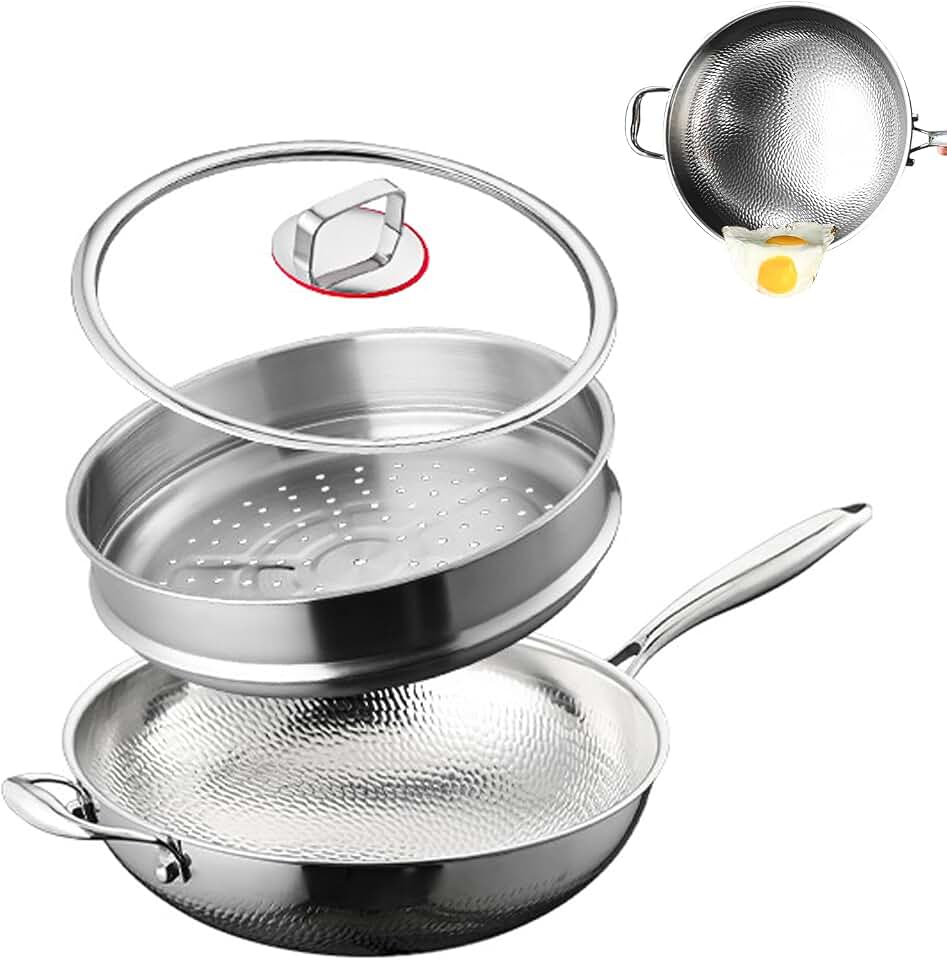
As an Amazon Associate, we may earn from qualifying purchases.
Work through The Wok Upgrade
No comments yet. Be the first to share your thoughts!