

Why blueing beats oven seasoning
The difference between a wok that sticks and one that sings comes down to heat source. Oven seasoning relies on ambient, indirect heat, creating a soft, porous polymerized layer. Stove-top blueing uses direct, high-intensity flame to oxidize the carbon steel itself before applying oil. This process transforms the metal surface into a harder, more durable non-stick coating capable of withstanding the violent thermal shocks of wok hei.
To blue a wok, you must heat the empty pan over high heat until the steel undergoes a chemical change. As the temperature rises, the metal shifts from grey to dark purple, and finally to a uniform blue. This blue oxide layer is the foundation of your non-stick surface. If you stop before the blue appears, or leave it too long until it turns grey again, the seasoning will fail to bond properly.
Once the wok is fully blueed and cooled slightly, you apply a thin layer of oil. The direct heat ensures the oil penetrates the metal’s pores and polymerizes into a glass-like finish. An oven cannot replicate this density, leaving your wok prone to rust and food adhesion during high-heat stir-frying.
This method is the gold standard for carbon steel woks. By prioritizing the blueing technique, you ensure your wok develops a seasoned surface that improves with every use.
Strip the factory coating
Before you can blue your wok, remove the protective oil or wax applied by the manufacturer to prevent rust during shipping. This factory layer is too thick to polymerize properly and will result in a sticky, uneven surface if you try to season over it. Think of this step as clearing the canvas; you need bare steel to build a durable non-stick foundation.
Fill your sink with hot water and a generous amount of dish soap. Use a steel wool pad to scrub the entire interior and exterior of the wok. Do not worry about scratching the metal; you are intentionally removing the factory finish. Rinse thoroughly and dry immediately with a towel, then place the wok on the stove over medium heat for two minutes to evaporate any remaining moisture.
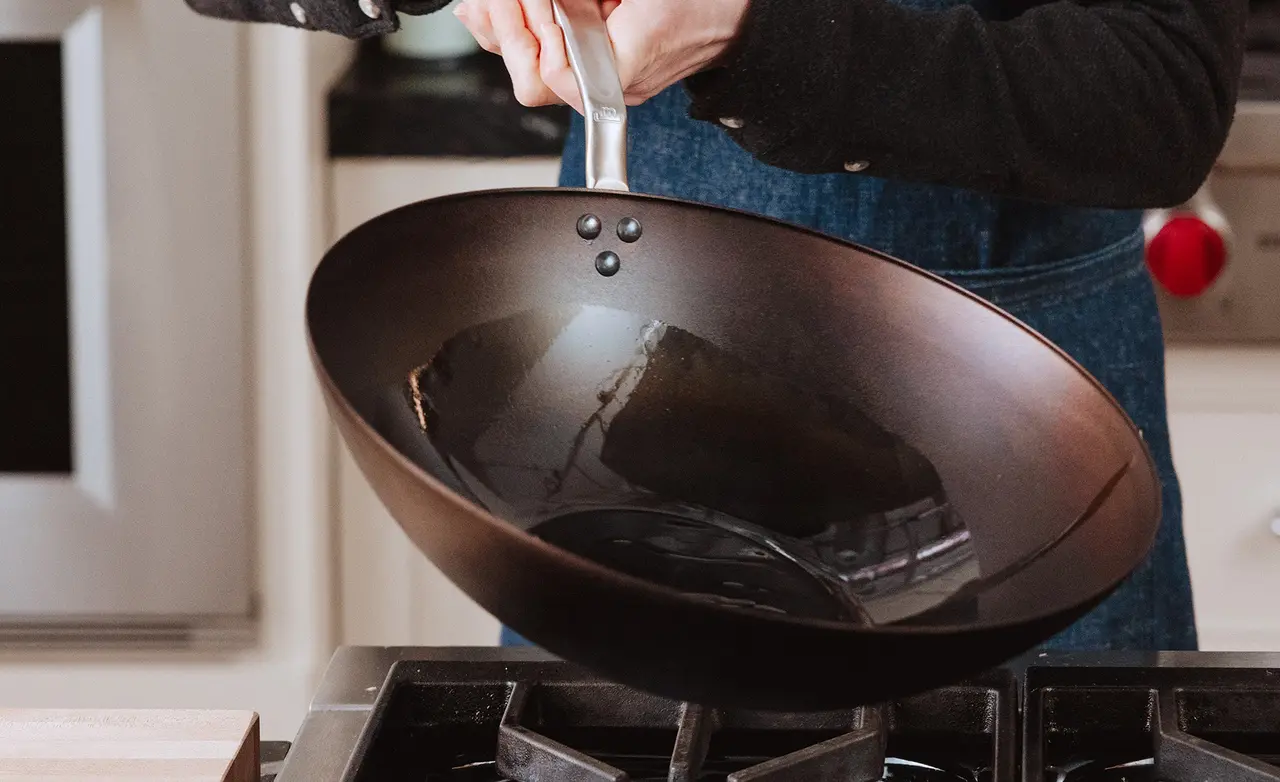
Your wok is now prepped for the blueing process. The next step involves heating the steel to a specific temperature and applying a thin layer of oil to create the initial polymerized coating.
Heat the Wok Until It Turns Blue
Heating the carbon steel wok is the most critical phase of the blueing process. This step alters the molecular structure of the steel, opening its pores and preparing the surface to accept the polymerized oil layer. Without this high-heat oxidation, the seasoning will remain brittle and prone to flaking off during your first stir-fry.
The Heating Process
Place your clean, dry wok on the stove burner set to high heat. If you are using a gas stove, rotate the wok to ensure even heating across the entire surface, including the curved sides. For electric or induction cooktops, keep the wok stationary but move it slightly every minute to prevent hot spots. You will need to heat the wok for approximately 15 to 20 minutes.
Pay close attention to the color changes. The steel will transition from its original grey or silver tone to a dark blue, and eventually to a deep blue-black. This color shift is the visual cue that the metal has reached the necessary temperature for seasoning. Do not rush this phase; uneven heating can lead to patchy seasoning where oil adheres in some spots but not others.
Choosing the Right Oil
Once the wok has turned a uniform blue, it is time to introduce the oil. Use a high-smoke-point oil such as grapeseed, canola, or peanut oil. Avoid olive oil or butter, as they will burn before the polymerization process can begin. Pour a small amount of oil into the hot wok—it should sizzle immediately upon contact.
Using a paper towel or a clean cloth held with tongs, wipe the oil across the entire interior surface of the wok. The heat will cause the oil to smoke and bond with the steel. Continue wiping until the oil is fully absorbed and the surface begins to darken to a rich, semi-glossy black. This black layer is the foundation of your non-stick surface. Allow the wok to cool completely before wiping it out with a dry cloth.
Apply oil and polymerize the layer
With the wok heated to the smoking point, you are ready to create the non-stick foundation. This phase transforms the bare metal through polymerization, where heat bonds the oil molecules to the steel, forming a hard, durable coating.
Coat the interior with oil
Pour about two teaspoons of oil into the hot wok. Grapeseed oil is the gold standard for this step because it has a very high smoke point (around 420°F/215°C) and creates a hard, non-stick finish. Canola oil is a widely available and effective alternative. Avoid olive oil or butter, as they burn at lower temperatures and will leave a sticky, uneven residue rather than a smooth polymerized layer.
Wipe the oil into a thin, even film
Using a folded paper towel or a clean cloth held with tongs, wipe the oil across the entire interior surface of the wok. You must work quickly and carefully, as the wok is extremely hot. The goal is to create the thinnest possible film. If the oil pools or looks glossy and wet, you have applied too much. Wipe it out until the surface looks nearly dry but still has a slight sheen. A thin layer polymerizes into a hard, glass-like finish, while a thick layer remains tacky and attracts food particles.
Burn off excess oil and repeat
Once the oil is evenly distributed, let the wok heat for another 30 to 60 seconds. You will see the oil begin to smoke and the color of the steel start to shift from silver to a deep blue or dark brown. This color change indicates that polymerization is occurring. If any spots look oily or uneven, wipe them again with a clean paper towel to remove excess oil. Let the wok cool slightly, then repeat the oiling and wiping process two or three more times. Each layer builds upon the last, creating a robust, non-stick surface that improves with every use.
![Pompeian 100% Grapeseed Oil - 68 fl oz (2 L) Grapeseed Oil for High Heat Cooking - Light and Subtle Flavor for Deep Frying and Baking Desserts - High Smoke Point - Value Size [Amazon-developed Certification] Compact by Design](https://m.media-amazon.com/images/I/61YzxXtsGcL._AC_UL960_QL65_.jpg)


As an Amazon Associate, we may earn from qualifying purchases.
Build the non-stick surface with cooking
The initial blueing creates a base layer of oxidized iron, but true non-stick performance comes from polymerized oil. You need to build up this layer through actual cooking. This phase transforms the wok from a piece of metal into a functional cooking vessel by filling the microscopic pores of the steel with hardened oil.
Start by heating the wok over medium-high heat. Add about two tablespoons of oil, such as grapeseed or canola. Swirl the oil to coat the entire interior surface, including the sides. Let the oil heat until it shimmers and begins to smoke lightly. This is the moment of polymerization, where the oil bonds to the metal.
Once the oil is hot, add your first batch of aromatics. Thinly sliced onions, garlic, or ginger work best. These ingredients release moisture, which helps clean any residual dust from the manufacturing process, while their natural sugars contribute to the seasoning layer. Stir-fry them vigorously for two to three minutes until they are deeply browned and slightly charred.
Discard the cooked aromatics. They have done their job. Wipe the wok out with a paper towel while it is still warm—do not use soap yet. You will notice the surface is darker and slicker. Repeat this process two or three times with fresh oil and fresh aromatics. Each cycle adds a thinner, harder layer of polymerized oil, gradually building the smooth, black, non-stick surface essential for professional stir-frying.
Clean and maintain your wok
Preserving the blueing finish requires a disciplined routine after every cook. The goal is to remove food residue without stripping the polymerized oil layer that creates your non-stick surface.
Start by scrubbing the wok with hot water and a small amount of mild dish soap. While traditional wisdom often warns against soap, modern detergents are safe for seasoned carbon steel when used sparingly. Use a steel wool pad or stiff brush to dislodge stuck bits. Avoid abrasive scouring pads that can scratch the seasoned surface.
Rinse thoroughly and dry the wok immediately with a towel. Any remaining moisture will lead to rust, undoing weeks of seasoning work. Place the wok on the burner over high heat for about one minute to evaporate all residual water. This heat also opens the metal's pores, preparing it to absorb the oil.
Once the wok is hot and dry, turn off the heat and let it cool slightly for thirty seconds. Add a few drops of oil, such as grapeseed or canola. Use a paper towel held with tongs to rub a thin, even coat over the entire interior surface. Wipe out any excess oil; the surface should look matte, not wet. This thin layer protects the metal until your next use.
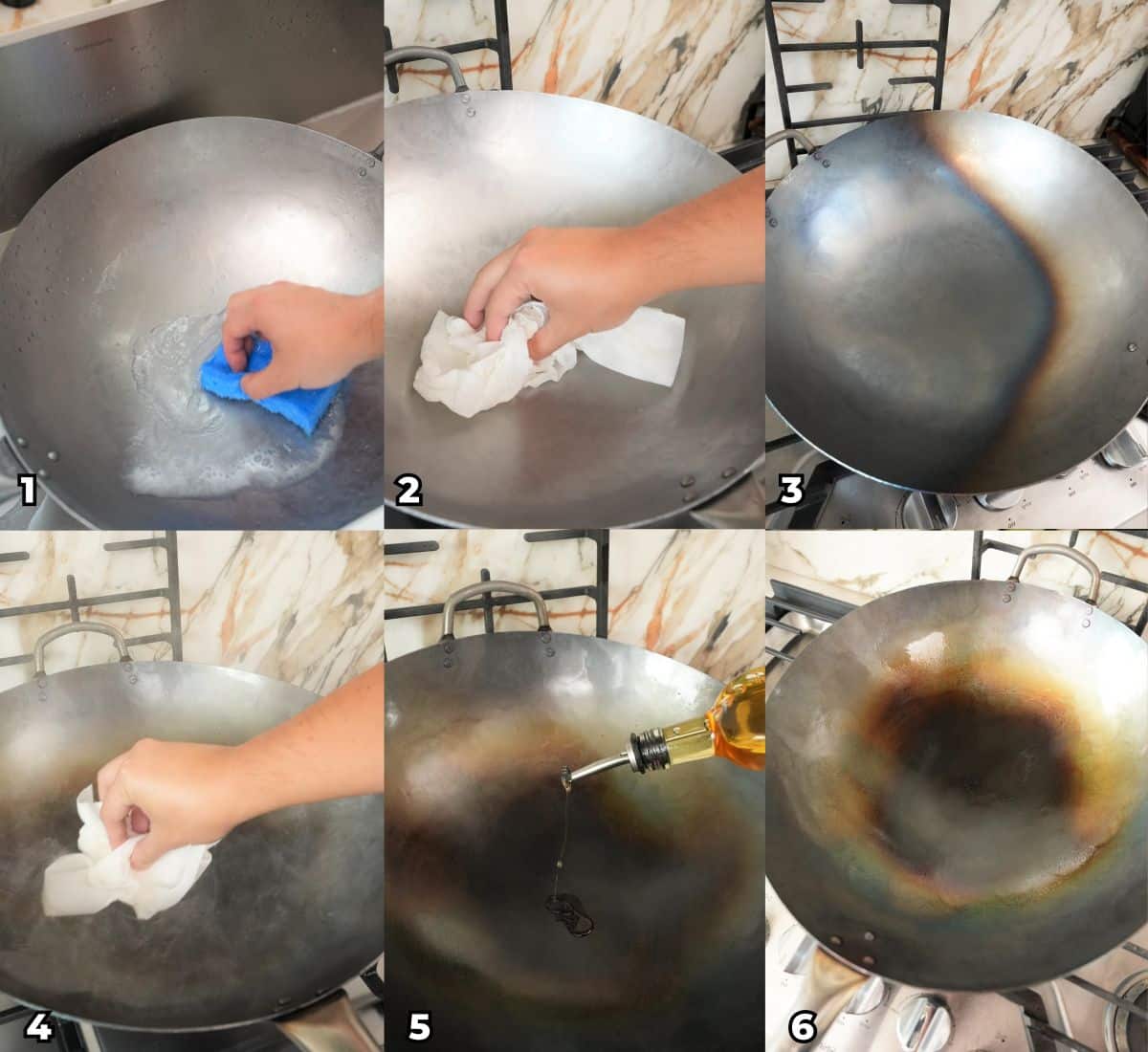
-
Scrub with mild soap and steel wool
-
Rinse and dry immediately with a towel
-
Heat over high flame for 1 minute
-
Apply a thin coat of grapeseed or canola oil
-
Store in a dry place
Troubleshooting Common Wok Seasoning Issues
Even with careful technique, carbon steel woks can develop sticky residue, patchy spots, or rust. These problems are rarely permanent; they usually signal a need for a quick correction rather than a full restart.
Sticky or Gummy Residue
Stickiness occurs when oil layers are too thick or the wok wasn’t heated enough to polymerize the oil fully. Instead of scraping it off, return the wok to the stove. Heat it over high heat until the sticky spots turn black and crisp, then wipe with a paper towel. If the gunk persists, scrub with coarse salt and a chainmail scrubber, rinse, dry immediately, and apply a thinner layer of grapeseed oil.
Patchy or Uneven Seasoning
Uneven seasoning often results from insufficient heating time or uneven oil distribution. The goal is a uniform blue-black patina. To fix this, heat the entire wok until it smokes lightly across the whole surface. Apply a very thin coat of oil using a folded paper towel, holding it with tongs. Rotate the wok constantly to ensure the oil hits every inch. Repeat this process two or three times until the color is consistent.
Surface Rust
Rust appears when moisture remains on the steel or if the seasoning layer is compromised. If you see orange spots, scrub the area vigorously with steel wool or a stiff brush until the metal is bare. Dry the wok completely over low heat, then immediately apply a fresh layer of oil and heat until it smokes. This seals the metal and restores the non-stick barrier.
Work through The Wok Revolution
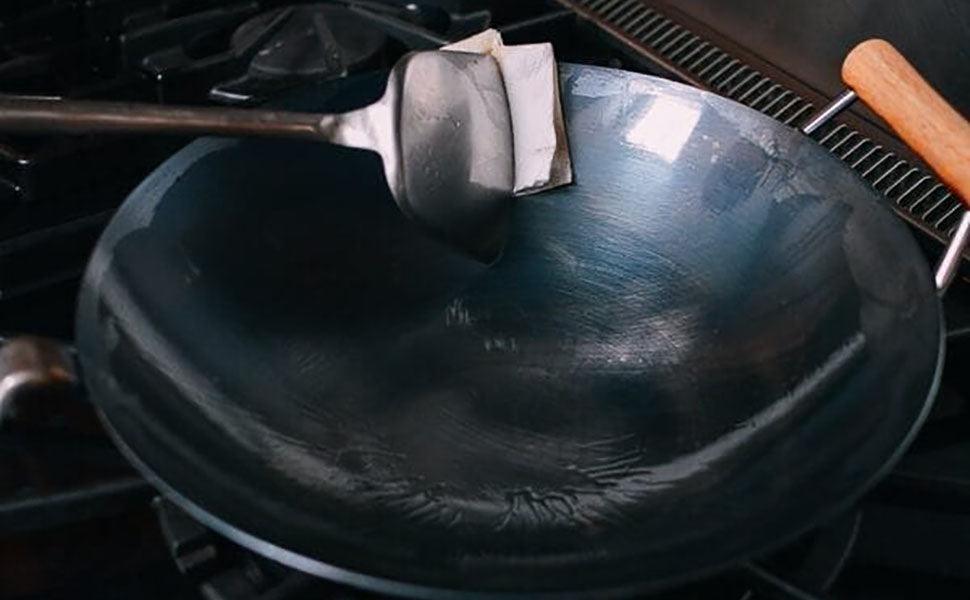
No comments yet. Be the first to share your thoughts!