

Why seasoning matters
Seasoning a carbon steel wok isn’t about applying a coating; it’s about creating a surface through chemical bonding. When you apply oil and apply heat, the oil undergoes polymerization. This process transforms the liquid fat into a hard, plastic-like layer that chemically bonds to the steel.
Think of it like baking bread. You aren’t just spreading butter on the dough; the heat changes the structure of the dough itself. Similarly, polymerization builds a durable, non-stick patina that withstands high-heat stir-frying. Without this layer, raw carbon steel will stick to food and rust quickly.
This natural non-stick surface is essential for proper wok cooking. It allows you to toss ingredients with minimal oil while preventing food from seizing to the metal. The goal is to build up this polymerized layer over time, making your wok better with every use.
Prepare the wok surface
New carbon steel woks arrive with a factory-applied anti-rust coating to protect the metal during shipping. This layer is not part of the seasoning process and must be removed before you build your first polymerized oil layer. Skipping this step traps grease and metal shavings under your seasoning, leading to uneven cooking and off-flavors.
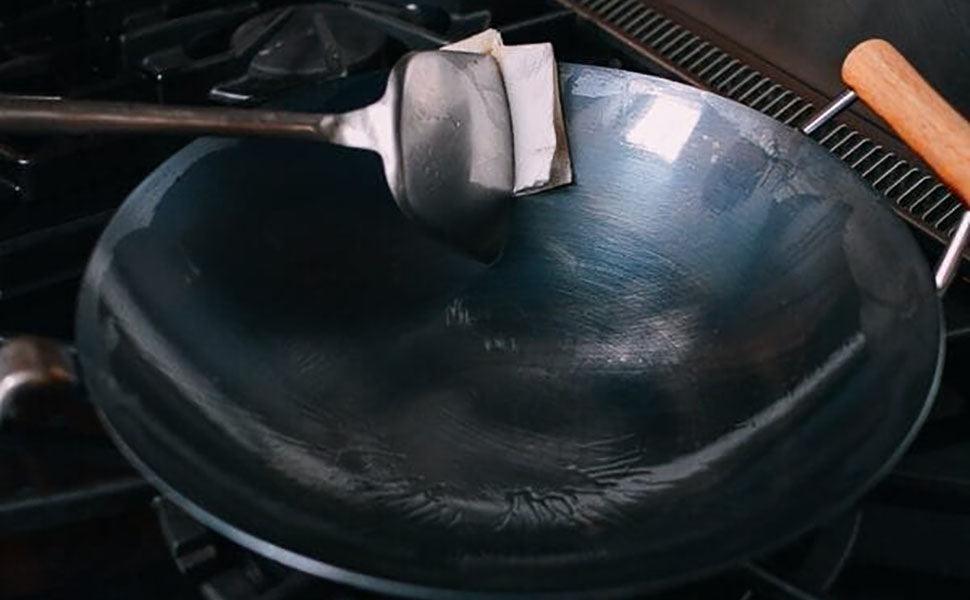
Start by filling the wok with hot water and a few drops of standard dish detergent. Use a stiff brush, steel wool, or an abrasive scouring pad to scrub the entire interior and exterior surfaces vigorously. You are looking for the bare metal to shine through; the water will turn gray or black as the factory coating and debris wash away. Rinse thoroughly and dry immediately with a towel to prevent flash rusting.
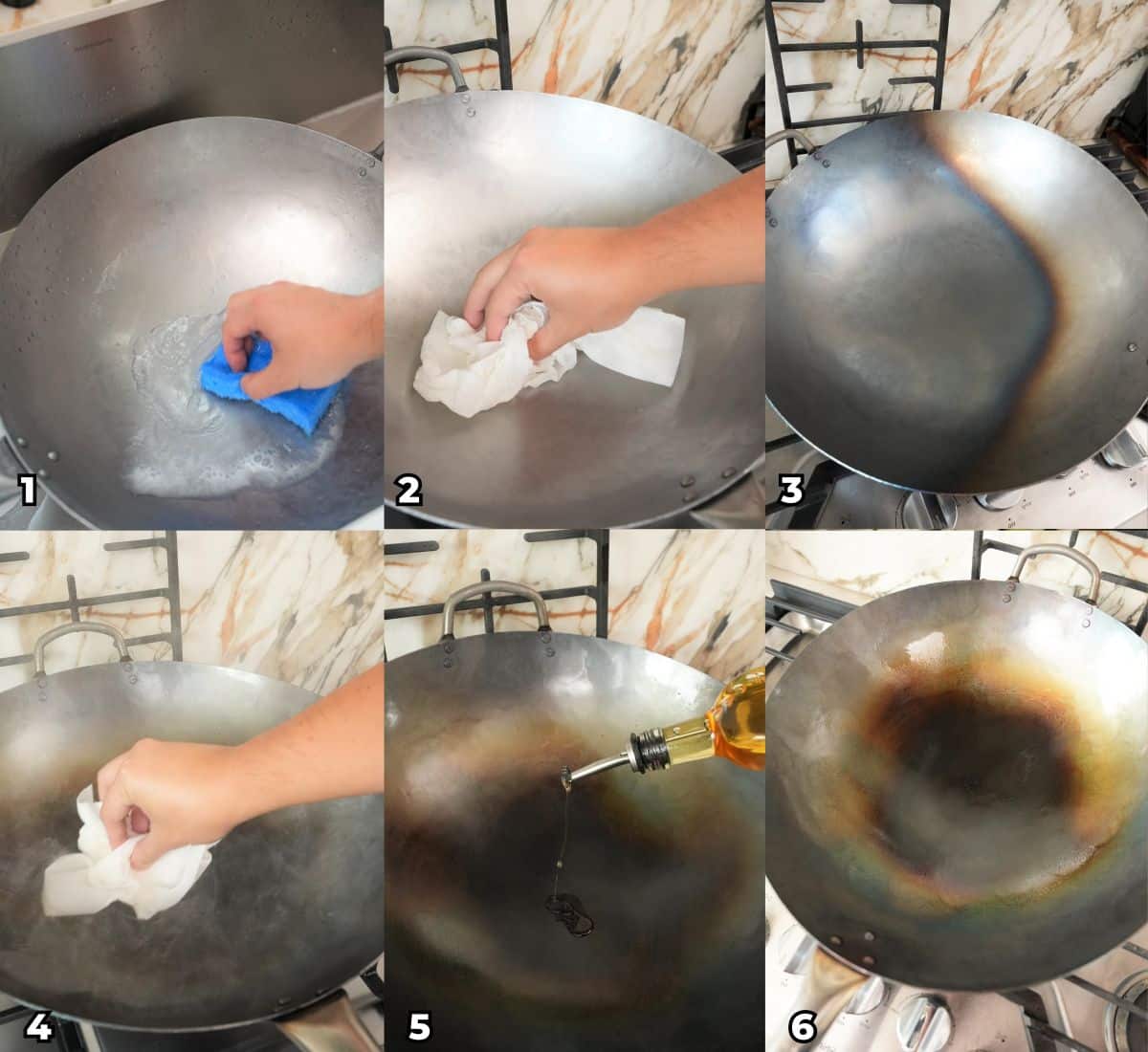
Fill the wok with hot water and liquid dish soap. Use steel wool or a coarse scouring pad to scrub every inch of the interior and exterior. The factory coating is designed to be removed; don't worry about scratching the metal at this stage. Rinse until the water runs clear and no suds remain.
Immediately dry the wok with a clean towel. Carbon steel rusts instantly when exposed to air after being wet. Ensure no moisture remains in the handle rivets or the bottom curve. If you see any spots of flash rust, scrub them out with a little more steel wool before proceeding.
Place the clean, dry wok on your stove over high heat. Heat it for 10–15 minutes until the metal changes color to a uniform blue or gray. This burns off any microscopic oil residues left from the scrubbing process. Let it cool slightly before moving to the oiling stage.
Once the factory coating is gone and the metal is bare, you are ready to apply your first layer of oil. This preparation ensures that your seasoning bonds directly to the steel, creating a durable non-stick surface that improves with every meal.
Heat and oil the pan
Seasoning a carbon steel wok is a process of polymerization. You are not just coating the metal; you are baking oil into the steel to create a hard, non-stick surface. The goal is to build thin, even layers of seasoning that protect the wok from rust and improve its cooking performance over time.
Start by placing your clean, dry wok on the stove over medium-high heat. Allow the metal to heat up until it begins to smoke. This indicates the steel is hot enough to accept the oil. If you are unsure, sprinkle a few drops of water on the surface; if they sizzle and evaporate instantly, the wok is ready.
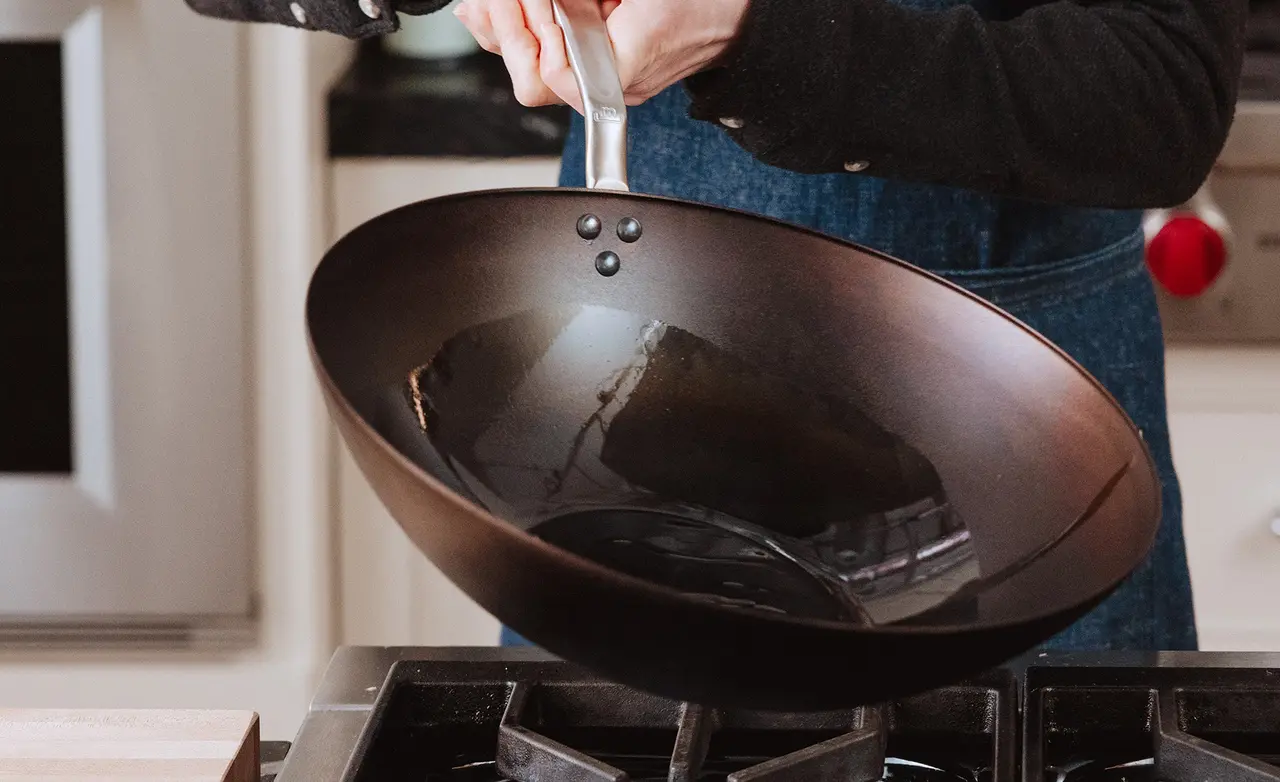
Once the wok is smoking, reduce the heat to medium-low. Add about a tablespoon of high-smoke-point oil, such as grapeseed, canola, or vegetable oil. Use a paper towel or a soft cloth to wipe the oil around the entire interior surface, including the sides. Tilt the wok to ensure the oil reaches every corner. You want a very thin layer; if you see pooling oil, wipe it out with a clean cloth.
Let the oil heat until it starts to smoke again, then continue heating for another minute or two. This allows the oil to bond with the steel. Turn off the heat and let the wok cool completely on the stove. Do not rush this cooling process. Once cool, wipe out any excess oil with a clean paper towel. This completes one cycle. For a new wok, repeat this process two or three times to establish a durable base layer.
Choose the right oil
Season a Wok works best as a clear sequence: define the constraint, compare the realistic options, test the tradeoff, and choose the path with the fewest hidden costs. That order keeps the advice usable instead of decorative. After each step, pause long enough to check whether the recommendation still fits the reader's actual situation. If it depends on perfect timing, unusual access, or a best-case budget, include a simpler fallback.
| Factor | What to check | Why it matters |
|---|---|---|
| Fit | Match the option to the primary use case. | A good deal still fails if it does not fit the job. |
| Condition | Verify age, wear, and service history. | Hidden condition issues erase upfront savings. |
| Cost | Compare purchase price with likely upkeep. | The cheapest option is not always the lowest-cost option. |
Build the patina layer
A single seasoning session creates a base, but it does not create a non-stick surface. True non-stick performance comes from building a patina—a dark, hard polymerized coating that grows thicker and more durable with every meal you cook. Think of this process like glazing a ceramic pot; you need multiple layers to achieve a smooth, functional finish.
The most effective way to build this patina is through the iterative cooking of fatty foods. When you cook dishes like stir-fried pork belly, bacon, or fatty fish, the rendered animal fats combine with the heat and the existing oil layer. This creates a new polymerized bond that adheres to the steel, filling in microscopic pores and smoothing the surface.
Start your cooking routine with these high-fat ingredients. The residual oil left in the pan after cooking should be minimal but visible. If the pan looks dry or matte, apply a thin coat of oil before storing. Over time, this cycle of cooking fat and maintaining the oil layer will transform the steel from a shiny gray metal into a deep, glossy black surface that naturally repels food.
Daily care and reseasoning
Keeping a carbon steel wok non-stick is mostly about habit. You do not need to strip and re-season the entire pan after every meal. Instead, follow a quick cleaning routine that preserves the polymerized oil layer you built up during the initial seasoning.
Rinse the wok with hot water immediately after cooking. Use a stiff brush or non-abrasive scrub pad to remove food bits. Avoid soaking the wok in water, as this can encourage rust on the bare steel. If stuck-on residue persists, use a small amount of mild dish soap; modern detergents are mild enough not to strip a well-established seasoning layer.
Water is the enemy of carbon steel. After washing, dry the wok thoroughly with a towel. Then, place it on the stove over medium-high heat for two to three minutes. This evaporates any remaining moisture from the microscopic pores of the metal. You will know it is dry when the surface looks matte and no steam rises.
While the wok is still warm (not piping hot), add about a teaspoon of neutral oil—vegetable, canola, or grapeseed work well. Use a paper towel to rub the oil evenly across the entire interior surface. Then, use a clean paper towel to wipe away as much excess oil as possible. The layer should be invisible; if you can see a puddle, you have used too much.
If you notice food sticking or a patch looking dull, you can spot-season it. Heat the wok until it smokes slightly, add a drop of oil, and swirl it around the sticky area for 30 seconds. Let it cool, then wipe clean. This re-polymerizes the oil in that specific spot without needing to re-season the whole pan.
A well-maintained wok should feel slick to the touch and look dark, almost black. If you see rust spots, scrub them off with steel wool, dry thoroughly, and apply a fresh coat of oil. Consistency here prevents the need for heavy re-seasoning later.
Recommended woks for 2026
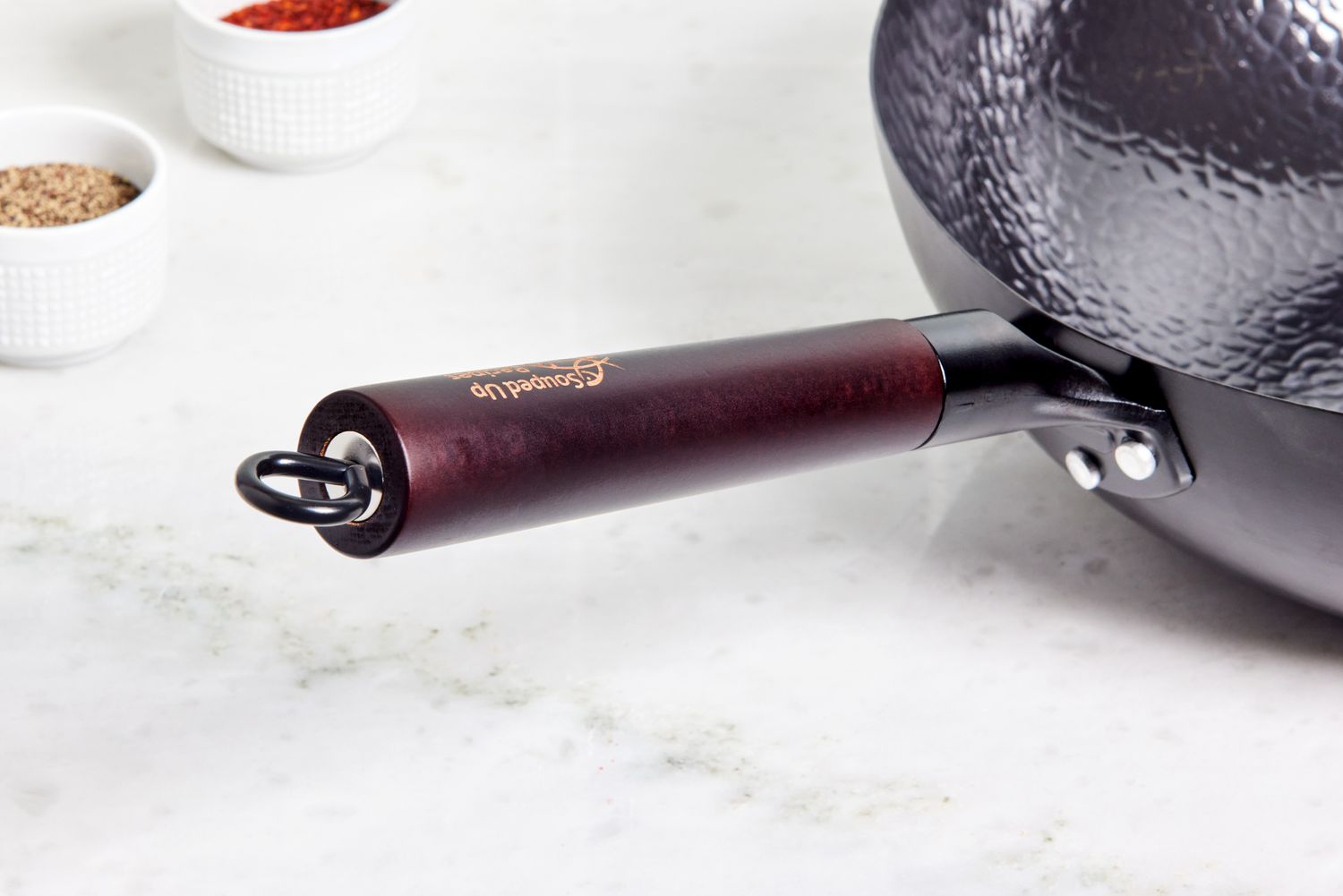
Choosing the right carbon steel wok is the foundation of successful seasoning and cooking. A good wok should be thin enough to heat quickly but heavy enough to retain that heat for a proper sear. Below are models that balance performance, durability, and value for home cooks.
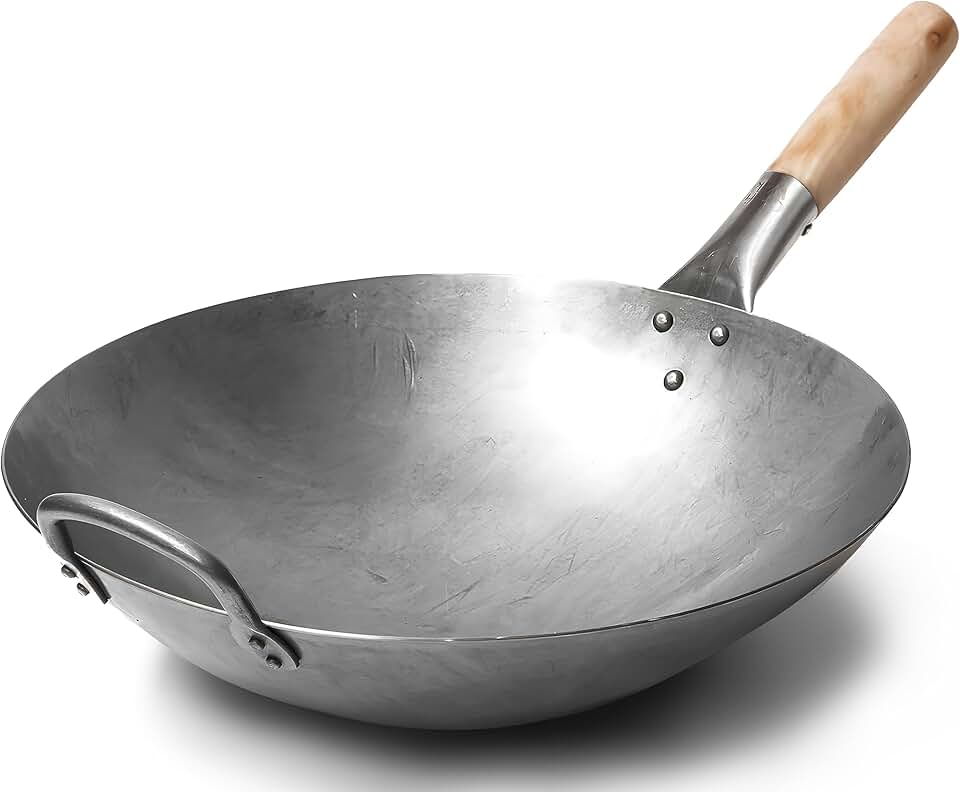

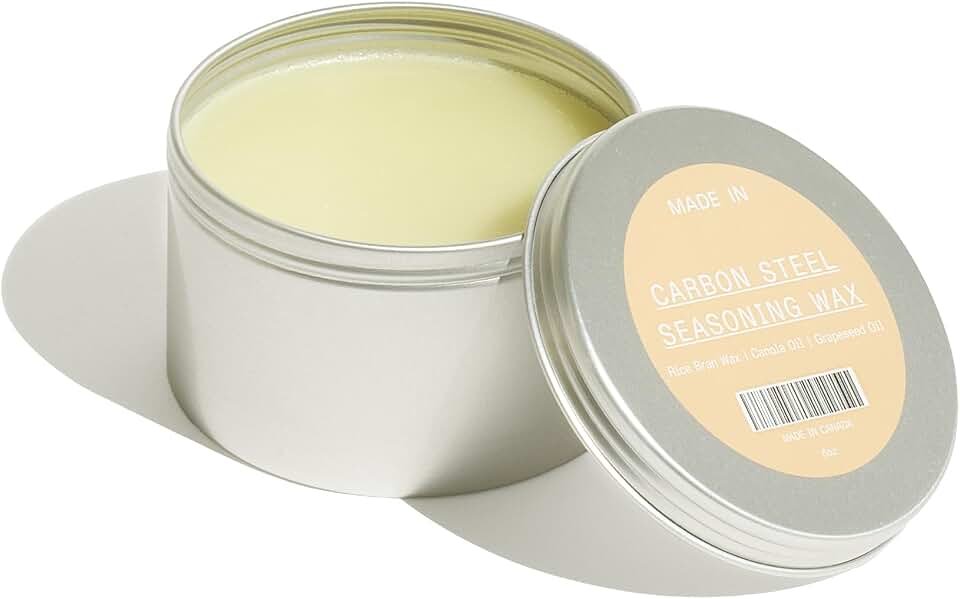

As an Amazon Associate, we may earn from qualifying purchases.
All these options are made from low-carbon steel, which is ideal for building a durable polymerized layer. Avoid non-stick coated woks if your goal is long-term seasoning, as the coating will degrade under high heat. Look for a wok with a flat bottom if you use an electric or induction cooktop, or a round bottom if you have a traditional wok burner.
Common seasoning: what to check next
Getting the oil choice right is the biggest hurdle for beginners. Grapeseed oil is the gold standard because of its high smoke point and neutral flavor, but you don't need to hunt for specialty bottles. Most neutral oils like vegetable, canola, peanut, or coconut oil work perfectly fine for building that initial polymer layer.
If your wok develops sticky patches or uneven spots, it usually means the oil layer was too thick. Wipe out excess oil thoroughly before the first high-heat burn. A thin, even coat cures into a hard, non-stick surface, while too much oil remains tacky and attracts dust.
No comments yet. Be the first to share your thoughts!