

Why carbon steel rules the wok
Carbon steel is the gold standard for home stir-frying because it bridges the gap between heat retention and responsiveness. Unlike heavy cast iron, which holds heat but heats slowly, or thin aluminum, which warps under high flame, carbon steel heats up quickly and allows you to adjust temperature instantly. This material property is essential for achieving wok hei, the breath of the wok, which requires intense, immediate heat to sear vegetables and proteins without steaming them.
Professional chefs prefer carbon steel for its ability to develop a natural non-stick patina over time. As you cook, polymerized oil fills the microscopic pores of the metal, creating a smoother cooking surface that improves with every meal. This seasoning process is unique to carbon steel and uncoated cast iron; non-stick coatings degrade under the high heat required for proper stir-frying, releasing fumes and losing their effectiveness.
While stainless steel is durable and dishwasher-safe, it struggles to maintain the consistent high heat needed for authentic stir-fry textures. Carbon steel’s lighter weight also makes it easier to toss ingredients—a technique that ensures even cooking and prevents burning. For anyone serious about Asian cooking, the investment in a quality carbon steel wok pays off in flavor and technique.
For those ready to buy, here are our top picks for carbon steel woks, each paired with a viral recipe to get you started.
5 Best Woks 2026: Top Carbon Steel Picks and 5 Viral Recipes
Carbon steel’s superior heat retention and seasoning capabilities make it the definitive choice for achieving authentic wok hei in high-heat cooking. Validated by rigorous testing from Serious Eats and Wirecutter, these five top-rated woks are paired with five viral recipes to ensure professional results at home.
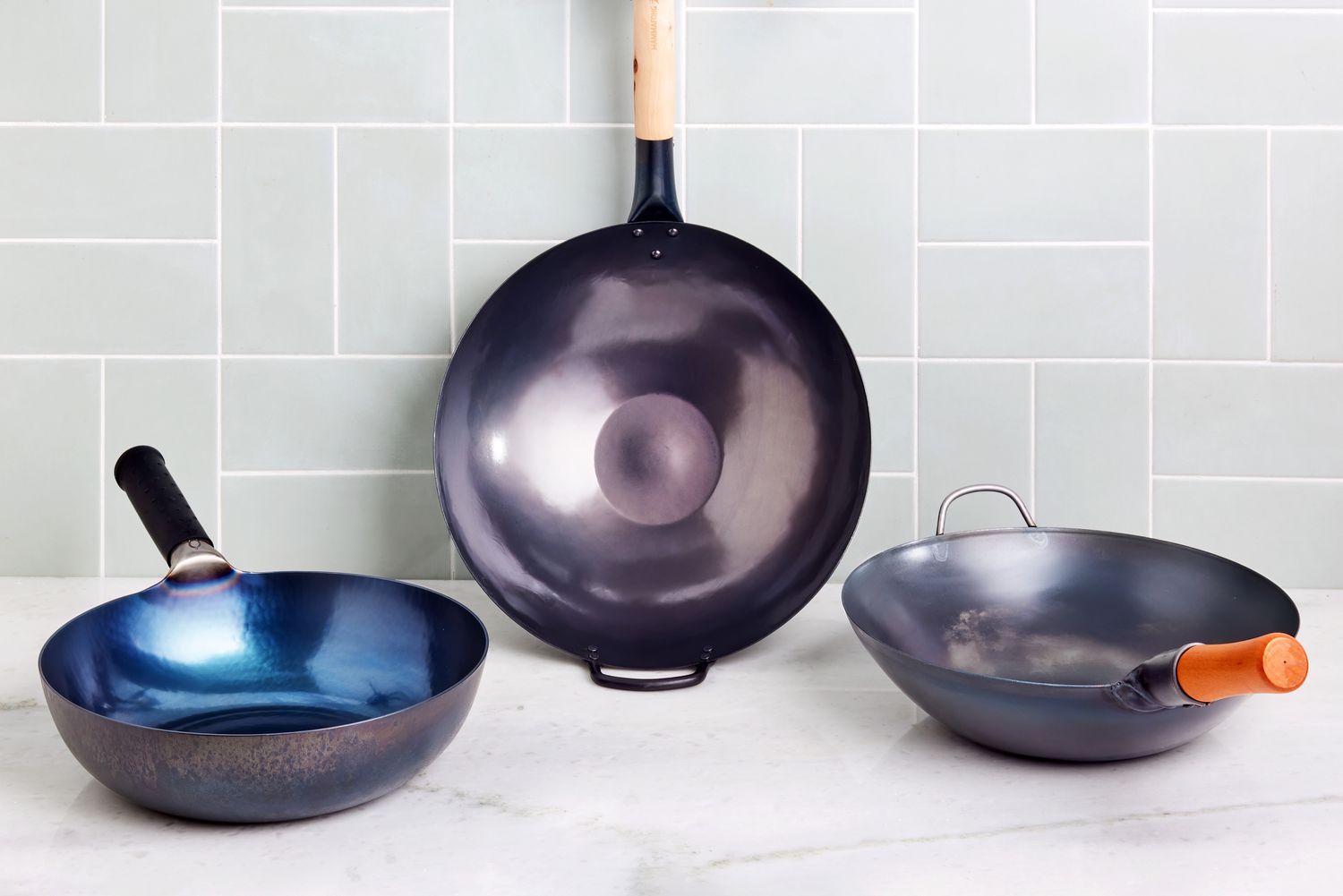
1. Best overall: Yosukata carbon steel
The Yosukata wok is a favorite among home cooks for its balanced weight and pre-seasoned finish, making it ready to use right out of the box. It excels at rapid heat distribution, allowing for quick searing of proteins and vegetables. To demonstrate its capabilities, try this classic Garlic Scapes and Shrimp Stir-Fry, which relies on high heat to achieve a crisp-tender texture.
2. Best flat bottom: Sur La Table pro
The Sur La Table professional wok features a flat bottom designed for stability on electric and glass-top stoves, a common constraint for many home kitchens. Its thick gauge steel retains heat well, preventing temperature drops when cold ingredients are added. This stability makes it ideal for dishes that require consistent simmering after an initial sear, such as a hearty Beef and Broccoli Stir-Fry.
3. Best pre-seasoned: Mammafong
Mammafong offers a wok that arrives pre-seasoned with a smooth, non-stick surface, reducing the initial learning curve for beginners. The handle is designed for comfort and control, which is crucial when tossing ingredients at high speeds. This wok performs exceptionally well with delicate ingredients that might stick to less seasoned pans, such as a Vegetable and Tofu Stir-Fry.

4. Best budget: Joyce Chen classic
The Joyce Chen classic is a reliable entry-level option that provides the essential characteristics of carbon steel without the premium price tag. While it may require a bit more initial seasoning effort, it heats up quickly and responds well to temperature adjustments. It is perfect for quick weeknight meals like a Simple Egg Fried Rice, where high heat prevents the rice from becoming mushy.
5. Best nonstick: Calphalon signature
The Calphalon Signature wok combines carbon steel construction with a durable non-stick coating, offering the heat responsiveness of steel with the ease of cleanup of synthetic surfaces. This makes it an excellent choice for low-oil cooking or for those who prefer not to maintain a seasoned patina. It is well-suited for a Light Chicken and Vegetable Stir-Fry, where minimal oil is desired.
How to season a wok for nonstick
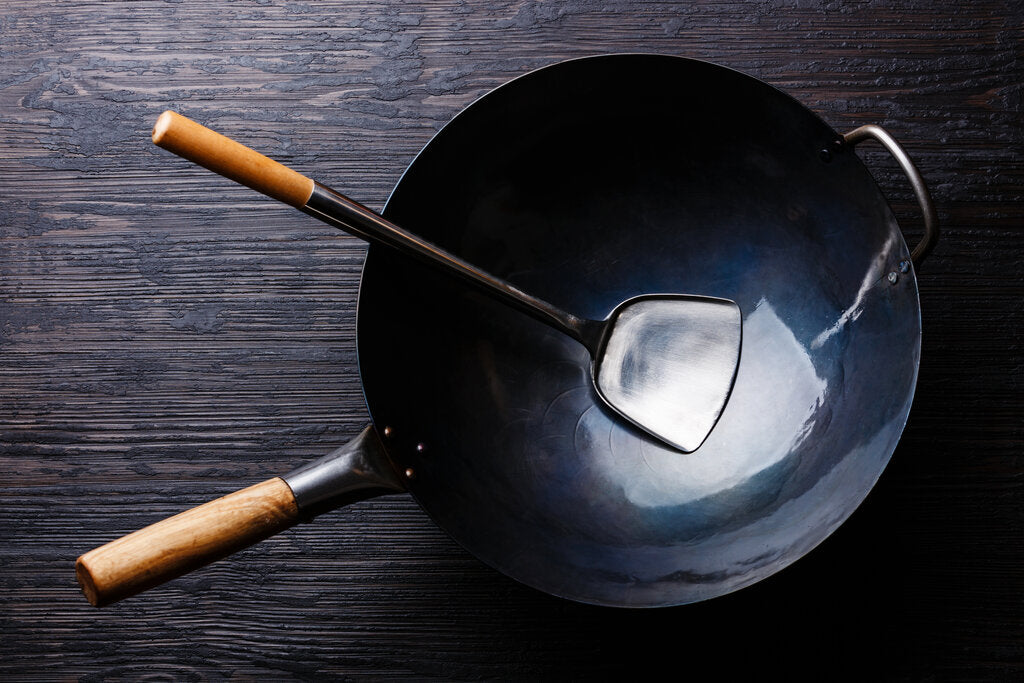
Seasoning is the process of polymerizing oil onto the metal surface to create a natural, nonstick coating. For carbon steel, this layer acts as a barrier against rust and improves heat distribution. Without it, your food will stick, and the pan will corrode quickly. Think of seasoning like building a patina on a leather jacket: it starts thin and uneven but becomes durable and protective with use.
Follow these steps to prepare your wok for its first stir-fry.
New carbon steel woks are coated in oil to prevent rust during shipping. This coating is not food-safe and will taste bitter. Use hot water, a dish soap, and a stiff brush or scouring pad to scrub the entire interior and exterior until the water runs clear and the metal feels squeaky clean. Dry it immediately with a towel to prevent flash rusting.
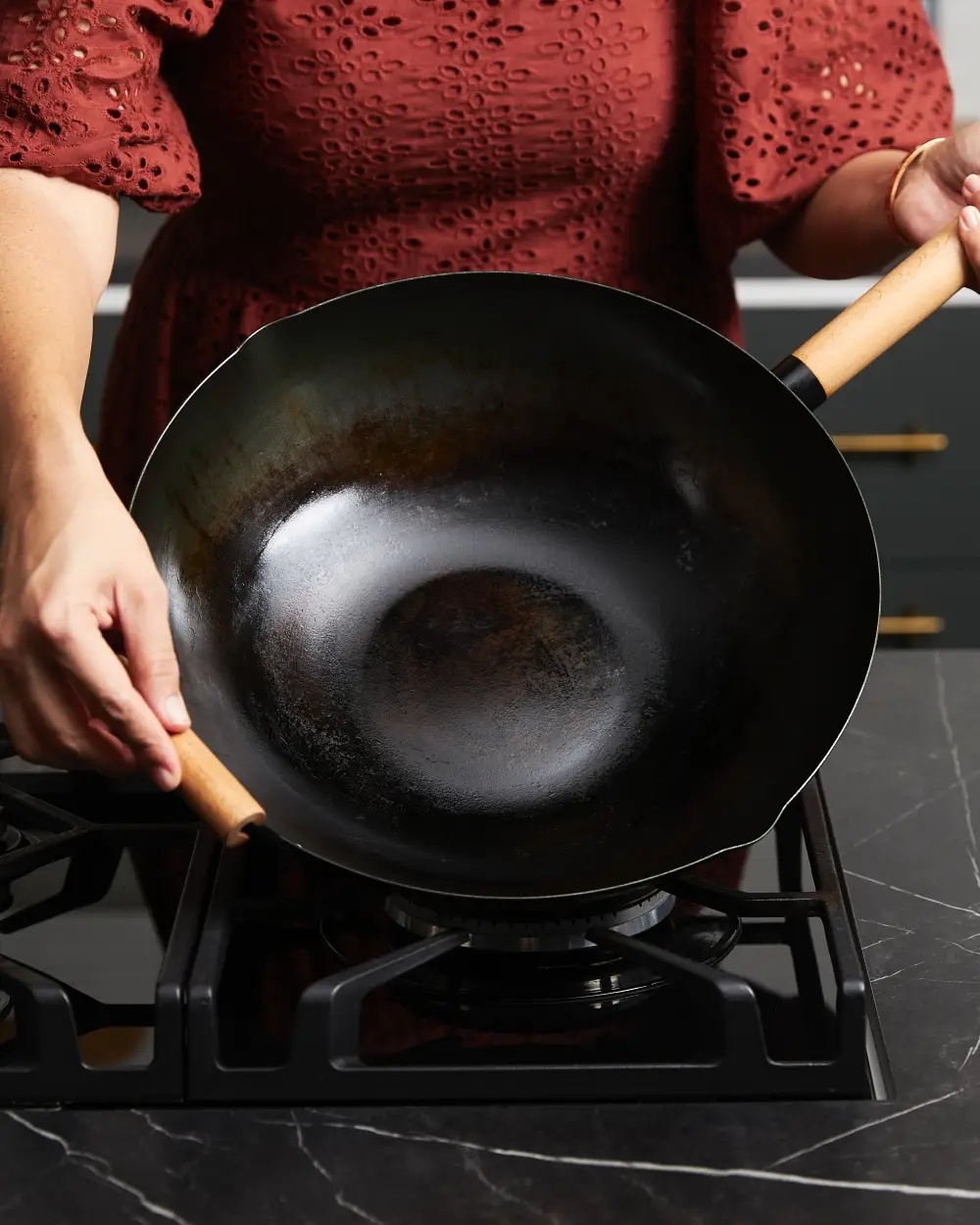
Place the clean, dry wok on your stove over high heat. Heat it until the metal changes color slightly and begins to smoke. This opens the pores of the steel and prepares it to accept the oil. Use tongs to rotate the wok so the heat distributes evenly across the bottom and up the sides.
Turn off the heat and let the wok cool for a minute until it is warm but not burning. Pour a small amount of high-smoke-point oil (like grapeseed, canola, or peanut oil) into the wok. Use a paper towel held with tongs to rub the oil over the entire interior surface. The layer should be so thin you can barely see it; excess oil will become sticky and patchy.
Return the wok to high heat. Watch as the oil smokes and the metal darkens to a bronze or black color. This is the polymerization process where the oil bonds to the steel. Continue heating until the smoke clears and the surface looks uniform. This may take 5-10 minutes. Do not walk away; this step requires attention.
Turn off the heat and let the wok cool completely. Wipe out any loose residue with a dry paper towel. For a stronger initial base, repeat the oiling and heating process two or three more times. The more layers you build, the more nonstick the surface becomes. Once finished, your wok is ready for cooking.
Wok cooking questions answered
Carbon steel woks require specific handling to maintain their non-stick seasoning and withstand high heat. Understanding maintenance, safety, and usage helps preserve the cookware and improve stir-fry results. The following answers address common queries about carbon steel woks, drawing on expert testing and official cooking guidelines.
No comments yet. Be the first to share your thoughts!