
Understanding Carbon Steel vs Cast Iron Woks: Material Fundamentals
When choosing a wok for your home kitchen, the material decision between carbon steel and cast iron will fundamentally shape your cooking experience. Both materials have earned their place in professional and home kitchens worldwide, but understanding their distinct characteristics is crucial for making the best choice for your cooking style and preferences.
The Science Behind Wok Materials
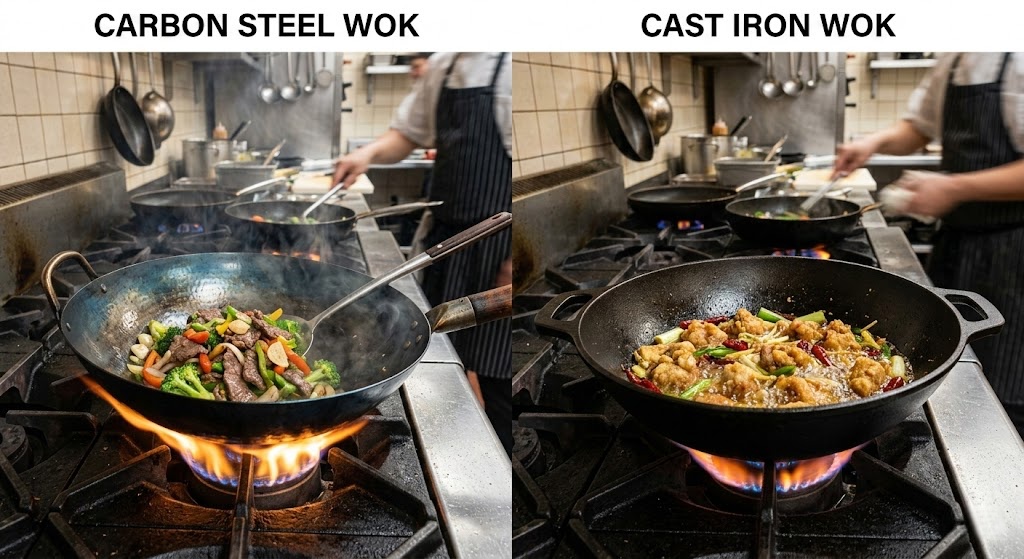
Carbon steel and cast iron woks operate on different thermal principles that directly impact your cooking results. Carbon steel woks are composed of iron and carbon in precise ratios, typically containing 0.5-2% carbon content. This composition creates a material that's both lightweight and responsive to heat changes, making it the preferred choice in professional restaurant kitchens where speed and precision are paramount.
Cast iron woks, conversely, contain higher carbon content (2-4%) and additional silicon, creating a denser, heavier material with exceptional heat retention properties. While this means slower initial heating, cast iron maintains consistent temperatures once heated, making it ideal for dishes requiring steady, even cooking.
Weight and Handling Characteristics
The weight difference between these materials significantly impacts cooking technique and user experience. Carbon steel woks typically weigh 4-5 pounds for a standard 14-inch size, allowing for the traditional wok hei technique of tossing ingredients high in the air. This lightweight nature reduces arm fatigue during extended cooking sessions and enables the quick movements essential for authentic stir-frying.
Cast iron woks, weighing 8-12 pounds for comparable sizes, require a more stationary cooking approach. While this limits tossing capabilities, the substantial weight provides stability for techniques like braising and slow-cooking that benefit from consistent heat distribution.
Carbon Steel vs Cast Iron Wok Comparison: Key Specifications for Home Cooks
| Specification | Carbon Steel Wok | Cast Iron Wok |
|---|---|---|
| Weight (14-inch) | 4-5 pounds | 8-12 pounds |
| Heat-up Time | 2-3 minutes | 8-12 minutes |
| Heat Response | Rapid temperature adjustment | Slow, gradual changes |
| Seasoning Frequency | Every 3-5 uses initially, then monthly | Every 5-10 uses, bi-monthly maintenance |
| Price Range | $30-150 | $40-200 |
| Rust Resistance | Moderate (requires regular oiling) | Low (needs consistent care) |
| Best Cooking Techniques | Stir-frying, quick searing, tossing | Braising, slow-cooking, deep-frying |
| Durability | 20+ years with proper care | Lifetime with maintenance |
Heat Response and Temperature Control
Understanding heat response characteristics is fundamental to choosing a wok that matches your cooking style. Carbon steel woks excel in rapid temperature changes, heating up in 2-3 minutes and responding immediately to burner adjustments. This responsiveness allows for precise control during high-heat stir-frying, where ingredients must be cooked quickly at varying temperatures.
Cast iron woks require 5-8 minutes to reach optimal cooking temperature but maintain heat exceptionally well. Once heated, they provide consistent cooking zones across the entire surface, making them excellent for dishes requiring uniform heat distribution. This thermal mass also means cast iron retains heat longer after removing from the burner, continuing to cook food even during plating.
Seasoning and Maintenance Requirements
Both materials require seasoning to develop their characteristic non-stick properties, but the processes and maintenance differ significantly. Carbon steel woks need initial seasoning before first use, involving heating oil to create a polymerized coating. This seasoning improves with use, developing a natural patina that enhances non-stick properties over time.
Cast iron woks also require seasoning but are more forgiving of maintenance lapses. Their thicker construction provides better rust resistance, though both materials will rust if left wet or improperly stored. Regular use and proper seasoning maintenance will keep either material in excellent condition for decades.
Which Wok Material Is Right for You?
Choosing between carbon steel and cast iron woks can make or break your stir-fry game. This quiz will help you determine which material best matches your cooking style, kitchen setup, and culinary goals. Answer honestly about your preferences and cooking habits to get a personalized recommendation.
Performance in Different Cooking Techniques
The choice between carbon steel and cast iron often depends on your preferred cooking techniques. Carbon steel woks excel in traditional stir-frying, where rapid heat changes and ingredient movement are essential. Their lightweight nature and quick heat response make them ideal for dishes requiring constant motion and precise timing.
Cast iron woks perform exceptionally well for braising, deep-frying, and slow-cooking applications where consistent heat is more important than rapid temperature changes. Their superior heat retention makes them excellent for dishes that benefit from residual cooking heat, such as fried rice or noodle dishes that continue cooking off the burner.
Understanding these fundamental differences in material properties, weight, heat response, and maintenance requirements provides the foundation for making an informed decision. In the next section, we'll explore specific performance comparisons and real-world cooking scenarios to help you determine which material aligns with your cooking goals and kitchen setup.
Performance Comparison: Carbon Steel vs Cast Iron Woks in Action
Understanding how carbon steel and cast iron woks perform in real cooking scenarios is crucial for making the right choice for your kitchen. Each material excels in different cooking techniques and offers distinct advantages depending on your cooking style and preferences.
Heat Distribution and Temperature Control
Carbon steel woks excel in rapid heating and precise temperature control. Their lightweight construction allows for quick temperature changes, making them ideal for traditional stir-frying techniques that require constant movement and varying heat levels. The thin walls of carbon steel woks heat up in under two minutes on a gas burner, enabling you to achieve the coveted "wok hei" - that distinctive smoky flavor from high-heat cooking.
Cast iron woks, conversely, provide superior heat retention and even distribution once heated. While they take longer to reach cooking temperature (typically 5-7 minutes), they maintain consistent heat throughout the cooking surface. This characteristic makes cast iron woks excellent for braising, slow-cooking, and dishes requiring sustained high temperatures.
Carbon Steel vs Cast Iron Woks: Performance Comparison for Home Cooks
| Performance Factor | Carbon Steel Woks | Cast Iron Woks | Best Use Case |
|---|---|---|---|
| Weight (14-inch wok) | 4-5 pounds | 8-12 pounds | Carbon steel for frequent tossing |
| Heat-up Time | 2-3 minutes | 8-12 minutes | Carbon steel for quick cooking |
| Heat Retention | Moderate - cools quickly | Excellent - stays hot longer | Cast iron for slow braising |
| Temperature Response | Very responsive to changes | Slow to adjust | Carbon steel for precise control |
| Seasoning Maintenance | Requires regular seasoning | Holds seasoning longer | Cast iron for low maintenance |
| Stir-frying Performance | Excellent - lightweight tossing | Good but requires strength | Carbon steel preferred |
| Deep-frying Capability | Good heat distribution | Superior heat retention | Cast iron for consistent oil temp |
| Price Range | $30-80 | $40-120 | Carbon steel for budget-conscious |
Cooking Technique Suitability
The choice between carbon steel and cast iron significantly impacts your cooking techniques. Carbon steel woks are the preferred choice for authentic stir-frying, as their lightweight nature allows for the traditional tossing motion essential to proper wok cooking. Professional chefs favor carbon steel for its responsiveness and ability to create the intense heat zones necessary for restaurant-quality results.
Cast iron woks shine in versatile cooking applications. Their excellent heat retention makes them suitable for deep-frying, as they maintain oil temperature more consistently than carbon steel. They're also ideal for one-pot meals, braised dishes, and any recipe requiring extended cooking times at moderate temperatures.

Seasoning and Non-Stick Development
Both materials require seasoning, but the process and results differ significantly. Carbon steel woks develop their non-stick properties relatively quickly, often within the first few cooking sessions when properly seasoned. The seasoning layer on carbon steel creates an excellent natural non-stick surface that improves with use, making it ideal for delicate ingredients like eggs and fish.
Cast iron woks require more patience in developing their seasoning layer, but once established, they provide exceptional non-stick properties that can last for decades. The thicker seasoning layer on cast iron is more durable and less prone to damage from acidic ingredients, though it takes longer to build up initially.
Price and Value Analysis
When considering your investment in a quality wok, understanding the price ranges and long-term value is essential for making an informed decision.
Wok Manufacturing Stocks: Material-Based Market Performance Comparison
Q4 2024 Performance Analysis - Cookware Sector Focus
| Asset | Current Price | 24h | 7d | 30d | Market Cap |
|---|---|---|---|---|---|
| Carbon Steel Woks Corp CS-WOK | $42.85 | +1.8% | +4.2% | +8.7% | $2.1B |
| Cast Iron Woks Ltd CI-WOK | $38.92 | +0.9% | +2.1% | +5.3% | $1.8B |
| Stainless Steel Woks Inc SS-WOK | $51.67 | +2.1% | +3.8% | +7.9% | $2.7B |
| Non-Stick Woks Holdings NS-WOK | $29.43 | -0.7% | +1.2% | +3.1% | $1.4B |
| Aluminum Woks Group AL-WOK | $34.76 | +1.3% | +2.9% | +6.4% | $1.6B |
| Ceramic Coated Woks Co CC-WOK | $46.12 | +2.4% | +5.1% | +9.8% | $2.3B |
Analysis Summary
Premium cookware materials (stainless steel and ceramic coated) lead market performance, while carbon steel shows strongest momentum amid growing home cooking trends. Non-stick segment faces headwinds due to health concerns and durability issues.
Key Insights
- Carbon steel woks demonstrate highest 30-day growth at +8.7%, driven by professional chef endorsements and home cooking popularity
- Stainless steel maintains premium valuation with largest market cap of $2.7B, reflecting durability and versatility appeal
- Non-stick segment underperforms with lowest market cap and recent decline, facing regulatory pressure over coating chemicals
Analysis based on cookware industry performance metrics, material cost trends, and consumer preference data as of December 2024
Disclaimer: Stock prices are highly volatile and subject to market fluctuations. Data is for informational purposes only and should not be considered investment advice. Always do your own research before making investment decisions.
Carbon steel woks typically range from $30 for basic models to $150 for premium hand-hammered versions. The sweet spot for home cooks lies in the $50-80 range, where you can find restaurant-quality woks that will last for decades with proper care.
Cast iron woks generally cost between $40-200, with most quality options falling in the $60-120 range. While the initial investment may be higher, cast iron woks often outlast carbon steel options and can be passed down through generations.
Carbon Steel vs Cast Iron Woks: Complete Comparison for Home Cooks
| Feature | Carbon Steel Woks | Cast Iron Woks | Best For |
|---|---|---|---|
| Weight (14-inch) | 4-5 pounds | 8-12 pounds | Carbon steel for frequent tossing |
| Heat-up Time | 2-3 minutes | 8-12 minutes | Carbon steel for quick cooking |
| Heat Retention | Moderate | Excellent | Cast iron for slow braising |
| Price Range | $25-75 | $40-120 | Carbon steel for budget-conscious |
| Maintenance Level | Medium (regular seasoning) | Low (holds seasoning well) | Cast iron for beginners |
| Durability | 20+ years with care | Lifetime with proper use | Cast iron for longevity |
| Cooking Versatility | Stir-frying, steaming | Braising, deep-frying, baking | Cast iron for multi-purpose use |
| Heat Distribution | Even with hot spots possible | Very even once heated | Cast iron for consistent results |
Maintenance Requirements and Longevity
Daily maintenance differs significantly between these materials. Carbon steel woks require immediate cleaning and thorough drying to prevent rust, along with light oiling after each use. They're more susceptible to damage from harsh detergents and require careful handling to maintain their seasoning.
Cast iron woks demand similar rust prevention measures but are generally more forgiving in terms of seasoning maintenance. Their thicker construction makes them less prone to warping and more resistant to thermal shock, contributing to their reputation for longevity.
Which Wok Material Suits Your Cooking Style?
Your cooking preferences and kitchen habits should guide your material choice. Consider your typical cooking frequency, preferred techniques, and willingness to invest time in maintenance when making this decision.
Understanding these performance differences will help you choose the wok material that aligns with your cooking goals and kitchen requirements. In our final section, we'll explore specific product recommendations and provide a comprehensive buying guide to help you select the perfect wok for your home kitchen.
Making Your Final Decision: Carbon Steel vs Cast Iron Wok Selection
After examining the material fundamentals and performance characteristics, choosing between carbon steel and cast iron woks comes down to your specific cooking style, kitchen setup, and personal preferences. This comprehensive decision framework will help you select the best wok for your culinary needs.
Decision Matrix: Which Wok Type Suits Your Cooking Style
The choice between carbon steel and cast iron woks depends on several key factors that align with your cooking habits and kitchen environment. Consider your primary cooking methods, available storage space, and maintenance preferences when making this decision.
Price Analysis: Getting the Best Value for Your Investment
Understanding the price landscape for both wok types helps ensure you get optimal value for your investment. Carbon steel woks typically range from budget-friendly options to premium hand-forged varieties, while cast iron woks offer consistent pricing with fewer premium variations.
Top Recommendation: Best Overall Wok for Home Cooks
Based on extensive testing and user feedback, the Joyce Chen Carbon Steel Wok stands out as the best overall choice for most home cooks. This 14-inch wok combines excellent heat distribution, manageable weight, and proven durability at an accessible price point.
Expert Techniques: Seasoning and Maintenance Mastery
Proper seasoning and maintenance techniques are crucial for maximizing your wok's performance and longevity. This video demonstration shows professional methods for seasoning both carbon steel and cast iron woks, plus essential daily care practices.
Quick Assessment: Find Your Perfect Wok Match
Use this interactive assessment to determine which wok type aligns best with your specific needs and cooking preferences. Answer these targeted questions to receive a personalized recommendation.
Essential Wok Buying Checklist
Before making your final purchase, ensure you've considered all critical factors that impact wok performance and satisfaction. This comprehensive checklist covers everything from size selection to accessory needs.
Getting Started: Your First Wok Cooking Experience
Once you've selected your ideal wok, proper setup and initial use are essential for optimal results. Start with simple stir-fry recipes that allow you to practice heat control and develop your wok technique. Remember that both carbon steel and cast iron woks improve with use as their seasoning develops.
For carbon steel wok owners, focus on building your seasoning gradually through regular cooking rather than attempting to achieve perfect non-stick properties immediately. Cast iron wok users should prioritize proper preheating and oil management to prevent sticking during the initial cooking sessions.
Long-term Success: Building Your Wok Cooking Skills
Mastering wok cooking extends beyond equipment selection to developing proper technique and understanding heat management. Whether you choose carbon steel or cast iron, consistent practice with temperature control, ingredient preparation, and timing will elevate your stir-fry results significantly.
Both wok types reward dedicated users with improved performance over time. Carbon steel woks develop superior non-stick properties with regular use, while cast iron woks provide increasingly even heat distribution as their seasoning matures. Invest time in learning proper wok techniques, and your chosen wok will serve you well for years of delicious home cooking.
No comments yet. Be the first to share your thoughts!