

Why seasoning matters for wok hei
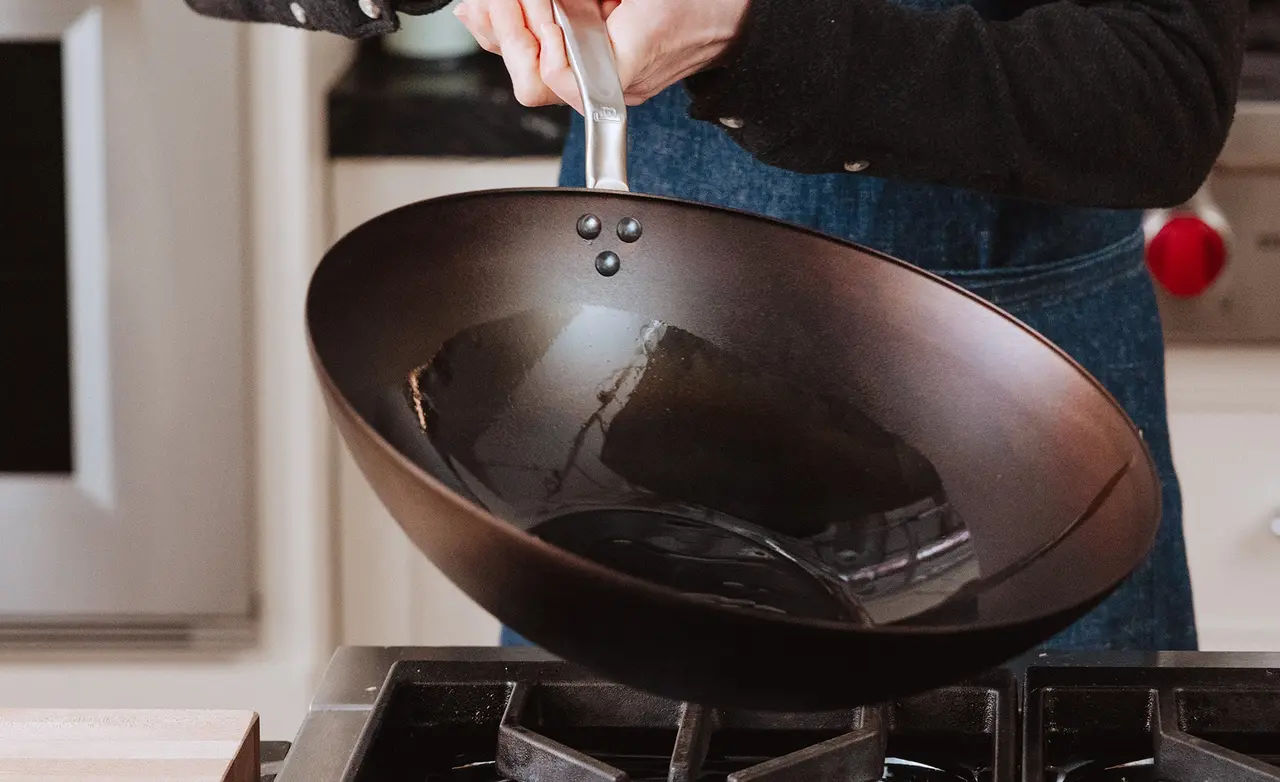
Seasoning transforms raw carbon steel into a non-stick surface by creating a polymerized oil layer. This hydrophobic barrier prevents food from bonding to the metal during high-heat stir-frying, which is essential for achieving wok hei—the elusive breath of the wok. A well-seasoned wok holds heat more evenly, allowing ingredients to sear instantly rather than steam.
Beyond preventing sticking, this patina aids in heat distribution. Without a proper polymerized layer, moisture from vegetables causes steaming instead of searing, resulting in soggy dishes rather than the charred, smoky flavor that defines great stir-fries.
Think of the seasoning layer like a non-stick pan’s coating, but one that improves with use. Each time you cook with oil, you add to this layer, making the wok more naturally non-stick over time. This is why a seasoned wok becomes a lifelong tool, unlike synthetic coatings that degrade and need replacement.
Gather your tools and oil
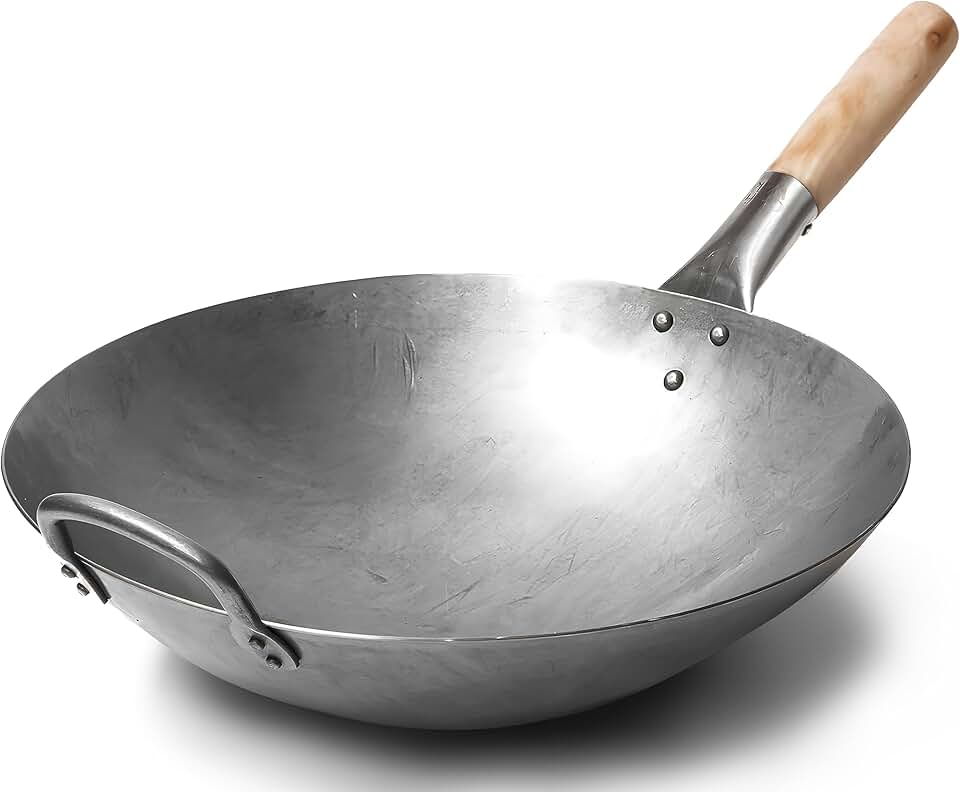
Seasoning a wok is a chemical process, not just a cleaning routine. You need the right materials to polymerize the oil into a hard, non-stick patina. Gather these items before you light the stove.
High-smoke-point oil
Avoid unrefined oils like olive or sesame oil; they burn too quickly and leave a sticky residue. Choose a refined oil with a high smoke point, such as grapeseed, peanut, or vegetable oil. Grapeseed oil is a top choice because it creates a smooth, durable finish without smoking excessively.
Cleaning supplies
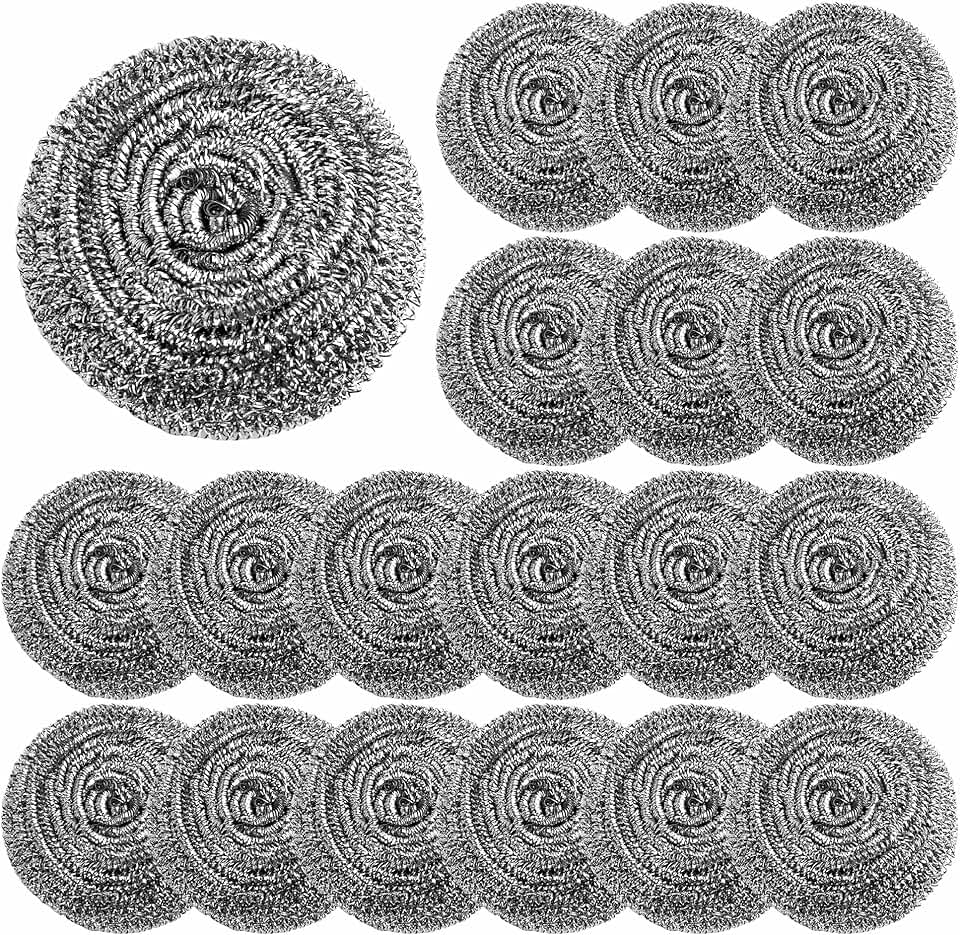
You need to strip the wok of its factory coating before seasoning. Use dish soap, warm water, and a steel wool pad or abrasive scrubber. A soft cloth or paper towel is also essential for drying the wok thoroughly. Moisture is the enemy of seasoning, so ensure the metal is bone-dry before applying oil.
Application tools
Use tongs to hold a paper towel or cloth while you spread the oil. This protects your hands from the heat and allows you to reach the curved sides of the wok evenly. Avoid using your bare hands or a brush that might leave bristles behind.
![Pompeian 100% Grapeseed Oil - 68 Fl Oz - Grapeseed Oil for High Heat Cooking - Light and Subtle Flavor for Deep Frying and Baking Desserts - High Smoke Point [Amazon-developed Certification] Compact by Design](https://m.media-amazon.com/images/I/61YzxXtsGcL._AC_UL960_QL65_.jpg)
As an Amazon Associate, we may earn from qualifying purchases.
Why this matters
Using the wrong oil or skipping the cleaning step is the most common mistake beginners make. Overheating the wok during seasoning can damage the metal, while too much oil creates a sticky, patchy surface. Proper preparation ensures a sleek, non-stick finish that lasts for years.
Clean the Wok Thoroughly
Before the polymerization process can begin, you must strip away the factory-applied protective coatings. Carbon steel woks arrive coated in a heavy layer of industrial oil or wax to prevent rust during shipping and storage. If you skip this step, the seasoning oil will bond to the factory coating rather than the metal itself, resulting in a patchy, sticky surface that flakes off during cooking.
Treat this initial wash not as a routine cleaning, but as a necessary removal of foreign material. You need a clean, bare metal surface for the seasoning to adhere properly.
Fill the wok with hot water and add a generous amount of dish soap. Use a stiff-bristled brush, steel wool, or abrasive scouring pad to scrub the entire interior and exterior surfaces. You are looking to remove the shiny, waxy factory coating. Scrub until the water runs clear and the metal feels uniformly rough and matte, not slick or greasy. Do not worry about scratching the steel; this abrasion is required to remove the barrier layer.
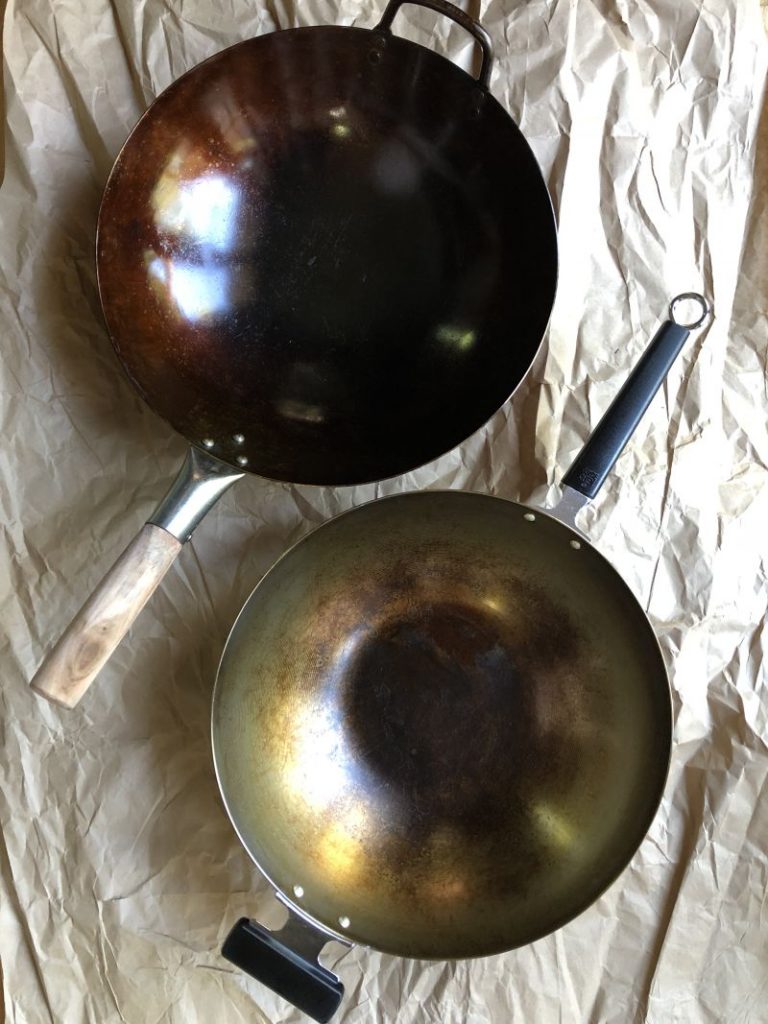
Rinse the wok thoroughly under hot running water to remove all soap residue and loosened wax. Inspect the surface closely under bright light. If you see any shiny spots or streaks, those areas still contain factory coating. Return to Step 1 and scrub those specific areas again. The metal should look uniform and dull gray across the entire cooking surface.
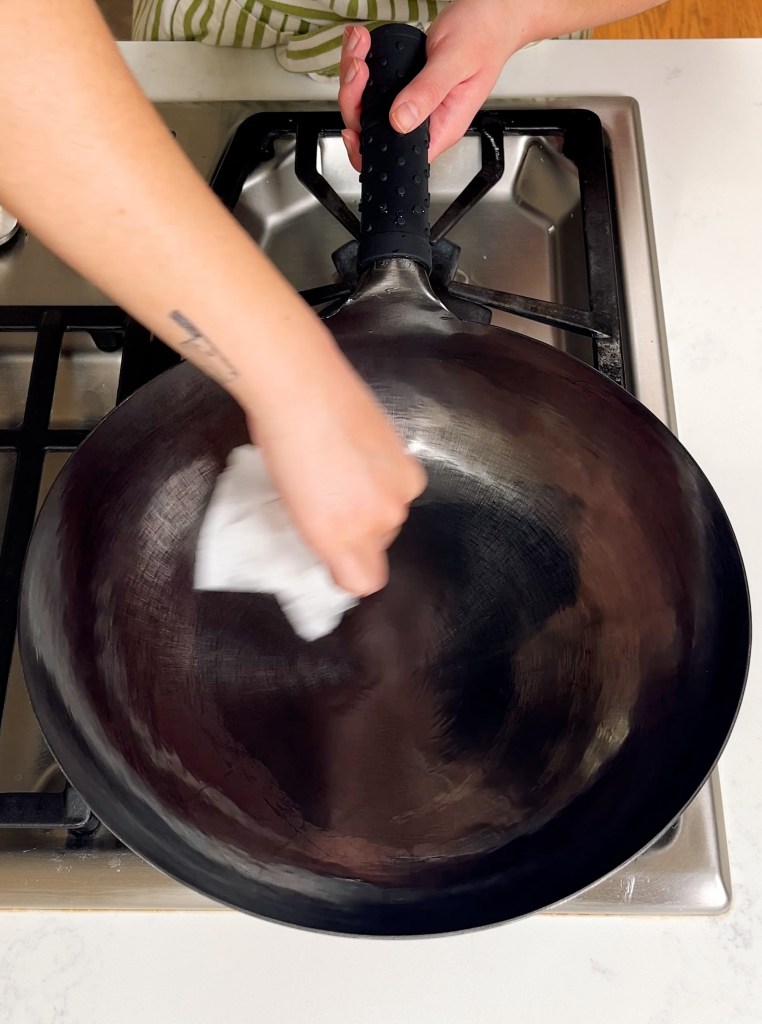
Water is the enemy of bare carbon steel. As soon as you are satisfied with the cleanliness, dry the wok completely with a towel. Then, place it on a stove burner over low heat for 2-3 minutes to evaporate any remaining moisture from the pores of the metal. This prevents immediate flash rusting before you begin the oiling process.
Heat and polymerize the oil
The goal of this step is to bond the oil to the metal through polymerization. You are not just coating the wok; you are chemically altering the surface to create a durable, non-stick patina. This process requires patience and careful temperature control.
Use a paper towel or cloth to apply a very thin layer of high-smoke-point oil (like peanut, canola, or grapeseed) to the entire interior surface, including the sides. Wipe away any excess oil with a clean cloth. If the oil is too thick, it will become sticky and patchy rather than forming a smooth, hard polymer layer.
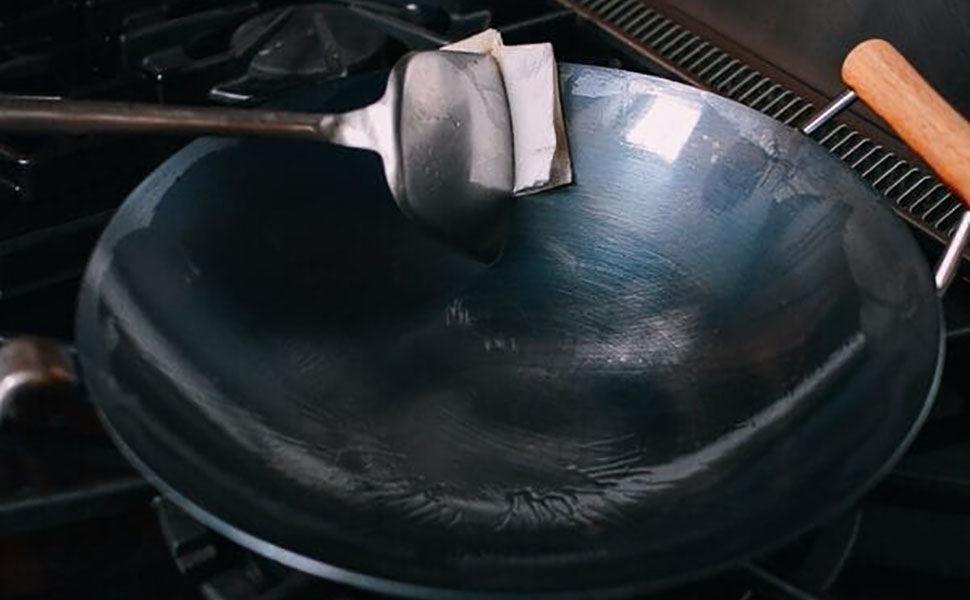
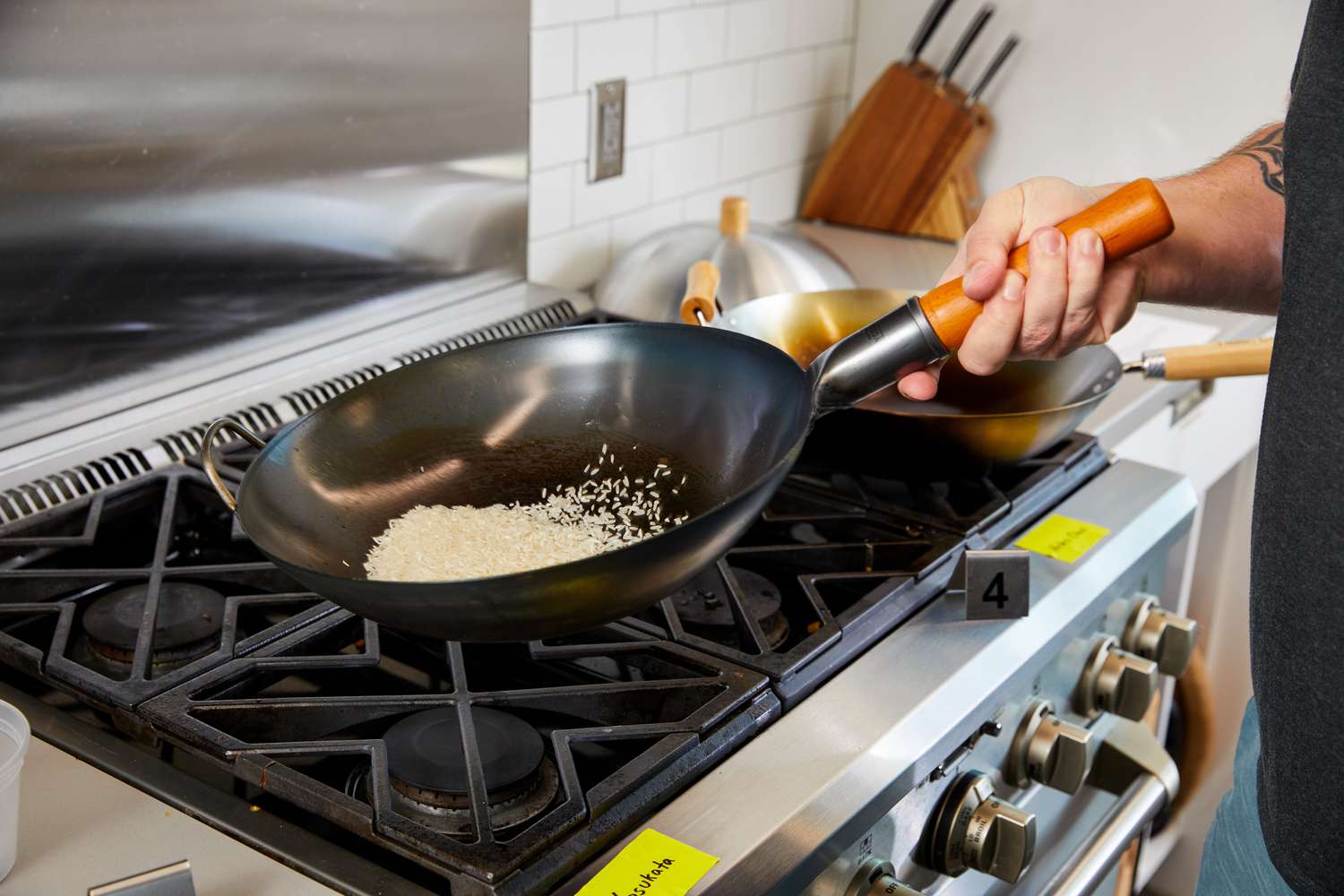
Place the wok on your stove over medium-high to high heat. If you have a gas stove, you can tilt the wok to ensure all sides receive direct flame. If you are using an electric or induction cooktop, keep the wok flat. Rotate the wok slowly every 30–60 seconds to ensure even heating across the entire cooking surface.
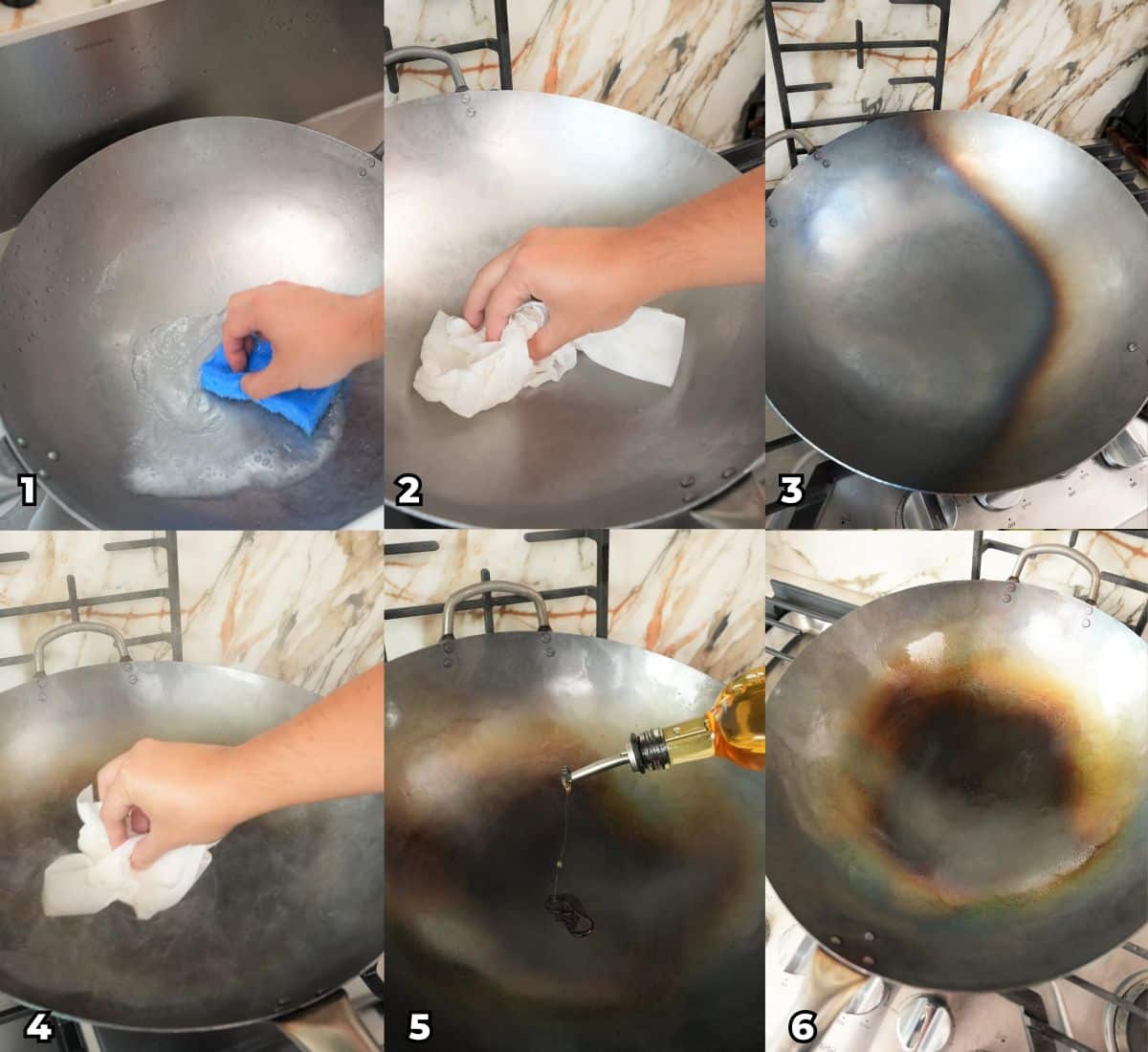
As the oil heats, it will begin to smoke. This is the polymerization process in action. The metal will change color from silver to a darker bronze or black. Continue heating and rotating until the entire interior surface is uniformly dark. This indicates that the oil has fully bonded to the steel.
Turn off the heat and allow the wok to cool completely on the stove. Do not rush this step by running water over it or placing it in a cold environment, as rapid temperature changes can warp the metal. Once cool, the initial layer of seasoning is complete.
Avoid sticky residue mistakes
A sticky wok is a sign of failure, not success. When the seasoning feels tacky or gummy to the touch, it means the oil layer was too thick or the heat was insufficient to fully polymerize the fat. Instead of forming a hard, glass-like shield, the oil remains semi-liquid, trapping dust and food particles. This common error is easily preventable by understanding the chemistry of polymerization.
The most frequent culprit is using too much oil. A common misconception is that more oil equals better protection. In reality, you only need a microscopic film. If you see puddles or thick globs pooling in the wok, you have over-applied. Wipe the wok with a paper towel after applying the oil until it looks nearly dry. This ensures the oil can bond directly to the metal rather than sitting on top as a separate, sticky layer.
Heat is the second critical factor. Low heat will not reach the temperature required to break down the oil molecules and fuse them to the steel. If the oil smokes gently but does not darken and haze consistently, the polymerization is incomplete. Ensure your wok is hot enough to maintain a steady, light smoke across the entire surface. If the oil doesn't smoke, it won't season; if it smokes too violently, it may burn unevenly.
Choose oils with high smoke points, such as peanut, grapeseed, or flaxseed oil. Avoid unrefined oils like olive or sesame oil, which have low smoke points and tend to go rancid or sticky. Remember that seasoning is not just coating the wok; it is chemically altering the surface. A proper patina should be smooth, hard, and non-stick, not tacky or soft.
Maintain your wok patina
Protecting your seasoning is about simple, consistent habits. A well-maintained wok requires minimal effort to keep its non-stick surface intact. The goal is to remove food residue without stripping the polymerized oil layer that gives the wok its natural non-stick properties.
Clean without soap
Rinse the wok with hot water immediately after cooking while it is still warm. Use a soft sponge or a non-abrasive brush to wipe away food particles. If food is stuck, add a little hot water and boil it briefly to loosen the residue.
Avoid harsh detergents or steel wool. Modern dish soaps like Dawn are mild enough not to strip a well-established patina, but many cooks prefer to skip soap entirely to preserve the seasoning. If you do use soap, use a tiny amount and rinse thoroughly.
Dry and heat
Moisture is the enemy of carbon steel. After washing, dry the wok completely with a towel. Then, place it back on the stove over medium heat for a minute or two to evaporate any remaining water. This step prevents rust and prepares the surface for the final oil layer.
Apply a thin oil coat
Once the wok is dry and slightly warm, add a teaspoon of high-smoke-point oil, such as peanut or vegetable oil. Use a paper towel to spread the oil evenly across the entire interior surface, then wipe out any excess. You want a microscopic layer, not a pool of oil. This thin coat protects the metal from oxidation until you cook again.
-
Rinse with hot water and soft sponge
-
Dry thoroughly with a towel
-
Heat on stove to evaporate moisture
-
Apply thin layer of high-smoke-point oil
No comments yet. Be the first to share your thoughts!