

Carbon Steel Woks: Why Now?
There's a real energy around wok cooking right now, and it's fantastic to see more people embracing this incredibly versatile technique at home. For a long time, woks felt like professional kitchen territory, but that's changing. People are realizing how much flavor and texture you can achieve with a good stir-fry, and it doesn’t have to be complicated.
When it comes to woks, carbon steel is the material most serious cooks swear by. It heats up quickly and evenly, meaning you get that coveted 'wok hei' – that slightly smoky, charred flavor that’s so characteristic of authentic stir-fries. Unlike cast iron, carbon steel is lighter and more responsive, making it easier to toss and maneuver your ingredients.
I know the idea of seasoning and maintaining a carbon steel wok can seem daunting. It is a bit of a commitment, but trust me, the results are worth it. A well-seasoned wok becomes naturally non-stick, and the more you use it, the better it performs. This guide will walk you through everything you need to know to choose, season, and care for your wok, so you can start creating incredible meals.
Don’t let the learning curve scare you. It’s less about precise technique and more about getting comfortable with the heat and movement. We're here to demystify the process and show you that anyone can master the art of wok cooking.
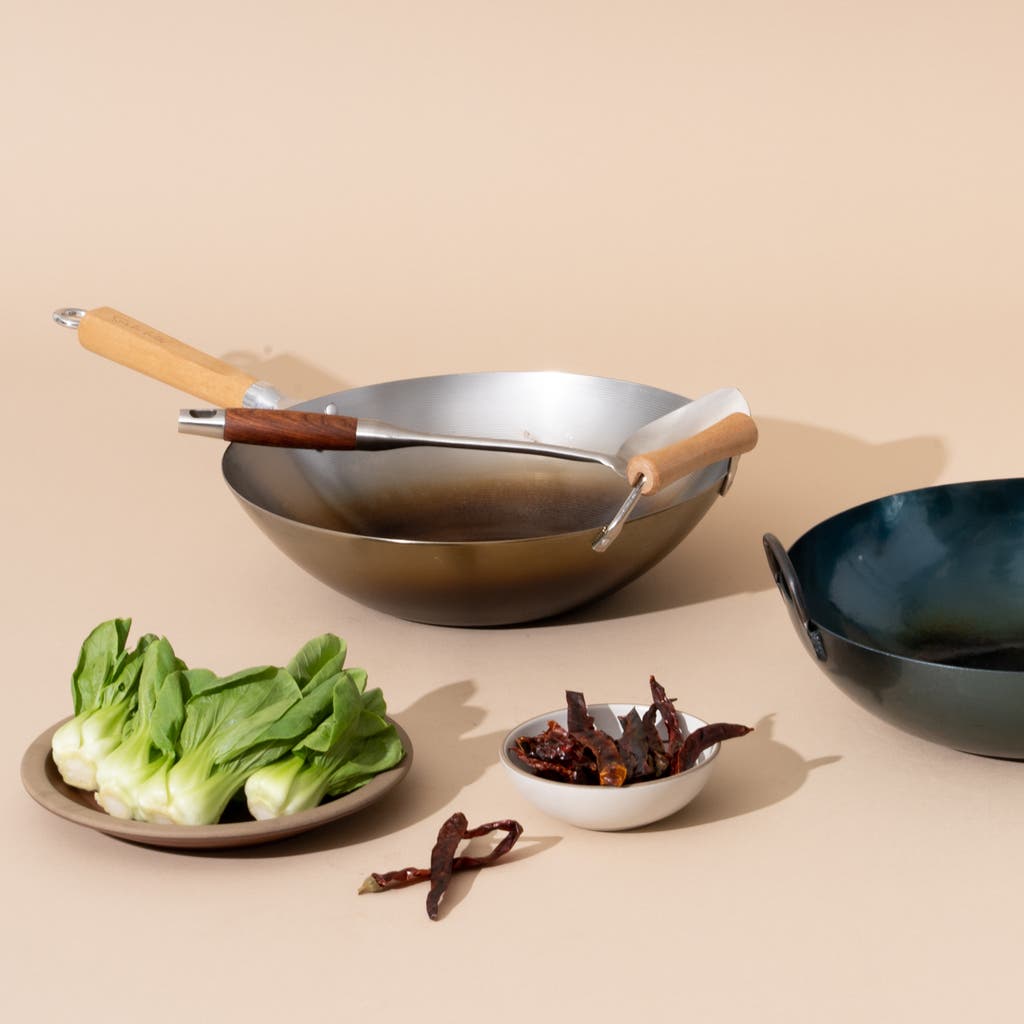
The 5 Best Carbon Steel Woks of 2026
Finding the right wok depends on your setup and cooking style. Based on recent testing from Food & Wine and Serious Eats, here are five excellent carbon steel woks to consider. Each has its strengths, so I’ll highlight what kind of cook would benefit most from each one.
Craft Wok Traditional Hand Hammered Carbon Steel Pow Wok (14-inch): This wok consistently ranks high on lists, and for good reason. Food & Wine praised its responsiveness and even heating. It's hand-hammered, which creates a slightly rough surface that’s ideal for seasoning. It’s a great all-around option, but the 14-inch size might be too large for smaller burners. It comes with a wooden handle and a helper handle, and costs around $130.
Yosukata Carbon Steel Wok Pan (13.5-inch): Serious Eats highlighted this wok for its excellent value and relatively thin gauge, which makes it heat up quickly. It's a good choice for electric or induction cooktops, where maximum heat can be a challenge. The handle is riveted and stays relatively cool. At around $80, it’s a fantastic entry point for home cooks.
The Wok Shop 14-Inch Carbon Steel Round Bottom Wok: This wok is a classic, and it’s particularly well-suited for high-BTU gas stoves. Food & Wine noted its ability to maintain high temperatures, which is essential for achieving wok hei. It requires a bit more skill to use effectively, as it’s round-bottomed and needs to be constantly moved. It's priced around $110.
Macy's Carbon Steel Wok (13.5-inch): This wok stands out for its thicker gauge, which provides excellent heat retention. It's a solid choice for cooks who like to stir-fry large batches of food. Serious Eats found it to be very durable and easy to clean. It’s a bit heavier than some other options, and the handle can get hot. It costs approximately $90.
Joyce Chen Carbon Steel Wok (13.5-inch): If you are looking for something a little different, this wok features a flat bottom and a wooden handle. Food Network found it to be a good all-purpose option for beginners. The flat bottom makes it stable on any cooktop, but it may not get as hot as a round-bottom wok. It's priced around $75.
Featured Products

14-inch flat bottom design for stability on various stovetops · Durable carbon steel construction for excellent heat distribution · Ideal for stir-frying and other high-heat cooking methods
This Ken Hom wok is a reliable and accessible option for home chefs seeking to master stir-fry techniques with its user-friendly flat bottom design.

14-inch flat bottom for stability and compatibility with multiple cooktops · Heavy-duty carbon steel construction for high-heat cooking · Suitable for stir-frying, sautéing, and frying on gas, electric, and induction stoves
The Babish Carbon Steel Wok offers robust construction and versatile stovetop compatibility, making it a solid choice for home chefs exploring high-heat cooking.
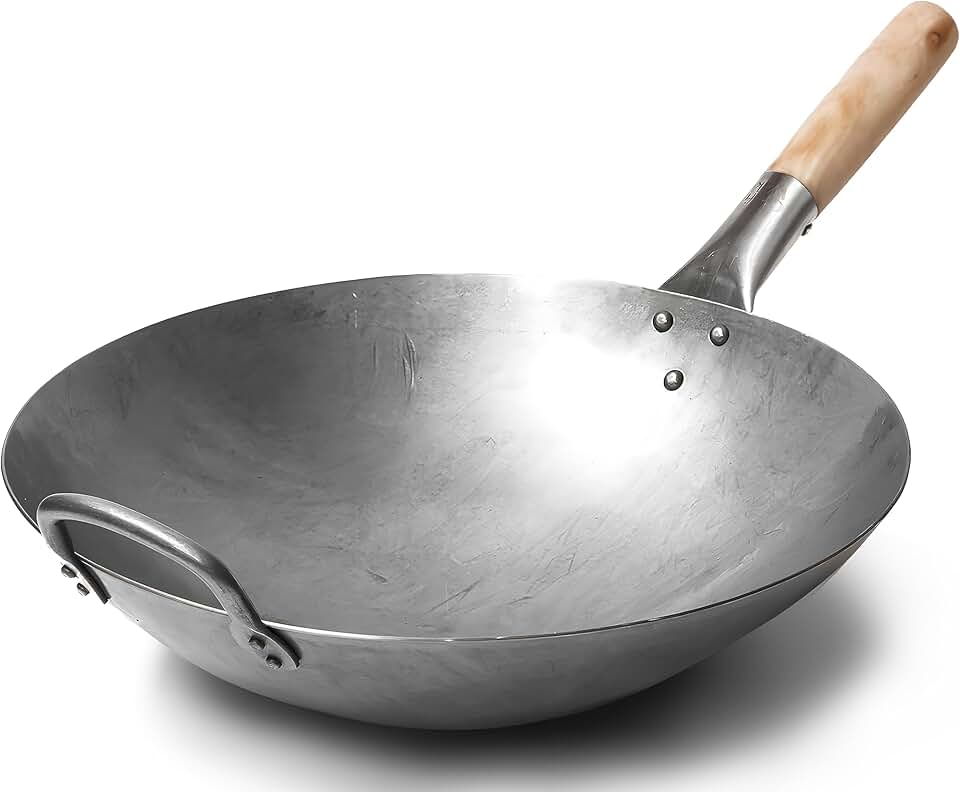
Traditional round bottom 'pow' wok design for authentic stir-frying · Hand-hammered carbon steel for superior heat retention and cooking performance · Includes both a wooden and a steel helper handle for secure grip and control
For those seeking an authentic Chinese cooking experience, this hand-hammered Craft Wok delivers exceptional heat control and traditional performance with its round bottom design.

14-inch size suitable for family-sized stir-fries · Pre-seasoned carbon steel for immediate use and easy maintenance · Classic wok shape designed for efficient heat distribution and tossing
The Joyce Chen Classic Series wok simplifies the entry into authentic wok cooking with its convenient pre-seasoned surface and classic design.
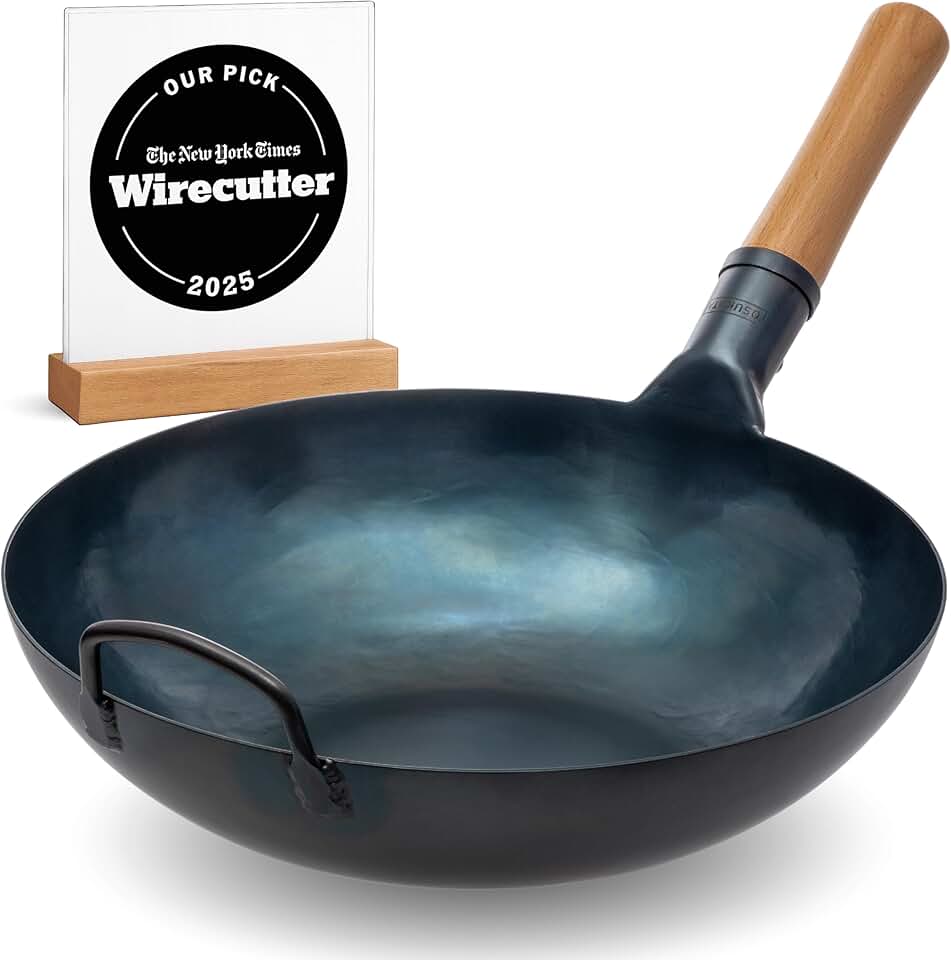
13.5-inch pre-seasoned blue carbon steel for enhanced durability and non-stick properties · Flat bottom design compatible with a wide range of heat sources, including open fire and induction · Versatile for stir-frying, BBQ, grilling, and camping
This YOSUKATA Blue Carbon Steel Wok is an exceptionally versatile and durable option, perfect for home chefs who enjoy diverse cooking methods from stovetop stir-fries to outdoor grilling.
As an Amazon Associate I earn from qualifying purchases. Prices may vary.
Wok Shape & Size: What Matters?
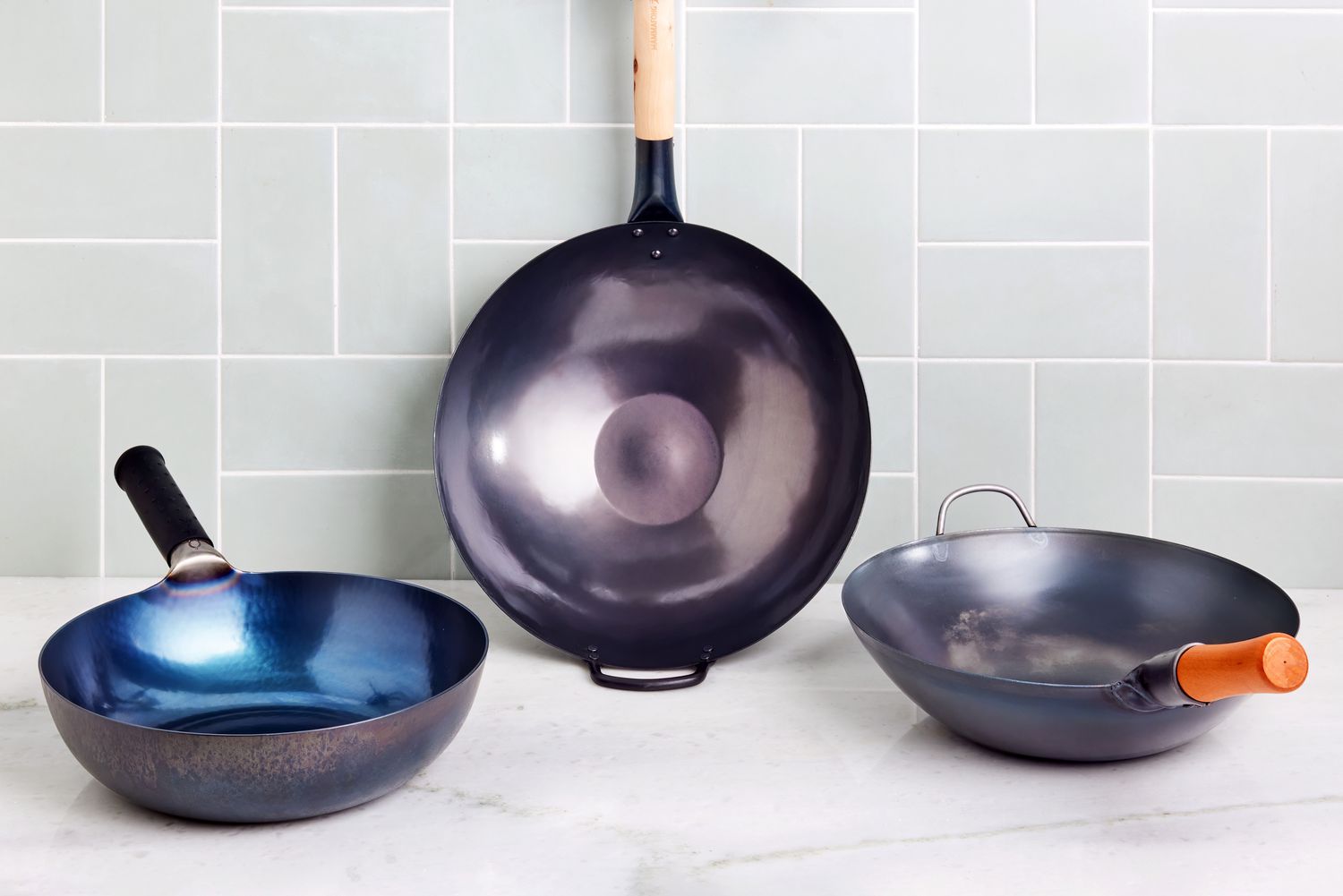
The shape of your wok – round-bottom or flat-bottom – is a fundamental decision. Round-bottom woks are the traditional choice, favored by professional chefs because they concentrate heat in the center, creating intense heat for stir-frying. However, they require a wok ring to sit securely on most Western stoves.
Flat-bottom woks are more stable on electric, induction, and even some gas cooktops. They don’t get quite as hot as round-bottom woks, but they’re much easier to use for beginners. They also tend to be more affordable. It’s a tradeoff between performance and convenience.
Wok gauge, or thickness, also plays a role. A thinner gauge (around 14-16 gauge) heats up faster but is more prone to warping. A thicker gauge (12-14 gauge) retains heat better and is more durable, but takes longer to heat up. For most home cooks, a 14-gauge wok is a good balance.
Size is another important consideration. A 14-inch wok is a good all-around size for a single cook or a small family. It provides enough surface area for stir-frying without being too unwieldy. If you frequently cook for larger groups, you might consider a 16-inch wok. Just be sure your burner can handle the size.
Carbon Steel Wok Comparison: Round-Bottom vs. Flat-Bottom (2026)
| Wok Bottom Type | Cooktop Compatibility | Stability | Heat Distribution | Wok Hei Potential | Ease of Cleaning |
|---|---|---|---|---|---|
| Round-Bottom | Gas cooktops (Excellent), Portable burners (Excellent), Electric/Induction (Poor - requires a wok ring) | Fair - Requires a wok ring for stability on most home cooktops | Excellent - Concentrated heat for efficient cooking | Excellent - Traditional shape maximizes wok hei development | Good - Requires proper seasoning and care to prevent sticking |
| Flat-Bottom | Gas (Good), Electric (Good), Induction (Good) | Excellent - Stable on all standard cooktops | Good - Even heat distribution, though potentially less concentrated than round-bottom | Good - Can achieve wok hei, but may require higher heat and technique | Fair - Flat surface can make food slide around more easily if not properly seasoned |
| Round-Bottom (with Wok Ring) | Gas cooktops (Excellent), Portable burners (Excellent), Electric/Induction (Good - with compatible ring) | Good - Wok ring provides increased stability | Excellent - Similar to traditional round-bottom woks | Excellent - Maintains the benefits of a round-bottom for wok hei | Good - Similar cleaning requirements to a standard round-bottom wok |
| Flat-Bottom (Heavy Gauge) | Gas (Excellent), Electric (Excellent), Induction (Excellent) | Excellent - Very stable due to weight and flat base | Very Good - Heavy gauge steel retains heat well | Good - Achieves good wok hei with sufficient heat | Fair - Can be heavier and more difficult to maneuver during cleaning |
| Round-Bottom (Thin Gauge) | Gas cooktops (Excellent), Portable burners (Excellent), Electric/Induction (Poor - requires a wok ring) | Fair - Lightweight, can be less stable without a ring | Good - Heats up quickly | Excellent - Ideal for developing wok hei due to responsiveness | Good - Easier to clean due to lighter weight |
Illustrative comparison based on the article research brief. Verify current pricing, limits, and product details in the official docs before relying on it.
Handles: Wood, Steel, and Beyond
Wok handles often get overlooked, but they’re crucial for control and comfort. Wooden handles are traditional and stay relatively cool to the touch, even during high-heat cooking. However, they can dry out and crack over time, and they’re not as durable as steel handles.
Steel handles are more durable and offer a modern look. They can get very hot, so you’ll need to use a pot holder or oven mitt. Look for handles that are securely welded or riveted to the wok body. Riveted handles are generally more secure than welded ones.
Helper handles – the small handle on the opposite side of the wok – can be incredibly useful for lifting and maneuvering the wok, especially when it’s full of hot food. Not all woks have helper handles, but if you’re a beginner, I recommend looking for one that does.
The shape and grip of the handle are also important. Choose a handle that feels comfortable in your hand and provides a secure grip, even when wet. A well-designed handle will make all the difference in your cooking experience.
Seasoning Your Wok: A Step-by-Step Guide
Seasoning a carbon steel wok isn’t difficult, but it does require some patience. The goal is to create a layer of polymerized oil – a hard, non-stick patina – on the surface of the wok. This takes time and repeated use, but it’s the key to a great cooking experience.
Start by thoroughly cleaning the wok with hot, soapy water to remove any manufacturing residue. Dry it completely. Then, heat the wok over high heat until it turns blue – this burns off any remaining coatings. Be sure to ventilate your kitchen well during this step! Next, add about a tablespoon of high smoke point oil (peanut, vegetable, or canola oil work well) to the wok.
Using a paper towel, rub the oil all over the inside surface of the wok, including the sides. Heat the wok over high heat until the oil starts to smoke. Continue heating and rubbing the oil until the wok turns a golden-brown color. Repeat this process several times, allowing the wok to cool slightly between each coat. The more coats you apply, the better the seasoning will be.
Don't be discouraged if the seasoning isn’t perfect at first. It will continue to improve with use. After each cooking session, simply rinse the wok with hot water and dry it thoroughly. Avoid using soap, as it can strip the seasoning. Seasoning is an ongoing process, not a one-time event.
Wok Care & Maintenance
Proper care is essential for maintaining your carbon steel wok and preserving its seasoning. After each use, rinse the wok with hot water and a soft sponge. Avoid using soap, as it can remove the seasoning. If food is stuck, you can gently scrape it off with a wooden spatula.
Dry the wok immediately and thoroughly to prevent rust. You can place it over low heat for a few minutes to ensure it’s completely dry. If rust does appear, don’t panic. Scrub it off with steel wool and re-season the wok.
Store your wok in a dry place. Avoid stacking other pans on top of it, as this can scratch the seasoning. A dedicated wok storage rack is a good investment. A little care goes a long way in preserving your wok’s performance.
Remember, a carbon steel wok isn’t like a non-stick pan. It requires a little more attention, but the superior cooking performance and flavor development are well worth the effort.
Wok Recipes to Get You Started
Now that you have a well-seasoned wok, it’s time to put it to use! Here are a few simple recipes to get you started. These recipes focus on technique and highlight the wok’s ability to deliver that signature wok hei.
Chicken and Broccoli Stir-Fry: Marinate 1 lb of diced chicken in soy sauce, cornstarch, and ginger. Stir-fry the chicken in hot oil until browned. Add broccoli florets and a sauce made from soy sauce, oyster sauce, and sesame oil. Cook until the broccoli is tender-crisp. Serve over rice.
Garlic Shrimp: Toss 1 lb of peeled and deveined shrimp with minced garlic, soy sauce, and a pinch of red pepper flakes. Stir-fry in hot oil until the shrimp are pink and cooked through. Garnish with chopped green onions.
Vegetable Lo Mein: Stir-fry your favorite vegetables (carrots, cabbage, bell peppers, snow peas) in hot oil. Add cooked lo mein noodles and a sauce made from soy sauce, oyster sauce, and sesame oil. Toss to combine and serve immediately.
More Wok Recipes
- Craft Wok - Explore classic stir-fries and noodle dishes with this popular, affordable option.
- Yosukata Carbon Steel Wok - A well-regarded wok known for its responsiveness and even heating.
- Macy's Carbon Steel Wok - Macy's offers several carbon steel woks, including options from brands like KitchenAid.
- Joyce Chen Pro Chef Flat Bottom Wok - A flat-bottomed wok ideal for induction cooktops and easier stability.
- Souperb Carbon Steel Wok - A lightweight and versatile wok, often praised for its ease of seasoning.
- The Wok Shop 14-Inch Carbon Steel Pow Wok - A traditional, round-bottomed wok favored by experienced wok chefs.
- Amazon Basics Carbon Steel Wok - A budget-friendly option for beginners looking to try wok cooking.
No comments yet. Be the first to share your thoughts!