

Why seasoning matters for carbon steel
Seasoning a wok is not about applying a coating; it is about building a surface. When you heat oil past its smoke point, the oil molecules break down and bond directly to the carbon steel. This chemical reaction, called polymerization, turns liquid oil into a hard, plastic-like layer that becomes part of the metal itself.
This bonded layer is what creates a natural non-stick surface. Unlike Teflon, which sits on top and wears off, a polymerized patina grows thicker and more durable with every meal. The surface becomes smoother, darker, and more hydrophobic, meaning water and food slide right off.
Gather your wok seasoning supplies
You only need a handful of items to build a proper patina. The goal is to strip away factory coatings and polymerize a thin layer of oil onto the metal. Keep these essentials within arm's reach before you turn on the heat.
The Hardware
- Steel wool or abrasive scrubber: Use fine-grade steel wool (0000) to scour the wok clean. Avoid dish soap with heavy moisturizers, which can leave a residue that interferes with seasoning.
- Tongs or a wok chuan: Long-handled tongs or a traditional bamboo wok chuan let you grip the hot metal safely. You will need to tilt and rotate the wok to coat every angle.
- Paper towels or lint-free cloths: You need something to wipe away excess oil and apply new layers. Paper towels are convenient but can shred; lint-free cotton cloths are more durable for repeated use.
The Oil
Choosing the right oil is the most critical decision. You need a fat with a high smoke point that can withstand intense heat without breaking down into gummy residues.
- Grapeseed oil: Widely recommended by manufacturers like Sub-Zero and Wolf for its neutral flavor and high smoke point (~420°F).
- Flaxseed oil: Creates a very hard, durable layer but can be brittle over time. Best for the initial seasoning coat.
- Refined avocado or sunflower oil: Excellent high-heat alternatives if grapeseed isn't available. Avoid extra virgin olive oil or butter, which will burn and smoke excessively.
Arrange your steel wool, chosen oil, tongs, and paper towels on a clear, heat-safe surface. Ensure your ventilation is on before proceeding.
Use the steel wool to scrub the entire interior surface. Remove any factory-applied anti-rust coatings or manufacturing oils. Rinse and dry thoroughly.
Pour a small amount of high-smoke-point oil onto a paper towel. Wipe the entire interior and exterior of the wok, ensuring an even, thin coat.
Scrub the factory coating off
New carbon steel woks arrive with a thick layer of protective oil. This coating prevents rust during shipping and storage, but it will make your wok sticky and bitter if you try to cook with it directly. You need to strip it away completely before building your first layer of seasoning.
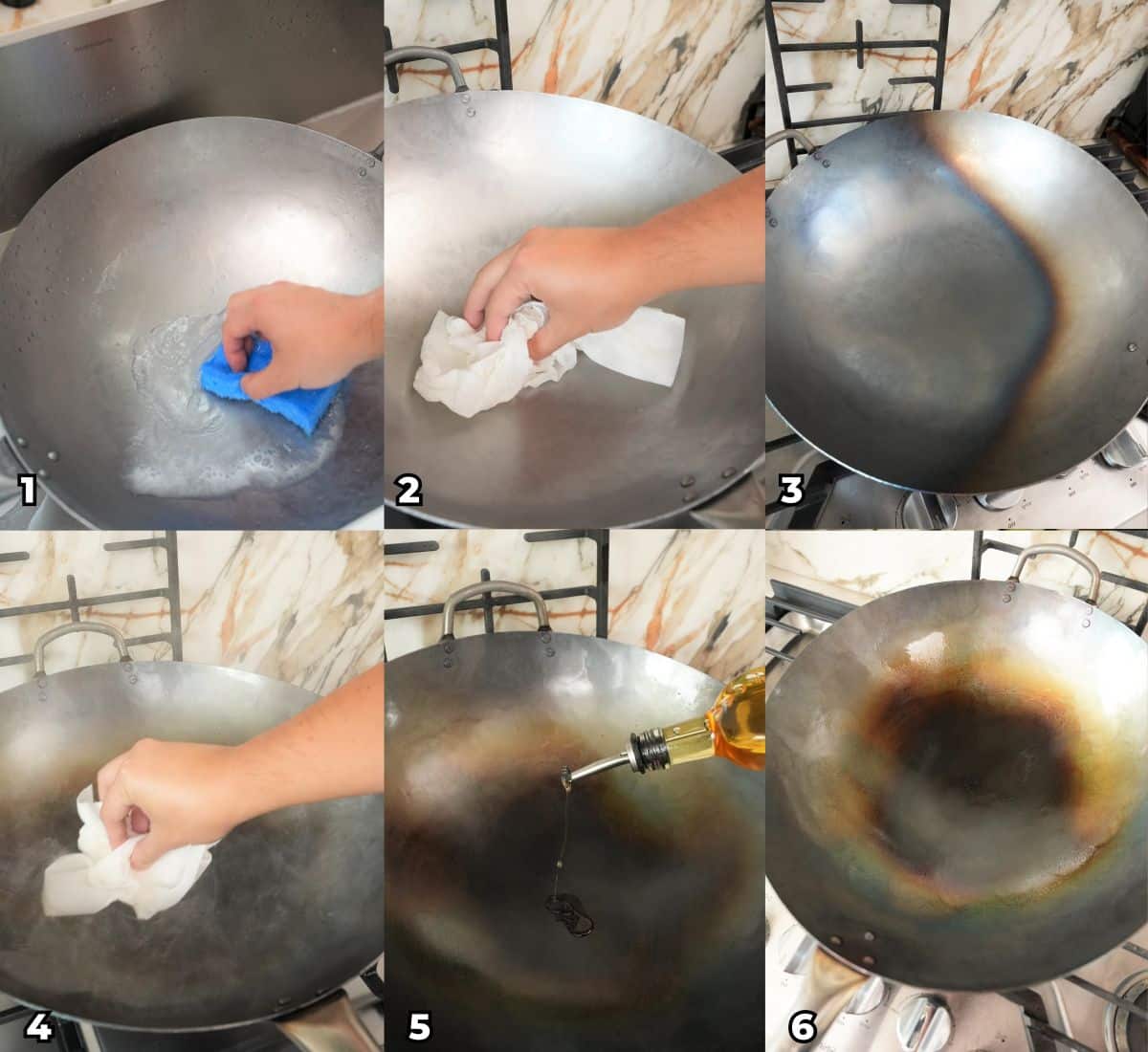
Fill your sink with hot water and add a generous squirt of dish soap. Use a stiff sponge or a brush to wash the entire interior and exterior of the wok. Don't worry about damaging the metal; this oil is superficial and designed to be removed. Rinse thoroughly until the water runs clear and the surface feels squeaky clean, not slick.
Your wok should now look like bare, dull gray metal. It is ready for the heat phase, where you will begin building the patina that makes it non-stick.
Heat the Wok Until It Turns Blue
Before you can build a lasting patina, you need to clean the raw metal. New carbon steel woks arrive with a factory-applied oil or wax coating designed to prevent rust during shipping. This layer is not food-safe for cooking and will burn off unevenly if you skip this step. The process of heating the wok until it changes color is called "blueing." It burns away these impurities and creates a uniform oxide layer that helps the seasoning adhere properly.
Place your clean, dry wok on the stove over high heat. If you are using a gas range, you can use a wok ring or simply let the flame lick up the sides. For electric or induction cooktops, you may need to move the wok around to ensure even heating. As the metal heats up, you will see the surface color shift from silver to a pale yellow, then to a light brown, and finally to a deep, uniform blue. This transformation indicates that the surface oxide layer is forming correctly.
Let the wok cool completely before moving to the next step. Do not rush this process by running water over the hot metal, as the sudden temperature change can warp the steel. Once cooled, the wok is ready for the initial oil layer.
Apply oil and smoke the surface
The "long yau" technique builds a hard, non-stick patina by forcing oil to bond with the metal through heat. This process, known as polymerization, turns liquid oil into a solid plastic-like coating that protects the steel from rust and food sticking.
1. Apply a thin layer of oil
Use a paper towel or cloth to rub a high-smoke-point oil (like flaxseed, grapeseed, or canola) over the entire interior surface. The layer must be invisible. If you can see shiny puddles or feel wet spots, you have applied too much. Excess oil will turn sticky and gummy rather than hardening into a smooth patina.
2. Heat until the oil smokes
Place the wok on high heat. As the temperature rises, the oil will begin to smoke. This is the visual cue that polymerization is happening. The smoke indicates that the oil molecules are breaking down and bonding to the steel lattice. Keep the wok on the heat until the smoking subsides slightly and the surface color begins to darken.
3. Cool and repeat
Turn off the heat and let the wok cool completely. The surface will look darker, often shifting from silver to bronze or black. Repeat the oiling and smoking process two to three times. Each layer adds thickness and durability to the seasoning. Once the surface is uniformly dark and matte, the initial seasoning is complete.
Repeat the oiling cycle three times
One thin coat of oil is rarely enough to build a durable, non-stick surface. Think of seasoning like building a wall: a single brick won’t hold up, but layering bricks creates something solid. You need multiple thin layers of polymerized oil to form that characteristic black patina.
Follow this sequence for the best results:
Use a paper towel to apply a tiny amount of high-smoke-point oil (like flaxseed or grapeseed) to the entire interior. Wipe it out aggressively with a clean towel. The wok should look almost dry, not wet. Any visible pooling will turn sticky and gummy rather than hardening into a smooth coating.
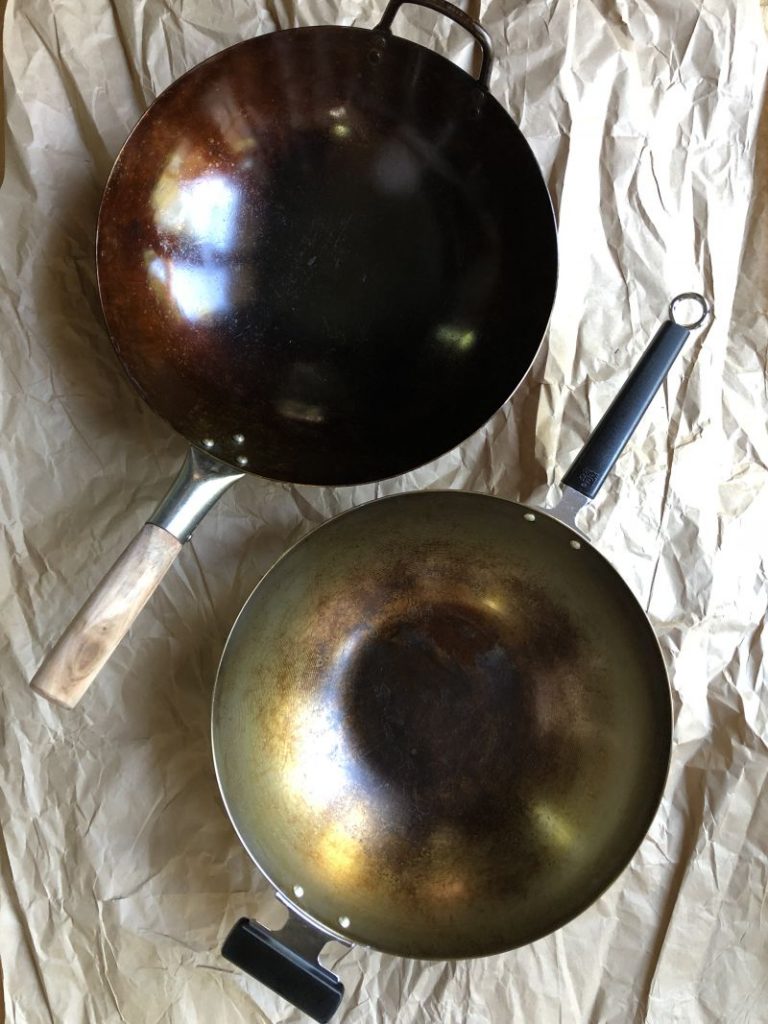
Return the wok to high heat. Watch for the oil to begin smoking lightly. This is the polymerization process in action, where the oil bonds to the steel. Rotate the wok to ensure every inch gets heated evenly.
Let the wok cool completely. The surface will darken slightly. Repeat the oiling and heating process two or three more times. Each cycle adds depth to the patina, making it more resistant to rust and sticking.
As you repeat this cycle, the wok will transition from a dull gray to a deep, glossy black. This visual change is your proof that the seasoning is building correctly.
Common seasoning mistakes to avoid
The most common mistake is applying too much oil. Excess oil cannot polymerize properly and will turn sticky, gummy, and tacky. To avoid this, always wipe the wok with a clean paper towel after applying oil until the surface looks nearly dry. Another frequent error is skipping the initial scrubbing of factory coatings, which prevents the seasoning from adhering to the metal. Finally, avoid using cold water on a hot wok, as the thermal shock can warp the steel.
Maintain your wok patina over time
Your wok’s non-stick surface is a living layer, not a permanent coating. It builds slowly and fades quickly if neglected. Treat it like a cast iron skillet: consistent, low-effort care keeps it black and slick.
The secret to seasoning a wok is to scrub, burn, oil, and smoke. That rhythm applies to maintenance, too. After every meal, follow this four-step loop to keep the patina intact.
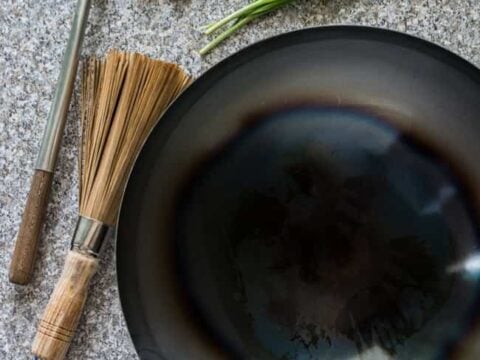
The Daily Maintenance Loop
- Quick Wash: Use hot water and a soft sponge or brush. Avoid soap if possible, but a drop of mild detergent won’t hurt if you rinse well. Never use steel wool; it strips the seasoning.
- Dry Thoroughly: Water is the enemy of carbon steel. Wipe the wok completely dry with a towel, then place it on the stove over low heat for 30 seconds to evaporate any hidden moisture.
- Oil Thinly: While the wok is still warm (not smoking), apply a few drops of neutral oil. Use a paper towel to spread it across the entire interior surface, then wipe away any excess. You should barely see a shine.
- Heat Briefly: Turn the heat to medium-high for 10–15 seconds until you see a faint wisp of smoke. This polymerizes the oil into the metal, reinforcing the non-stick layer.
-
Rinse with hot water and soft sponge
-
Dry with towel and heat on stove
-
Apply thin layer of neutral oil
-
Heat briefly to smoke point
No comments yet. Be the first to share your thoughts!