

Why seasoning matters for carbon steel
Raw carbon steel is porous. Without protection, that exposed metal reacts instantly with moisture and oxygen, turning your wok a mottled orange-brown within hours. Seasoning solves this by creating a polymerized layer of hardened oil that fills those microscopic pores. This layer acts as a barrier, providing the non-stick properties you need for stir-frying and offering corrosion resistance against rust.
Think of seasoning as building a patina, similar to how leather breaks in or cast iron improves with use. It is not a one-time event but a cumulative process. Each time you cook with oil, you add to the patina, making the surface smoother and more naturally non-stick over time. A well-seasoned wok develops a dark, slick finish that food releases from with minimal effort.
The goal is to transform reactive metal into a stable cooking surface. This polymerized coating is what allows you to cook sticky foods like eggs or fish without them adhering to the pan. It also makes cleaning easier, as food scraps slide off rather than baking onto the metal. Protecting this layer is the single most important habit for keeping a carbon steel wok in good condition.
Gather your tools and oils
Before heating the wok, assemble a small kit of essentials. You need a steel wool pad for scrubbing, paper towels for wiping, and tongs to handle the hot metal safely. A soft cloth works for the final polish, but paper towels absorb excess oil more effectively during the initial seasoning layers. Keep a bottle of high smoke-point oil nearby so you can apply it quickly.
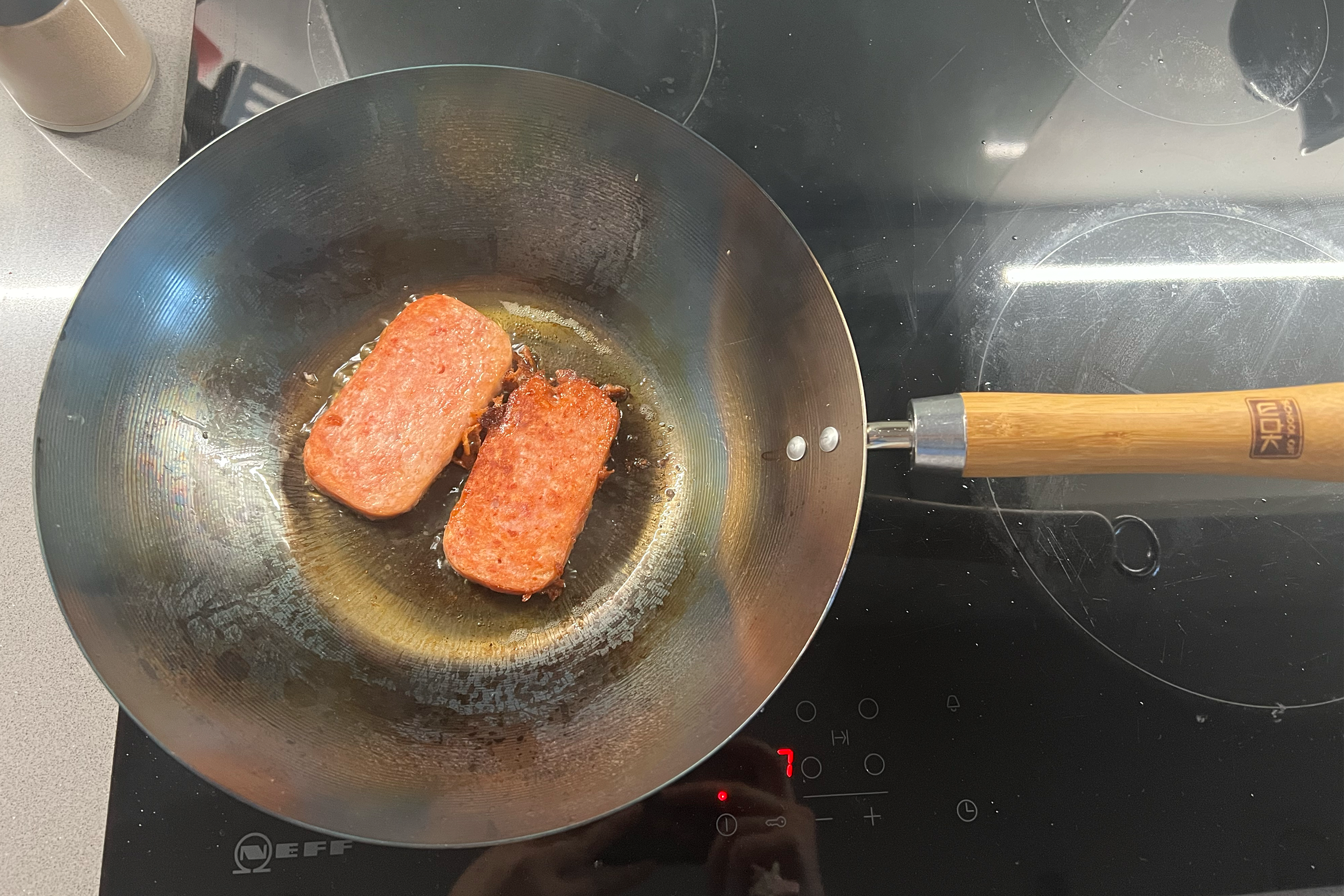
Seasoning requires oil that can polymerize without burning. Grapeseed, canola, and peanut oils are ideal because they have high smoke points. Avoid butter, extra virgin olive oil, or flaxseed oil; they burn too quickly or create a sticky, uneven finish rather than a hard, non-stick surface.
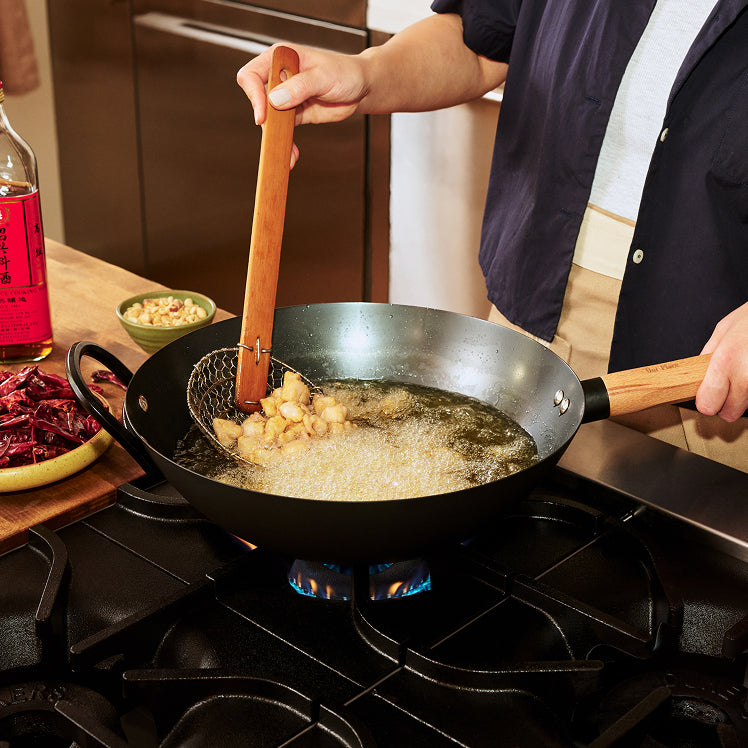
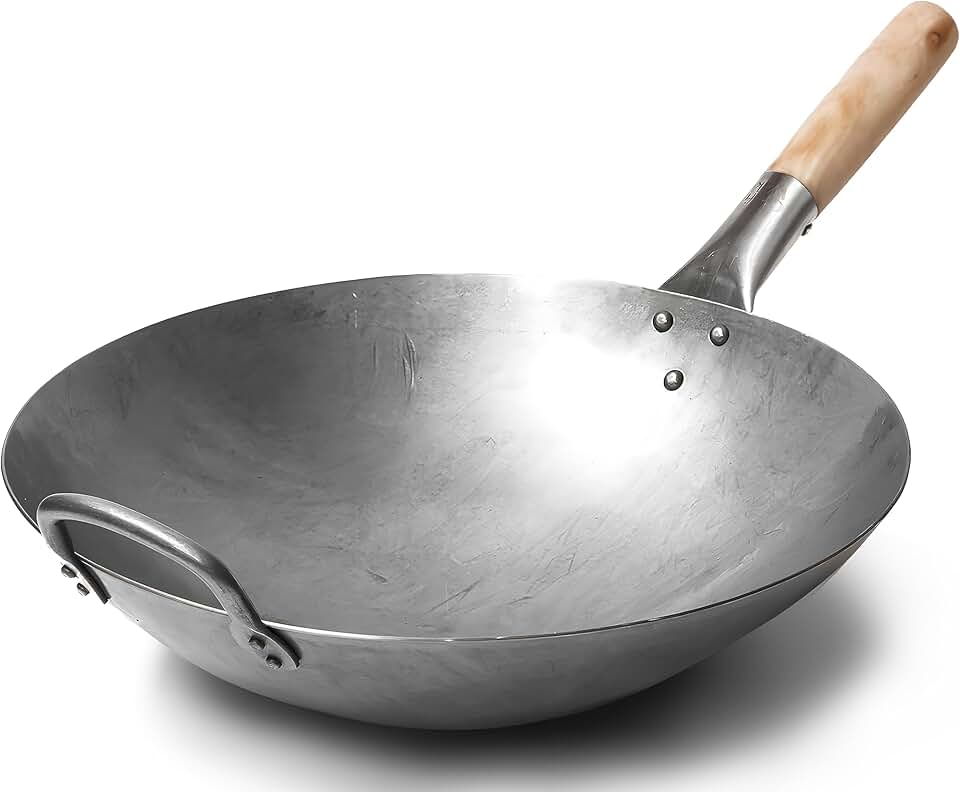

![Pompeian 100% Grapeseed Oil - 68 fl oz (2 L) - Value Size | Grapeseed Oil for High Heat Cooking - Light and Subtle Flavor for Deep Frying and Baking Desserts - High Smoke Point [Amazon-developed Certification] Compact by Design](https://m.media-amazon.com/images/I/61YzxXtsGcL._AC_UL960_QL65_.jpg)
As an Amazon Associate, we may earn from qualifying purchases.
Step-by-step initial seasoning process
Seasoning a carbon steel wok is less about coating it and more about chemically bonding oil to the metal through heat. This initial process removes the protective wax coating from the factory and creates a dark, polymerized layer that provides natural non-stick properties. Follow this sequence to build a durable foundation for your wok.
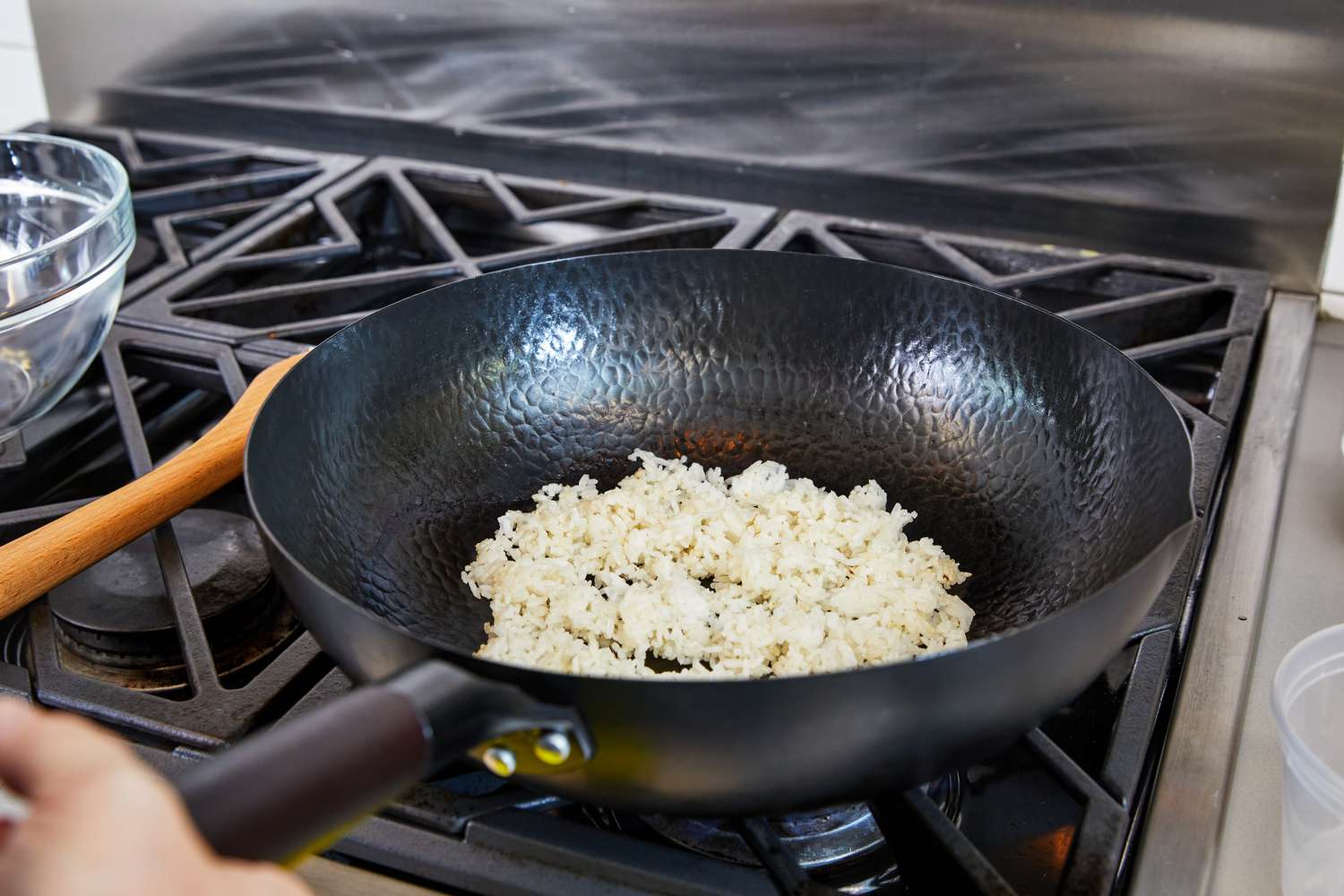
New carbon steel woks arrive coated in a thin layer of industrial wax to prevent rust during shipping. This wax must be removed before seasoning, or the oil will not bond to the metal. Fill your sink with hot water and dish soap, then scrub the entire wok vigorously with a stiff brush or abrasive sponge. Repeat this process until the water runs clear and the metal feels raw and squeaky. Dry it immediately and thoroughly with a towel to prevent flash rusting.
Place the clean, dry wok on your stove burner set to high heat. As the metal heats up, it will change color from silver to a pale yellow, then to a deep purple, and finally to a dark blue. This oxidation process, known as "bluing," helps stabilize the metal and opens the pores for better oil adhesion. Rotate the wok constantly to ensure even heating across the entire surface, including the bottom. Once the wok is uniformly blue, remove it from the heat and let it cool slightly until it is warm to the touch but not hot enough to burn you.
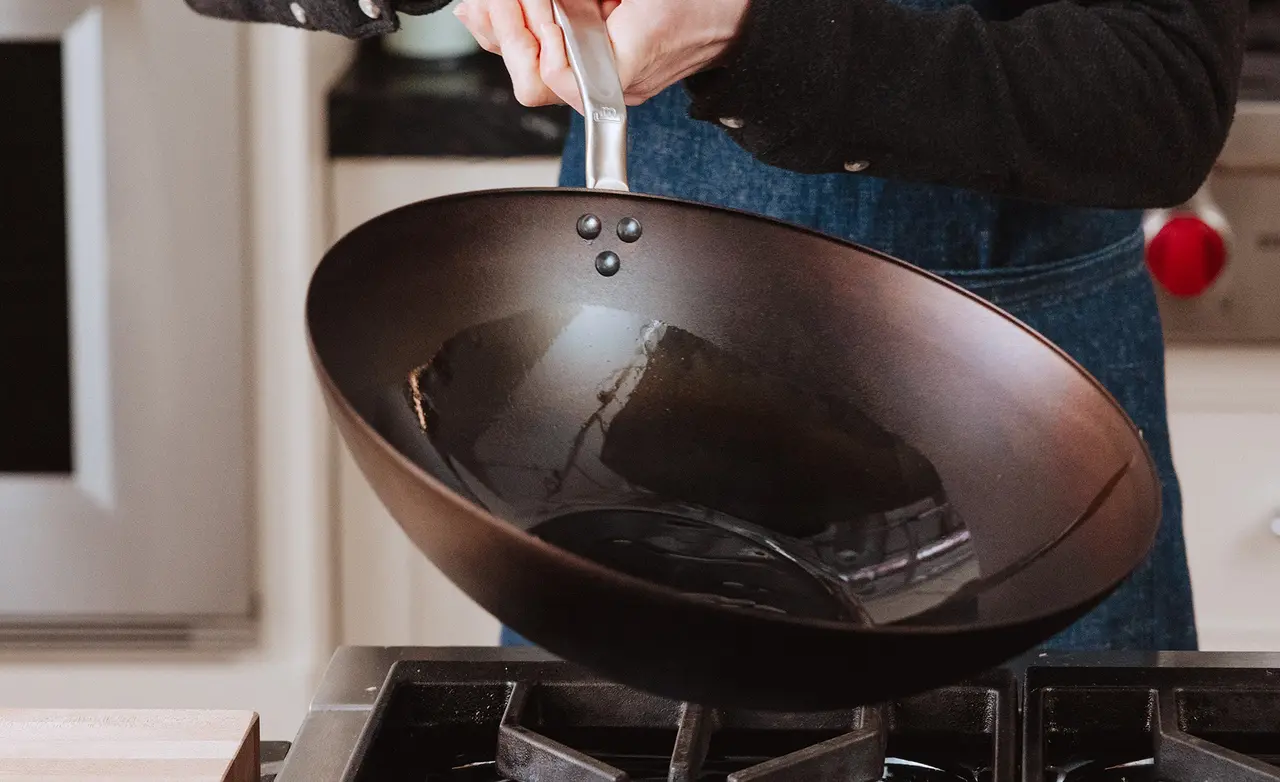
Turn the heat back on to medium-low. Add about one tablespoon of a high-smoke-point oil, such as flaxseed, grapeseed, or vegetable oil, to the wok. Use a paper towel or cloth to spread the oil evenly over the entire interior surface, including the sides. It is critical to apply the oil thinly; if the layer is too thick, it will become sticky rather than polymerizing into a hard shell. After coating the inside, wipe out any excess oil with a clean paper towel until the surface looks almost dry.
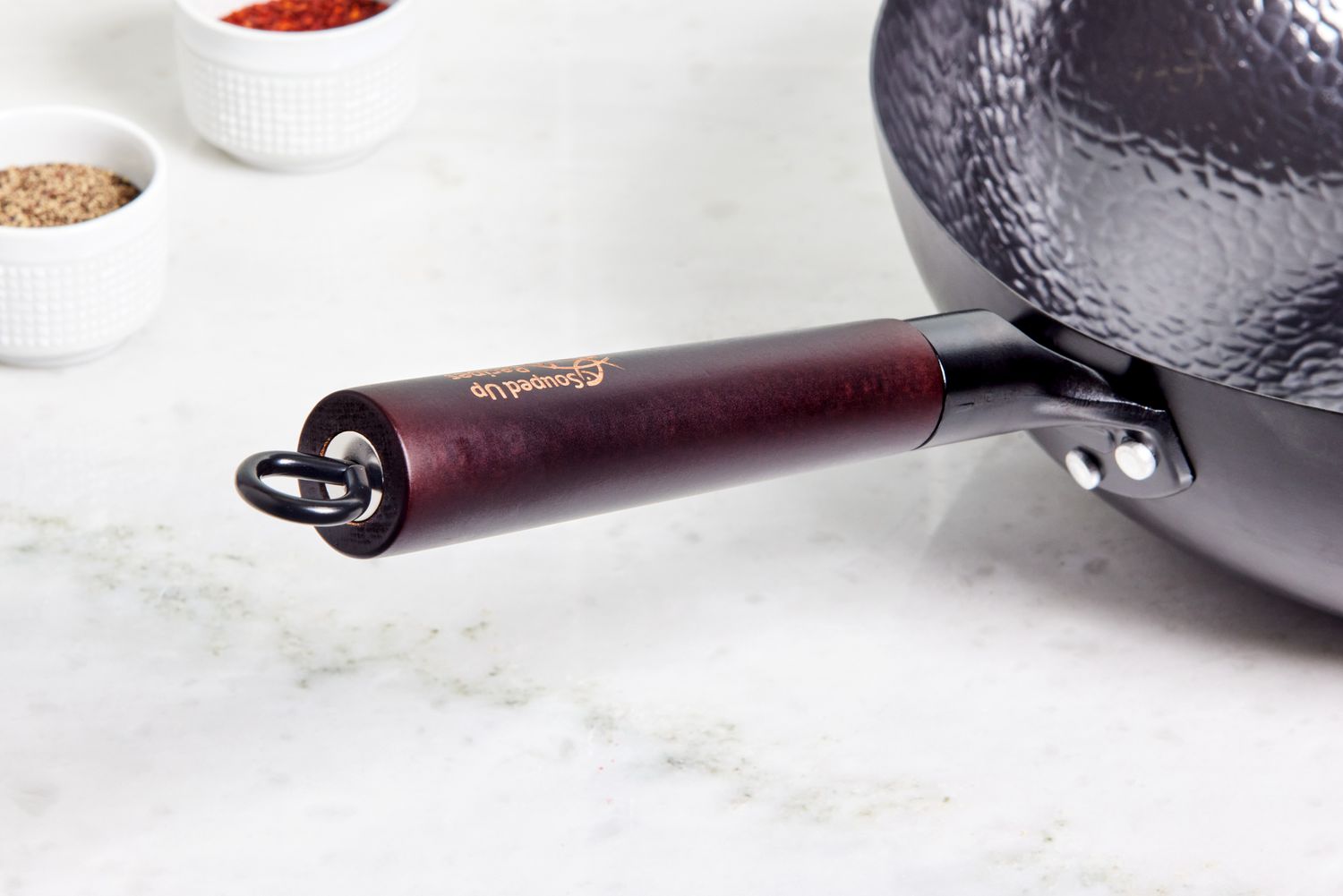
Return the oiled wok to the heat. The oil will begin to smoke and darken as it undergoes polymerization, turning from a liquid into a solid, non-stick coating. Keep the wok on the burner, rotating it occasionally to ensure the heat reaches all areas. Continue heating until the smoking subsides and the surface turns a dark brown or black. This process typically takes 10 to 15 minutes. Turn off the heat and let the wok cool completely on the stove.
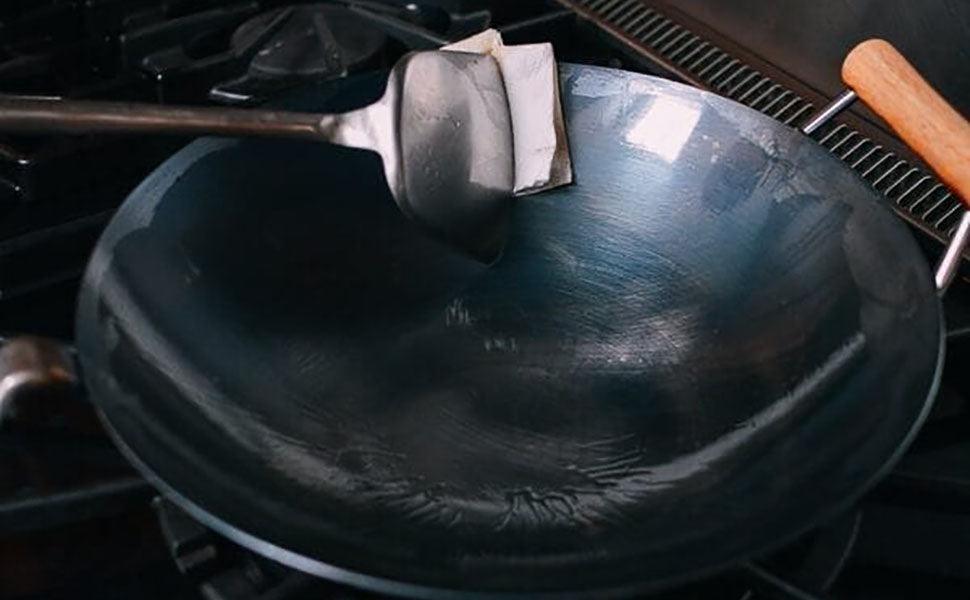
A single layer of seasoning is fragile and may peel during initial use. For a more durable non-stick surface, repeat the oiling and heating process two or three more times. Each cycle adds another layer of polymerized oil, building up a thicker, more resilient coating. Once you are satisfied with the darkness and smoothness of the finish, your wok is ready for cooking. Avoid using soap for the first few weeks to allow the seasoning to harden further through use.
Building patina through regular cooking
The initial seasoning layer is merely a foundation, not the final destination. Think of the first coat as a primer paint job; it protects the raw metal, but the true non-stick surface comes from the polymerization of fats during daily cooking. Every time you stir-fry with oil, the heat bonds those lipids to the carbon steel, gradually thickening the patina into a hard, dark, slick finish that repels food naturally.
This process happens organically if you cook frequently. If you use your wok several times a week, you will notice the color shifting from silver to bronze, then to a deep, glossy black. This is the patina building up. You do not need to perform complex rituals between meals. Instead, focus on proper cleaning and a light protective coat afterward.
After each use, wash the wok with hot water and a soft brush or sponge. Avoid harsh abrasives that strip the developing layer. Dry it completely over low heat to prevent rust, then wipe a thin film of oil across the surface. This daily maintenance reinforces the non-stick properties and keeps the wok in prime condition.
A simple routine keeps the patina healthy:
- Wash with hot water and a soft sponge.
- Dry thoroughly over low heat.
- Apply a light coat of oil before storing.
-
Wash with hot water and a soft sponge
-
Dry thoroughly over low heat
-
Apply a light coat of oil before storing
Common mistakes that ruin your wok
Even a well-seasoned carbon steel wok can lose its non-stick patina if you treat it like a stainless steel pan. The biggest barrier to a good wok is the lingering belief that soap is forbidden. This is a myth. Modern dish soap does not contain lye, the harsh chemical that strips seasoning. In fact, a small amount of mild detergent is the best way to remove grease and food residue without damaging the polymerized oil layer. The real danger lies in what follows the wash.
Never soak your wok in water. Carbon steel is essentially a sponge for moisture. Leaving it submerged, even for a few minutes, allows water to seep into the microscopic pores of the metal. This leads to immediate rusting, especially if you live in a humid climate. After washing, dry the wok immediately on the stove over low heat. Use a towel to wipe away visible water, then let the residual heat evaporate the rest. This step is non-negotiable for maintaining your seasoning.
Avoid abrasive cleaners and steel wool unless you are starting over. Scrubbing with harsh pads strips away the hard, blackened polymerized oil that gives your wok its non-stick surface. If food sticks, use kosher salt and a paper towel to scrub the surface gently. The salt acts as a mild abrasive that lifts burnt bits without stripping the seasoning. Reserve steel wool only for deep cleans or when re-seasoning from scratch.
Finally, never store your wok without a thin layer of oil. Once the wok is dry and warm, apply a few drops of neutral oil to the interior and wipe it around with a paper towel. This creates a protective barrier against humidity. Store the wok in a dry place, and if you live in a particularly damp area, consider placing a paper towel inside to absorb excess moisture. These small habits prevent rust and keep your carbon steel wok ready for high-heat cooking.
Frequently asked questions about wok care
Seasoning a wok is less about memorizing rigid rules and more about understanding how polymerized oil creates a non-stick surface. Here are the most common questions we get about maintaining that layer.
Helpful gear
Use these product recommendations as a starting point, then choose the size, material, and price point that fit how you actually use the gear.
As an Amazon Associate, we may earn from qualifying purchases.
No comments yet. Be the first to share your thoughts!