

Why carbon steel beats other metals
Carbon steel is the undisputed standard for home wok cooking, offering a balance of heat responsiveness and durability that other materials simply cannot match. Unlike stainless steel, which heats unevenly and struggles to maintain the intense temperatures needed for proper stir-frying, carbon steel conducts heat rapidly and responds instantly to adjustments in flame. This responsiveness allows you to sear vegetables quickly without steaming them, preserving their crisp texture and vibrant color.
The material’s ability to build a natural nonstick surface through seasoning is another major advantage. As you cook, polymerized oil fills the microscopic pores of the metal, creating a slick, easy-to-clean surface that improves with use. This natural patina is superior to factory-applied coatings, which degrade over time and can release harmful fumes if subjected to the high heat required for wok cooking.
Skip nonstick woks. The high heat required for proper stir-frying will degrade the coating and release harmful fumes.
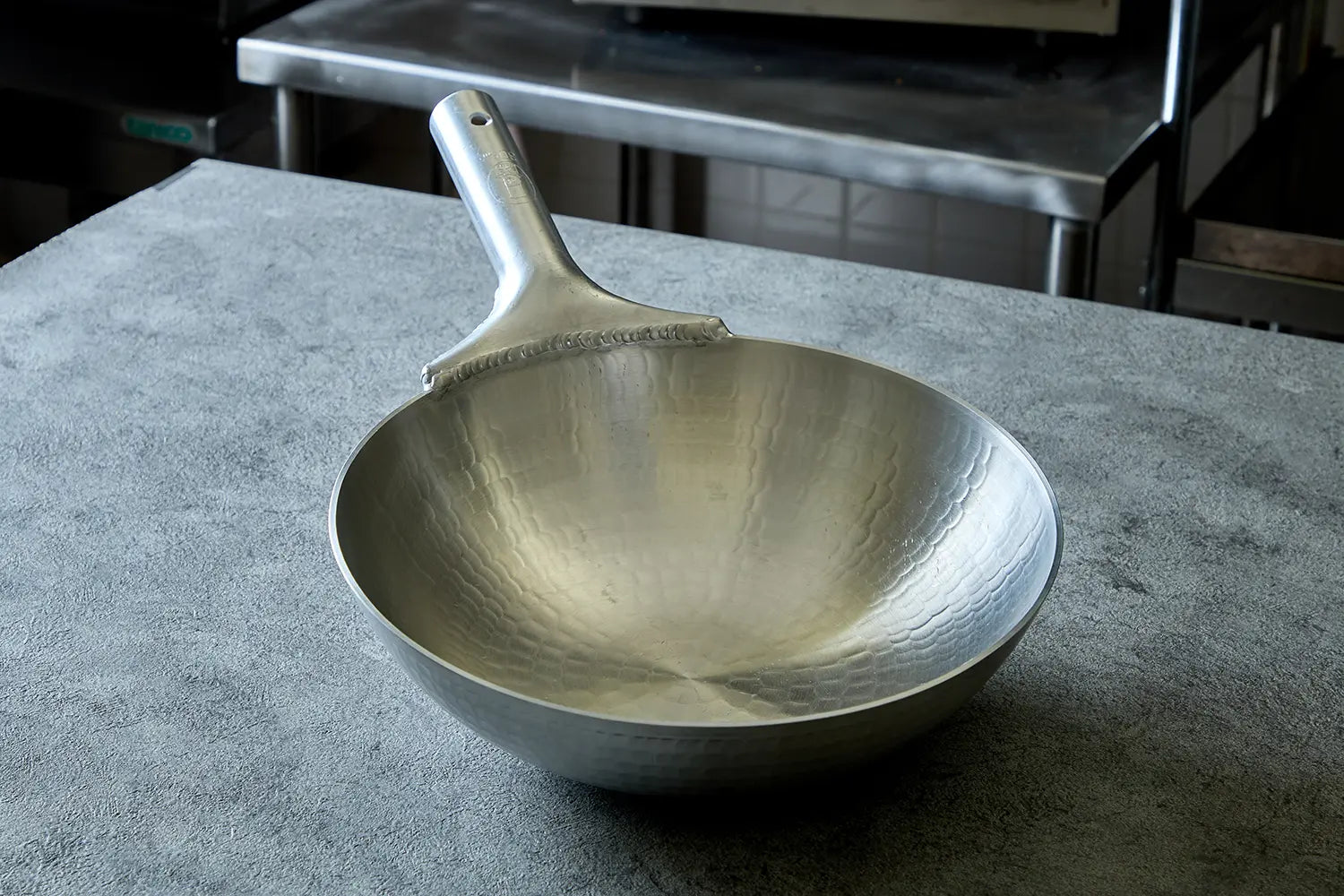
While cast iron retains heat well, it is often too heavy for the tossing and turning techniques that define wok cooking. Carbon steel, typically found in 14- to 16-gauge thicknesses, provides enough mass to maintain temperature during cooking while remaining light enough to maneuver with one hand. Look for a 14-inch flat-bottomed model with a long handle and a helper handle for stability and control.
Pick the right size and shape for your stove
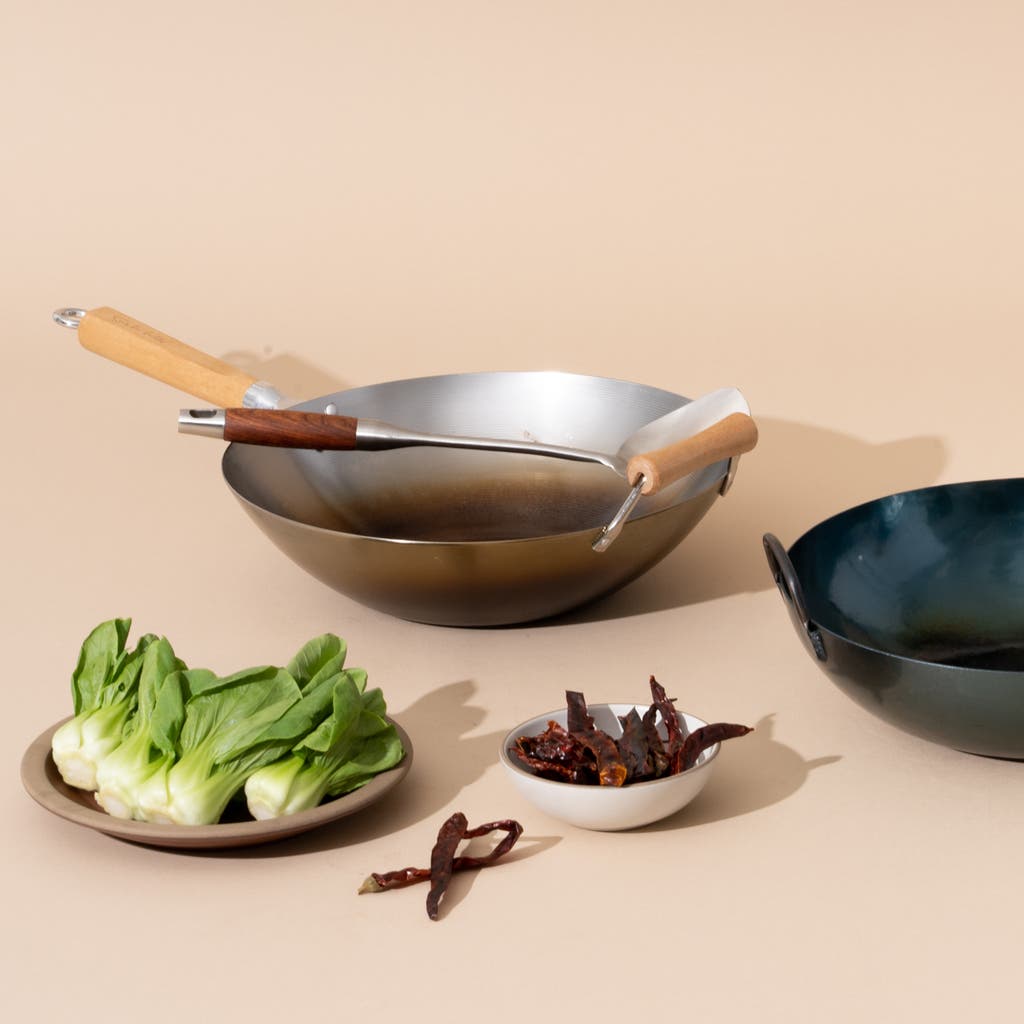
Choosing the correct wok dimensions and base shape is the most critical step in setting up a functional home kitchen. A mismatch between your cookware and your heat source results in uneven cooking, dangerous instability, or simply a wok that won’t fit on your burners. For most home cooks, carbon steel remains the standard material because it heats quickly and develops a natural nonstick patina over time.
Diameter: 12 to 14 Inches
The ideal diameter for a home wok is between 12 and 14 inches. This size provides enough surface area to sear vegetables and proteins without overcrowding, which is essential for achieving the high-heat char known as wok hei. Smaller woks (10-11 inches) are difficult to toss and often fail to distribute heat evenly across the center. Larger woks (16+ inches) require commercial-grade gas burners to reach the necessary temperatures and are generally too heavy for daily handling.
Flat vs. Round Base: Match Your Cooktop
The shape of the wok’s base determines which stoves it can safely sit on. Round-bottomed woks are traditional and designed for wok rings or open-flame gas burners, where the flame curls up around the curved steel. Flat-bottomed woks are engineered for modern electric, induction, and glass-ceramic cooktops. They provide a stable, flat surface that maximizes contact with the heating element, ensuring consistent heat transfer.
Comparison of Wok Bases
| Feature | Flat-Bottomed Wok | Round-Bottomed Wok |
|---|---|---|
| Stove Compatibility | Electric, Induction, Gas, Ceramic | Gas (with wok ring), Open Flame |
| Stability | High; sits securely without rings | Low; requires a wok ring or stand |
| Heat Distribution | Even contact with flat heating elements | Concentrated heat at the bottom curve |
| Storage | Stacks easily; fits in standard cabinets | Requires vertical storage or a wok ring |
| Tossing Ease | Slightly heavier; stable for stir-frying | Lighter; easier to flip ingredients |
Handle Style and Maneuverability
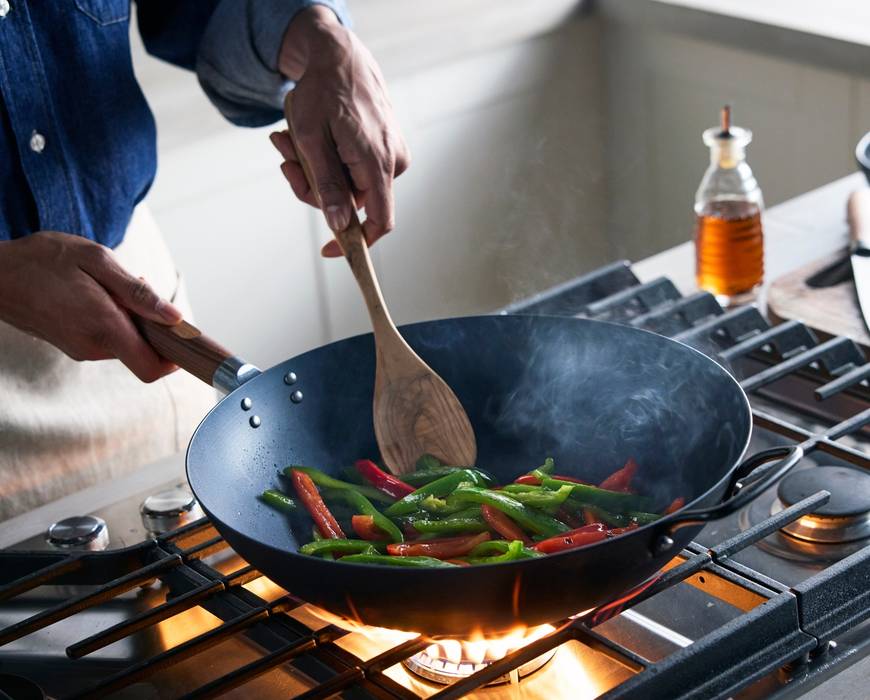
The handle type also influences usability. Long, single handles (often called "swallow tail" or "stir-fry handles") offer better leverage for tossing and are easier to hang. Two small loop handles ("helper handles") provide balance for heavy woks but can be awkward to grip with oven mitts. For carbon steel woks, a single long handle made of wood or stainless steel is usually the most practical choice for home stir-frying.
Final Recommendation
If you have an electric or induction stove, buy a flat-bottomed carbon steel wok. If you have a gas stove, a round-bottomed wok is authentic but requires a wok ring. Always check that the wok’s diameter fits comfortably within your burner’s outer coil or flame spreader to avoid instability.
Top carbon steel woks for home kitchens
Carbon steel is the standard for home stir-frying because it heats quickly and seasons beautifully. The best models balance thin enough metal for high-heat responsiveness with enough weight to stay stable. We recommend three specific woks that cover the most common home kitchen needs.
Lodge Carbon Steel Wok
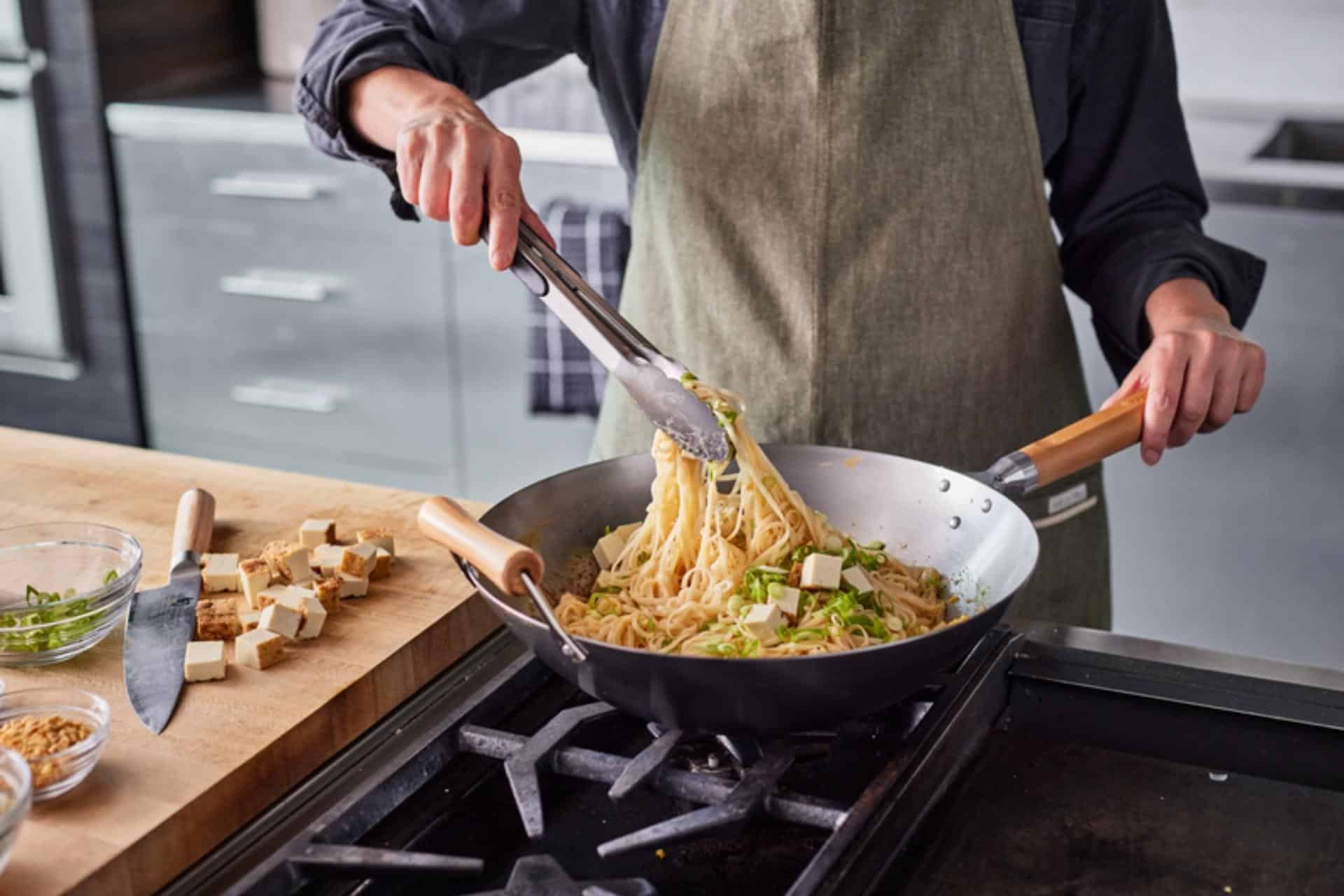
The Lodge wok is the most accessible entry point. It comes pre-seasoned, which removes the initial friction for beginners. The 12-inch size fits most standard burners, and the long helper handle provides decent balance. It is not the lightest option, but the price point makes it a low-risk purchase for testing your stir-fry routine.
De Buyer Mineral B Wok
De Buyer offers a lighter, thinner gauge that responds instantly to temperature changes. The round bottom design requires a wok ring or burner grate, which is common for authentic wok cooking. This model is favored by cooks who prioritize heat responsiveness over stability on flat glass tops. The bare metal finish develops a dark patina quickly with regular use.
Matfer Bourgeat Wok
Matfer Bourgeat produces professional-grade cookware that holds up to heavy daily use. The steel is slightly thicker than De Buyer’s, offering better heat retention for larger batches. The long handle is riveted securely, reducing the wobble common in cheaper models. It is a durable choice for serious home cooks who want a wok that will last decades.
Season your new carbon steel wok
A new carbon steel wok arrives with a protective oil coating to prevent rust during shipping. This layer is not your non-stick surface; it is a barrier that must be removed and replaced with a polymerized patina. Building this patina turns the metal into a naturally non-stick cooking surface that improves with every stir-fry.
The goal is to create a thin, hard layer of carbonized oil that bonds to the steel. Think of it like breaking in a leather boot: you need heat and friction to shape the material to your use. Without this step, food will stick, and the wok will rust quickly.
The seasoning process
Follow these steps to burn off the factory coating and build your initial non-stick layer.
Pour hot water and a generous amount of dish soap into the wok. Use a stiff brush or abrasive sponge to scrub the entire interior and exterior vigorously. You are removing the industrial oil, so the water will turn black. Rinse thoroughly and dry immediately with a towel.
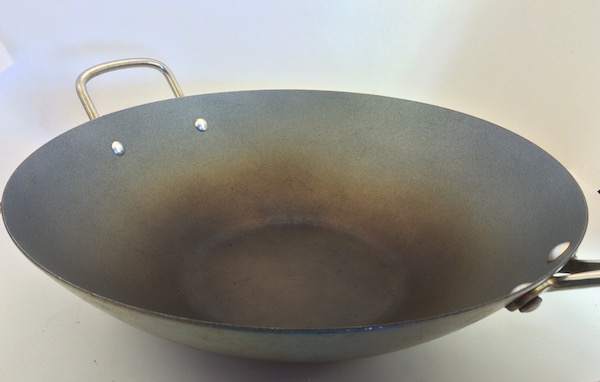
Place the clean, dry wok over high heat. Use a gas burner if possible, as it heats the sides better. Swirl the wok around to ensure even heating. The metal will change color, turning from silver to blue or gold. This is the steel oxidizing; it is normal and necessary.
Turn off the heat and let the wok cool slightly until it is warm but not hot to the touch. Pour a small amount of high-smoke-point oil (like grapeseed or flaxseed) into the wok. Use a paper towel to rub the oil over every surface, inside and out. Wipe away any excess; the layer should be barely visible.
Return the wok to high heat. The oil will begin to smoke heavily. This is the polymerization process happening. Keep the heat on until the smoking subsides slightly, then turn off the heat. Let the wok cool completely in a well-ventilated area.
For a robust initial patina, repeat the oiling and burning process two or three times. Each layer adds depth to the non-stick surface. Once finished, the wok should have a dark, semi-matte finish. Wash it gently with hot water and a soft sponge before your first meal.
Seasoning recipe
This simple recipe outlines the materials and timing for a standard 14-inch carbon steel wok. The oil choice matters less than the thinness of the application.
Watch the technique
Visualizing the heat distribution helps you avoid hot spots that can lead to uneven seasoning. This video demonstrates the proper hand movements for heating and oiling a wok.
Care and maintenance for your carbon steel wok
A carbon steel wok is not a nonstick pan that requires delicate handling; it is a tool that improves with use. The goal of daily care is to preserve the polymerized oil layer (seasoning) and prevent rust. Unlike Teflon, carbon steel can withstand abrasion and high heat, allowing for a simple, robust cleaning routine that takes less than a minute.
The Post-Cooking Checklist
Follow this routine after every meal to keep your wok in peak condition:
Frequently asked questions about woks
How to pick out a good wok?
A good wok combines superior construction, a wide cooking surface, and gently sloped sides for easy tossing. For home cooking, prioritize a 14-inch, flat-bottomed carbon steel wok with 14- to 16-gauge thickness. This weight balances heat retention with maneuverability, while a long handle and helper handle ensure stability on modern cooktops.
What to avoid when buying a wok?
Avoid coated nonstick woks. Nonstick coatings cannot tolerate the high heat required for proper stir-frying, and the constant spatula use will rapidly scratch and chip the surface. Stainless steel is also less ideal than carbon steel for this specific cooking method, as it lacks the same responsive heat distribution and seasoning potential.
Can I use a wok on induction cooktops?
Yes, provided the wok has a flat bottom. Traditional round-bottom woks require a wok ring or specialized induction adapter to sit stably on the flat glass surface. Flat-bottomed carbon steel woks are designed to sit directly on induction burners, ensuring efficient heat transfer without the need for extra accessories.
No comments yet. Be the first to share your thoughts!