

Why Seasoning Matters for Your Wok
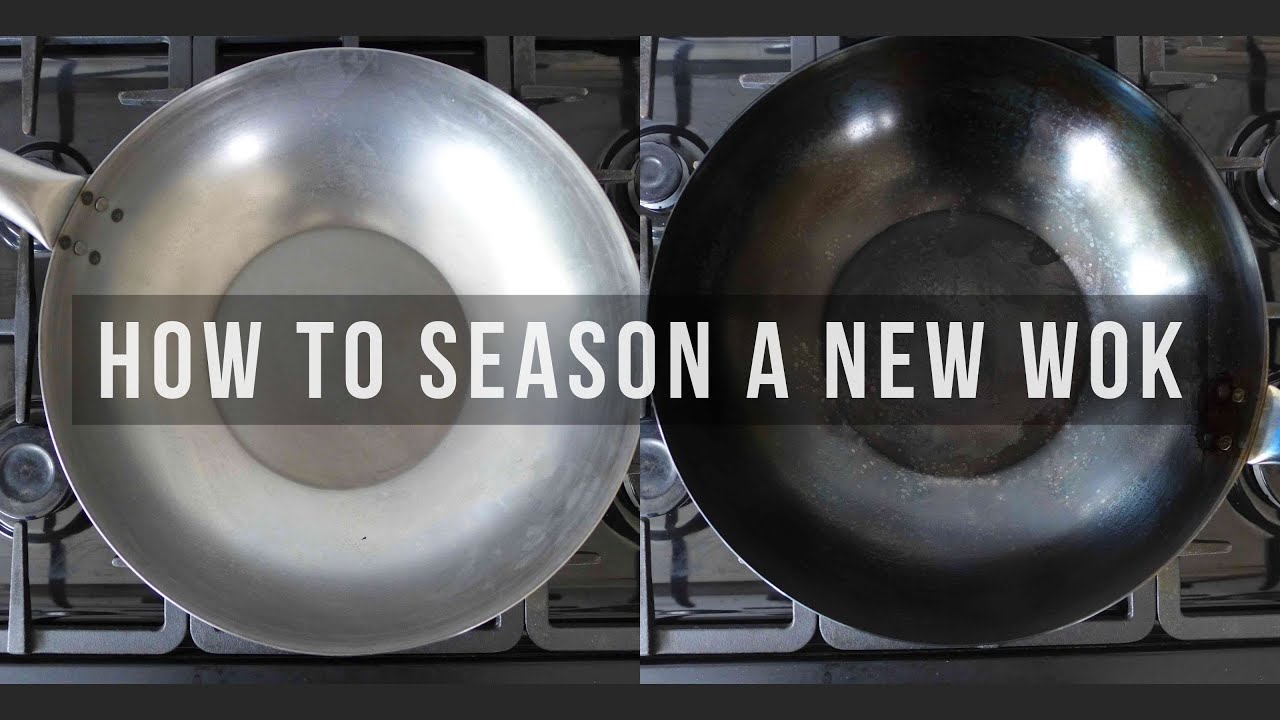
A new carbon steel wok needs seasoning before it's ready for cooking. The bare metal surface is reactive, causing food to stick and potentially imparting a metallic taste. Seasoning builds layers of polymerized oil, creating a natural non-stick surface that also enhances flavor.
Most woks are carbon steel, known for its responsiveness to high heat, though it can rust if not cared for. Stainless steel woks don't need the same intensive seasoning but can benefit from a light coat to improve non-stick qualities. Seasoning carbon steel creates a protective patina and develops wok hei, the smoky flavor characteristic of good stir-fries.
A well-seasoned wok distributes heat evenly, searing food quickly and developing that smoky taste. The more you use your wok, the better the seasoning gets, leading to more flavorful food. Cooking with a wok is a partnership that rewards the cook.
Gathering Your Supplies
Gather a wok, a high-smoke-point oil, paper towels, and a heat source. A gas burner provides the most even heat for seasoning, though electric or induction cooktops can also be used, they will just take longer.
Choose an oil that withstands high temperatures, such as peanut, canola, or vegetable oil. Peanut oil adds a subtle flavor, while canola and vegetable oil are neutral. You'll need plenty of paper towels for applying and wiping oil, a scrub brush or steel wool for initial cleaning, and oven mitts for handling the hot wok.
- Wok (carbon steel recommended)
- High-smoke-point oil (peanut, canola, vegetable)
- Paper towels
- Heat source (gas preferred)
- Scrub brush or steel wool
- Oven mitts
Initial Cleaning: Preparing the Surface
New woks have a protective coating that must be removed before seasoning. Fill the wok with hot water and dish soap, then scrub the entire surface, inside and out, with a brush or steel wool to remove all residue.
Rinse the wok thoroughly to remove all soap. Dry it completely with paper towels, as any remaining water will hinder seasoning. A slight odor during cleaning is normal and will disappear with seasoning.
The First Burn-In: Building the Foundation
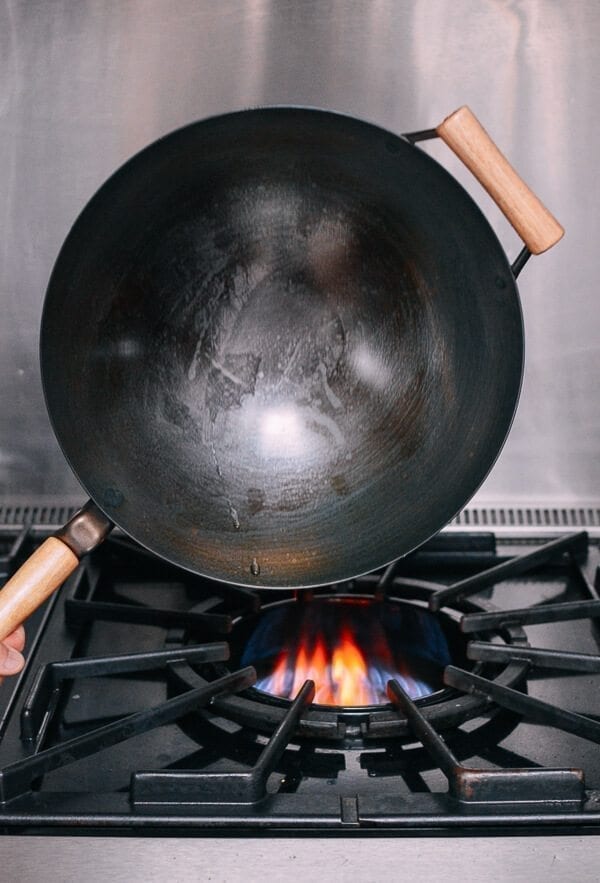
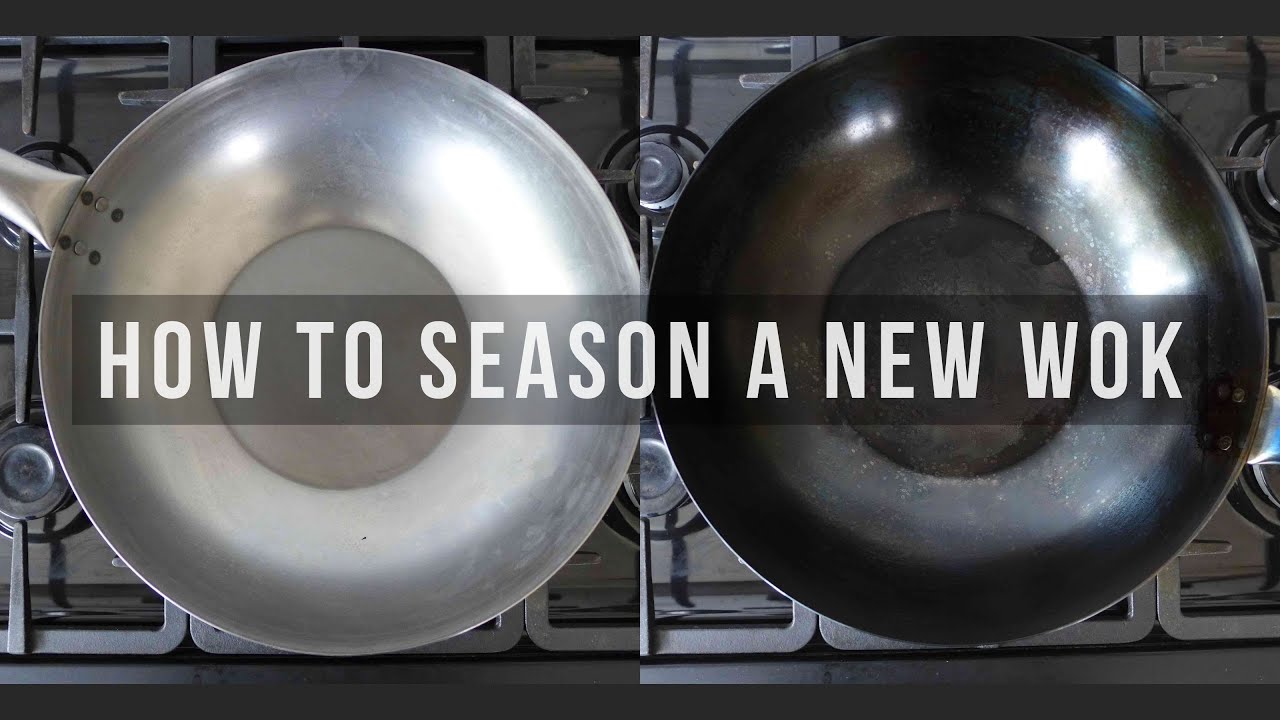
Place the clean, dry wok over high heat until it's very hot and almost smoking. The metal will change color, likely turning blue or purple before darkening, indicating it's transforming.
Rotate the wok continuously over the burner for even heating, preventing hot spots. Once hot, add about a tablespoon of oil and spread it in a very thin, even coat across the entire surface with paper towels. Use a minimal amount of oil.
Continue heating the wok; it will smoke heavily. Ensure good ventilation by opening windows or using an exhaust fan. The smoke is the oil polymerizing and bonding to the metal. Heat and rotate for 15-20 minutes, or until smoking lessens and the wok appears dark and bronze-like.
Let the wok cool slightly, then repeat the oiling and heating process at least three times for the initial burn-in. Each layer builds a more durable seasoning. Uneven coloring will even out with more layers.
- Heat wok over high heat until it changes color (blue/purple, then darkens).
- Rotate wok continuously for even heating.
- Add about 1 tablespoon of high-smoke-point oil.
- Spread oil in a thin, even coat with paper towels.
- Heat and rotate for 15-20 minutes, until smoking subsides.
- Repeat oiling and heating process at least 3 times.
Subsequent Seasoning Layers
Repeat the seasoning process 3-5 more times to build a resilient, non-stick surface. Each layer darkens the wok and improves its performance, building on the initial foundation.
Patchy or sticky spots are normal as you add layers. Focus heat and oil on sticky areas in the next layer, or lightly scrub with steel wool and re-season.
Some prefer lower heat for later layers to create an even coat, while high heat creates a harder, more durable seasoning. Consistency is key: apply a thin oil coat, heat thoroughly, and repeat.
Troubleshooting Common Problems
Even with careful seasoning, issues can arise. To remove rust spots, scrub the area with steel wool and re-season. Flaking seasoning suggests insufficient oil or uneven heating; re-season the affected area.
Address sticky spots by focusing heat and oil on them in the next layer. If seasoning is accidentally scrubbed off, re-season the area. Seasoning is an ongoing process.
Avoid specific rust removal products, as they can leave residues affecting food flavor. Mechanical removal with steel wool and re-seasoning is the best approach to maintain a clean, ready-to-cook surface.
Maintaining Your Seasoning: Daily Care
undefined the wok with hot water and a soft sponge. Dry it thoroughly with paper towels immediately after washing. A light coat of oil after drying is a good habit to get into – it helps to protect the seasoning.
Regular use is the best way to maintain your seasoning. The more you cook with your wok, the better the seasoning will become. The oils from your food will contribute to the patina, making it even more non-stick and flavorful. If you haven’t used your wok in a while, a quick re-seasoning might be needed to restore its non-stick properties. A well-maintained wok is a joy to cook with, and it will last for years with proper care.
Wok Seasoning: Myths Debunked
There’s a lot of misinformation out there about wok seasoning. Let’s clear up some common myths. You do not necessarily need to season a stainless steel wok, although a light seasoning can still improve its non-stick capabilities. You also don't need to cook anything specific during the seasoning process, despite what some people claim – oil is the key ingredient.
And finally, you don’t need to use a specific type of oil – as long as it has a high smoke point, it will work. Peanut, canola, and vegetable oil are all good choices. The most important thing is to build up layers of polymerized oil, regardless of the specific oil you use. Don't get bogged down in the details; focus on the fundamentals.
- Myth: You must season a stainless steel wok. Reality: Not necessary, but can be beneficial.
- Myth: You need to cook something specific during seasoning. Reality: Oil is the key.
- Myth: You need a specific type of oil. Reality: High smoke point is the most important factor.
Wok Seasoning: Separating Myths from Realities
| Myth | Reality | Evidence/Explanation |
|---|---|---|
| Stainless steel woks must be seasoned | Seasoning stainless steel woks is not strictly *necessary* for functionality, but it can improve performance. | Stainless steel doesn’t develop a naturally non-stick patina like carbon steel. Seasoning can create a barrier that reduces sticking, but it won't be the same as a well-seasoned carbon steel wok. |
| You must cook a specific food first | There's no single 'first food' required for seasoning. The goal is to build layers of polymerized oil. | The type of food isn't as important as the repeated heating and cooling of oil. While some suggest onions or ginger, any food cooked with oil will contribute to the seasoning process. |
| Only certain oils work | While some oils polymerize more readily, a variety of oils can be used for seasoning. | Oils with higher smoke points and unsaturated fats (like peanut, canola, or vegetable oil) are commonly recommended, but others can work. The key is repeated heating to create the polymerized layer. |
| A dark color indicates a well-seasoned wok | Color is an indicator, but not the sole determinant of a good seasoning. | A dark patina suggests layers of polymerized oil, but uneven coloring or flaking indicates issues. A smooth, even, and adhered seasoning is more important than darkness. |
| Seasoning creates a permanent non-stick surface | Seasoning requires maintenance and will degrade with use and cleaning. | The polymerized oil layer is susceptible to damage from harsh detergents and abrasive cleaning. Regular use and re-seasoning are needed to maintain the non-stick properties. |
| You can skip the initial cleaning of a new wok | New woks often have a protective coating from manufacturing that *must* be removed. | Many woks are coated with oil or other substances to prevent rust during shipping and storage. This coating needs to be thoroughly cleaned off before seasoning. |
| More seasoning layers are always better | There's a point of diminishing returns with seasoning layers. | Excessively thick layers can become sticky or prone to flaking. A smooth, even, and well-maintained seasoning is preferable to many thick layers. |
Illustrative comparison based on the article research brief. Verify current pricing, limits, and product details in the official docs before relying on it.
No comments yet. Be the first to share your thoughts!