

Wok hei: the flavor air fryers miss
There’s a flavor in Asian cuisine that many home cooks struggle to replicate: wok hei. It’s that slightly smoky, charred, and complex taste you get from a properly executed stir-fry. It’s not just about the ingredients, it’s about the cooking process itself. The shape of a wok, its ability to get incredibly hot, and the constant tossing and turning of food all contribute to developing this desirable quality.
Air fryers rely on convection. They blow hot air around a basket, which is great for frozen fries but fails to mimic the direct, searing contact of a carbon steel pan. You get crispness, but you miss the singed, complex edge that defines a good stir-fry.
I want to be upfront: air fryers are incredibly convenient and versatile appliances. They have a place in the kitchen, and many people enjoy using them. However, if you’re aiming for authentic Asian flavors, particularly those reliant on the stir-fry technique, a wok is the superior tool. The difference isn't subtle, it's a fundamental shift in the final flavor profile.
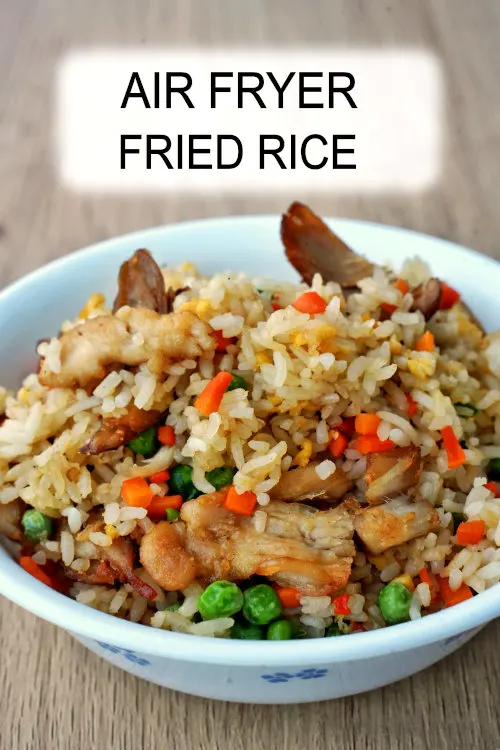
How heat moves in a wok
Woks are designed to distribute heat differently than most other cookware. The sloping sides allow food to be constantly moved into and out of the hottest part of the wok, creating distinct temperature zones. This is essential for achieving properly cooked food with varying degrees of char and tenderness. The material of the wok also matters significantly.
Carbon steel is a popular choice because it heats up quickly and retains heat well. Cast iron is another option, offering even greater heat retention but being slower to respond to temperature changes. The ability to quickly adjust heat is key to wok cooking. Air fryers, on the other hand, rely on a heating element and a fan to circulate hot air.
While air fryers can reach high temperatures—many models claim to reach 400°F (204°C)—they lack the direct, intense heat of a wok. They excel at circulating heat, meaning the food is cooked more evenly, but it doesn't receive the same searing heat that creates wok hei. This difference in heat dynamics is a major factor in the flavor and texture differences between the two cooking methods.
The problem with air fryer crispness
Air fryers are rightfully praised for their ability to create crispy textures. However, the type of crispness they deliver isn’t always ideal for Asian cuisine. It tends to be a uniformly crispy exterior, which can sometimes feel dry or brittle. Woks offer a much wider range of textural possibilities.
A skilled wok cook can create dishes with both tender and crispy elements in a single stir-fry. Vegetables can be slightly charred on the edges while remaining crisp-tender inside. Proteins can develop a beautiful sear without becoming overcooked. This nuanced textural contrast is difficult to achieve in an air fryer.
I’ve found that some dishes, like certain noodle dishes or dishes with delicate sauces, just don’t translate well to an air fryer. The constant circulation of air can dry out the noodles or cause the sauce to become overly concentrated. A wok allows for greater control over moisture and sauce reduction, resulting in a more balanced and flavorful dish.
Recipe Suitability: Where Each Shines
Woks are the only way to make Kung Pao chicken or Pad Thai correctly. Beyond the stir-fry, I use mine with a bamboo rack for steaming fish or as a deep fryer because the wide top makes managing oil easier. It even works for slow-braised pork belly since the heavy base holds a steady simmer.
Air fryers, conversely, excel at tasks like cooking spring rolls or certain types of fried dumplings. They’re incredibly convenient for reheating leftovers, especially fried foods, and can quickly cook simple vegetable side dishes. For example, for Mapo Tofu, a wok is absolutely essential to develop the complex flavors. But for reheating leftover fried chicken, an air fryer is undeniably convenient.
I want to avoid blanket statements. An air fryer can cook vegetables, but a wok does it with more nuance and flavor. An air fryer can reheat leftovers, but it won’t fully restore the texture of a wok-fried dish. Consider the specific dish and the desired outcome when choosing your cooking method.
Wok Accessories: Expanding Your Range
One of the things I appreciate about woks is their versatility, and that versatility is enhanced by the available accessories. A good wok lid is essential for steaming, braising, and even controlling the cooking temperature. Wok spatulas, designed with a curved edge, make it easier to scoop and toss food.
Steaming racks turn your wok into a steamer, perfect for dumplings or vegetables. Wok rings can help to stabilize the wok on a gas stove or prevent it from sliding around. These accessories significantly expand the wok’s functionality beyond simple stir-frying.
Air fryers, on the other hand, require minimal accessories. Most come with a basic basket and drip tray, and additional accessories like skewers or baking pans are often optional. The simplicity is appealing, but it also highlights the wok’s broader range of capabilities.
- A heavy lid for steaming and braising
- A curved metal spatula to match the pan's contour
- Steaming Rack
- Wok Ring
Essential Wok Accessories for Authentic Asian Cooking

Durable heavy-duty carbon steel construction · Flat bottom for stability on various stovetops · Suitable for high-heat cooking methods like stir-frying and sautéing
This wok is designed for high-heat cooking, essential for authentic Asian stir-fry techniques.
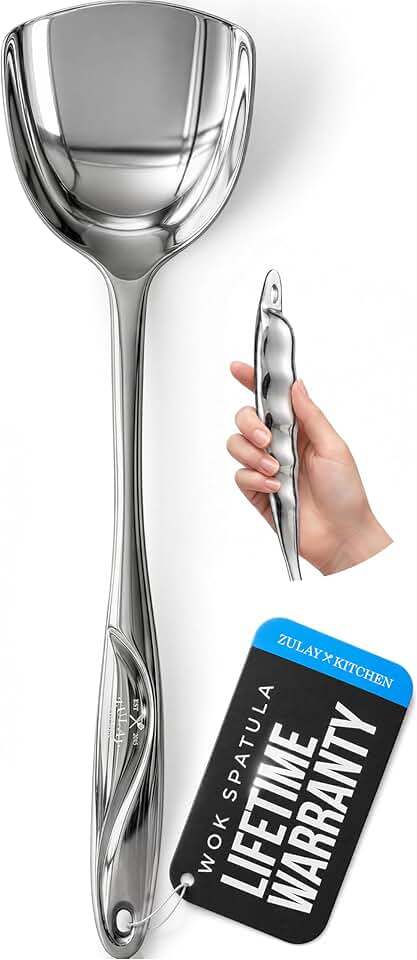
Durable and rust-proof stainless steel construction · Heat-resistant handle for safe use · 14.8-inch length for optimal reach
A sturdy spatula is crucial for maneuvering ingredients effectively during stir-frying.
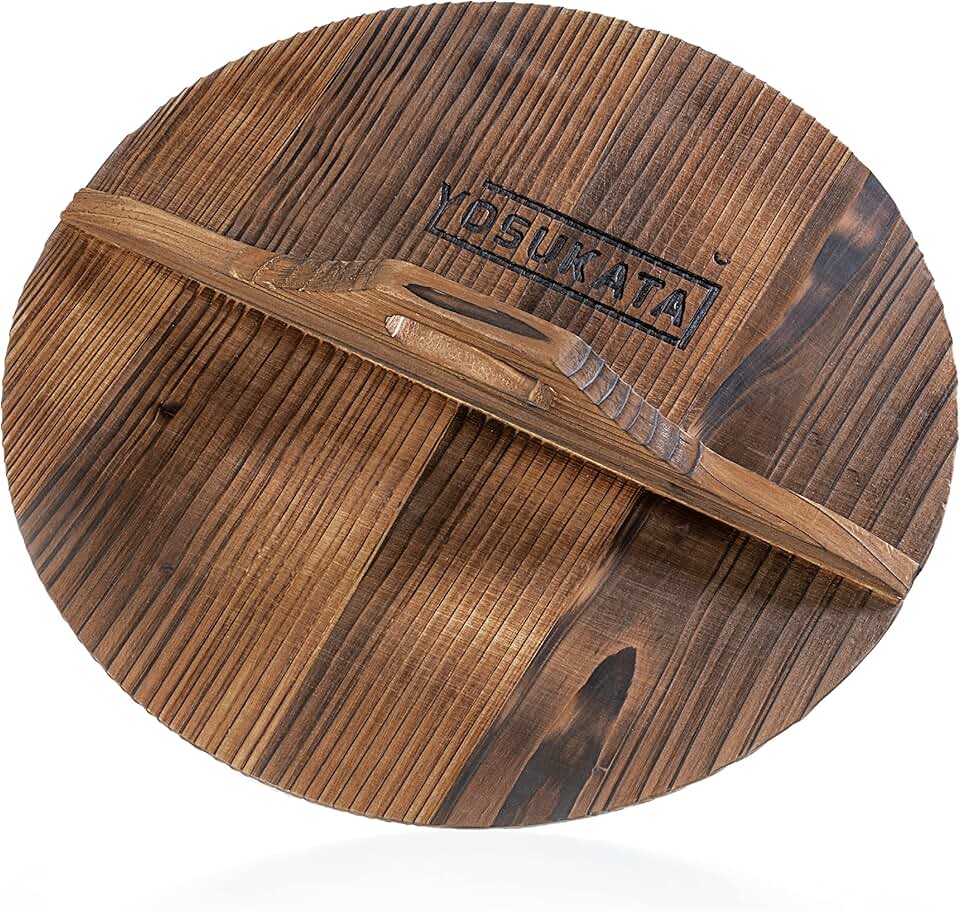
Wooden lid designed for 13.5-inch woks · Ergonomic handle for comfortable grip · Condensate-free design to maintain crispness
This lid helps to trap heat and moisture, aiding in steaming and braising techniques within the wok.

Set of three stainless steel racks in different sizes (7.5, 9, 10.5 inches) · Versatile for steaming, baking, cooling, and grilling · Fits various kitchen appliances including air fryers and stockpots
These racks offer versatility for steaming or grilling smaller components of Asian dishes, complementing air fryer use.

Designed to support cast iron woks on gas stove burners · Provides stability for even heating · Replacement part compatible with many major gas stove brands
This wok ring ensures your wok is stable and properly positioned on a gas stove, crucial for achieving the high heat needed for authentic stir-frying.
As an Amazon Associate I earn from qualifying purchases. Prices may vary.
The reality of cleaning and maintenance
Maintaining a wok requires more effort than maintaining an air fryer. Carbon steel woks need to be seasoned regularly to prevent rust and develop a non-stick patina. This involves coating the wok with oil and heating it until it polymerizes, creating a protective layer. Proper cleaning is also crucial – avoid using harsh detergents and always dry the wok thoroughly.
Air fryers are generally easier to clean. The basket and drip tray are often dishwasher safe, but food buildup can still occur and require some scrubbing. However, you don’t have to worry about seasoning or preventing rust.
I’ve spent hours re-seasoning woks over the years, and I believe it's worth the effort for the enhanced cooking performance and flavor. But it’s important to be realistic about the commitment involved. A well-maintained wok is a joy to cook with, but it requires ongoing care and attention.
Wok vs. Air Fryer: A Comparison for Asian Cuisine (2026)
| Criteria | Wok | Air Fryer |
|---|---|---|
| Flavor (Wok Hei Potential) | High | Low |
| Texture Variety | High | Medium |
| Versatility | High | Medium |
| Ease of Cleaning | Medium | High |
| Initial Cost | Medium | Medium |
| Long-Term Maintenance | Medium | Low |
| Space Requirements | Medium | Low |
Illustrative comparison based on the article research brief. Verify current pricing, limits, and product details in the official docs before relying on it.

No comments yet. Be the first to share your thoughts!