

Why seasoning matters for carbon steel
Seasoning a wok creates a polymerized oil layer that bonds to the metal surface. This layer acts as a barrier against moisture, preventing the carbon steel from rusting. Without this protective coating, raw carbon steel reacts quickly with water and air, leading to orange patches and a deteriorating cooking surface.
Beyond rust prevention, the seasoned layer provides natural non-stick properties. As you cook with oil and heat, the polymerization builds up, creating a smoother surface that releases food more easily. This is fundamentally different from Teflon coatings, which rely on synthetic chemicals to achieve slipperiness and wear out over time. A properly seasoned wok improves with use, developing a dark, slick patina that enhances flavor and performance.
Unlike non-stick pans that have a fixed lifespan, the seasoning on a carbon steel wok can be maintained and repaired indefinitely. It is a living surface that responds to how you treat it. Regular cooking with fat and heat reinforces the layer, while harsh scrubbing or soap can strip it away, requiring you to rebuild it. Understanding this dynamic is essential for getting the most out of your wok.
Gather your wok seasoning supplies
Before you turn on the stove, lay out the tools you need to season a wok properly. This process relies on simple household items, but choosing the right materials makes the difference between a sticky mess and a smooth, non-stick surface.
You will need a steel wool pad or a coarse scouring pad to strip away any factory-applied protective coatings. Dish soap and a sponge are essential for degreasing the pan before applying heat. For the seasoning itself, pick a high-smoke-point oil; grapeseed, canola, or flaxseed oil work best because they polymerize effectively into a hard layer.
Don't forget your protective gear. Use tongs to hold the wok handle for safety, and keep plenty of paper towels or a soft cloth nearby to apply the oil in thin, even coats. Having everything within reach keeps the process moving quickly before the oil heats up too fast.
Clean the wok before first use
New carbon steel woks arrive coated in a thick layer of industrial preservative oil. This protective barrier prevents rust during shipping and storage, but it is not meant for cooking. If you skip this step, that rancid, chemical-tasting coating will linger on your food and interfere with the seasoning process.
Start by rinsing the wok under hot water. Add a generous amount of dish soap to cut through the grease. Use a steel wool pad or a stiff brush to scrub the entire interior surface. You need to remove every trace of the factory coating until the metal feels clean and smooth to the touch. The water will turn dark as the oil washes away; keep scrubbing until the runoff is clear.
Once the factory oil is gone, rinse the wok thoroughly with hot water. Dry it immediately and completely using a towel. Place the wok on the stove over low heat for a few minutes to evaporate any remaining moisture. This ensures the metal is bone-dry before you begin seasoning.
Fill the wok with hot water and dish soap. Use a steel wool pad to scrub the entire interior surface, removing the factory-applied protective oil coating. The water will turn dark as the oil washes away.
Rinse the wok with hot water until the soap and oil residue are completely gone. Dry the wok immediately with a towel, then place it on the stove over low heat for a few minutes to evaporate any remaining moisture.


As an Amazon Associate, we may earn from qualifying purchases.
Heat the wok to blue the metal
Place the empty wok on your stove burner and turn the heat to high. This step is essential for stabilizing the carbon steel and preparing the surface for the oil layer. You are not cooking food here; you are altering the metal itself.
As the wok heats up, you will see the surface change from a dull silver to a golden brown, and finally to a deep blue or grey. This color shift is the steel oxidizing. In culinary terms, this is often called "bluing" the metal. It creates a stable base that helps the seasoning bond properly and prevents rust before you even add oil.
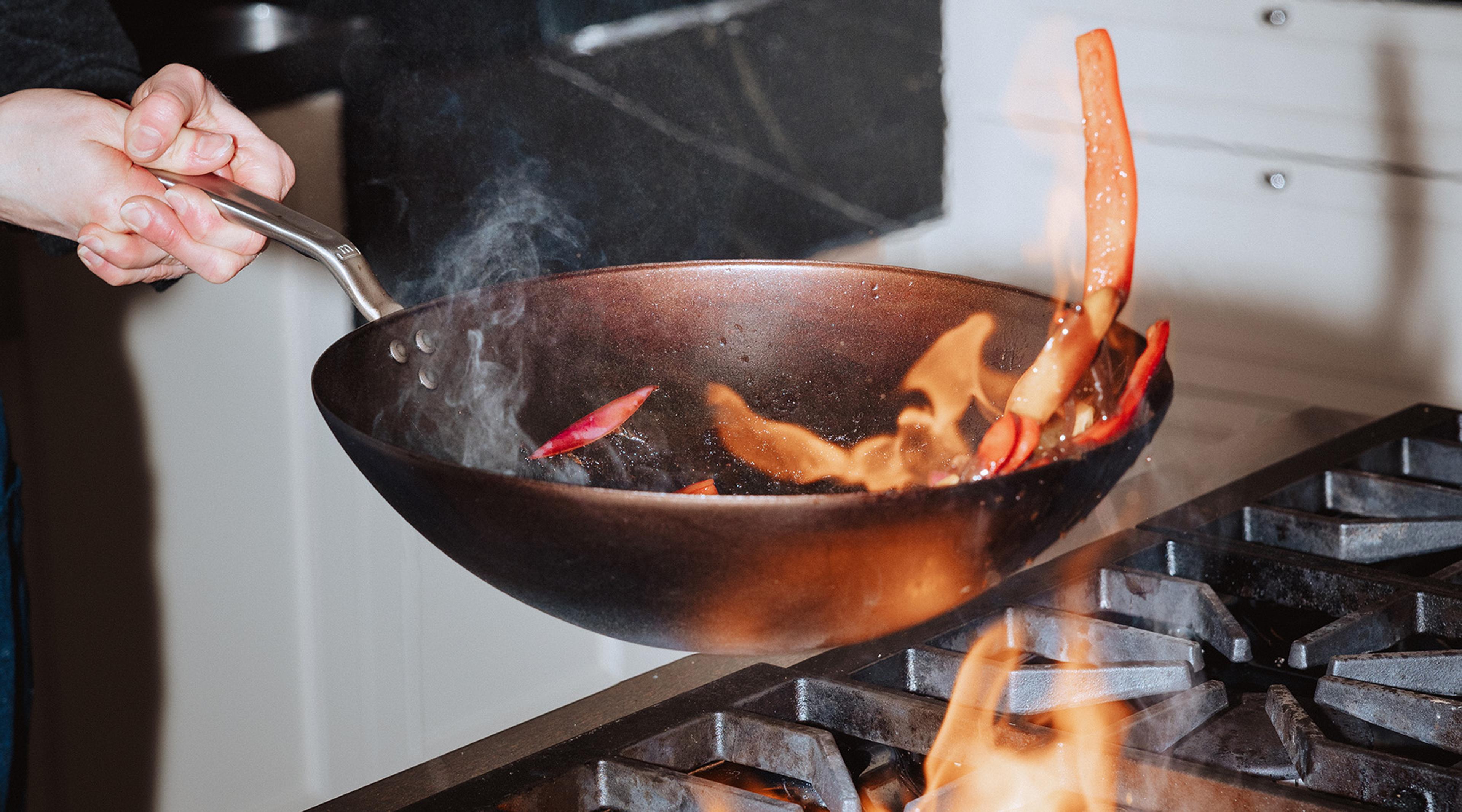
The wok is ready for oil when it reaches a uniform blue-grey color across the entire cooking surface. This process typically takes 10 to 15 minutes. If you are using a gas stove, you can see the flames lick the sides, which helps heat the upper rim evenly. With electric or induction cooktops, you may need to tilt the wok occasionally to heat the sides, though the bottom will heat faster than the walls.
Do not rush this step. If the wok is not hot enough, the oil will not polymerize correctly, and your seasoning will be patchy. If it overheats and smokes excessively, wipe it down with a dry cloth and let it cool slightly before proceeding. The goal is a consistent, even color, not a scorched black spot.
Apply oil to build the initial patina
The "long yau" technique, or oil-smearing, is the core method for building a durable non-stick patina on carbon steel. This process polymerizes the oil, creating a hard, slick surface that improves with every use. You are essentially cooking the oil into the metal rather than just coating it.
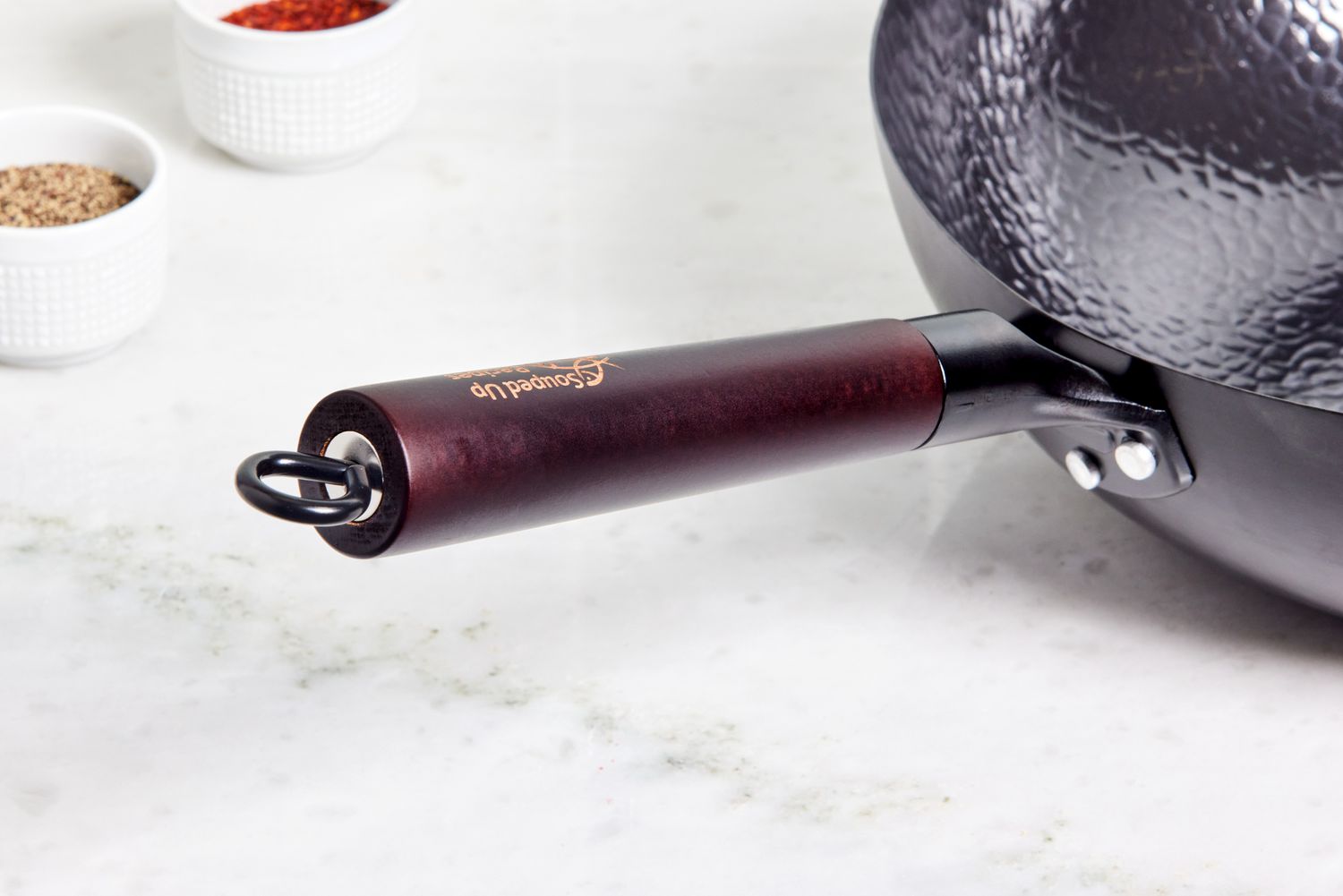
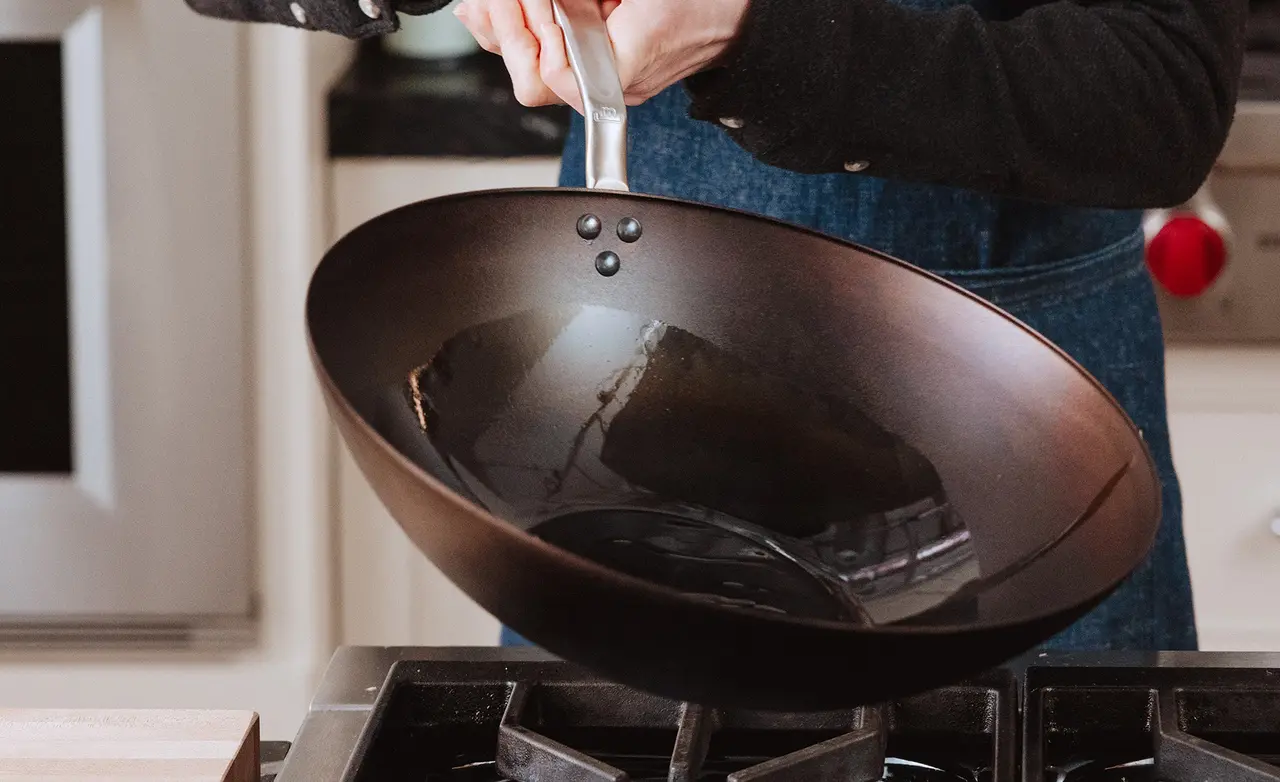
This initial seasoning creates the foundation for your wok's non-stick performance. The goal is a uniform, darkened surface that feels slick to the touch. Avoid using too much oil, which can leave a sticky residue instead of a hard patina.
Cook your first dish to finish seasoning
Your initial cooking session is the final step in building a reliable non-stick surface. While polymerization begins during the heating phase, the first meal actually completes the bond between the oil and the carbon steel. This process also neutralizes any residual metallic taste that might linger from the manufacturing or seasoning process.
Choose a dish with high heat and some natural fat or oil. Stir-fried onions, garlic, or fatty meats like pork belly work best. The ingredients act as a gentle abrasive, scrubbing away any loose carbon while the heat and fat fill in microscopic pores. Avoid delicate proteins like fish or eggs for this first run, as they are more likely to stick to a surface that hasn't fully cured.
Heat the wok until it smokes slightly, add your oil, and introduce the food. Cook until the ingredients are browned and the oil has darkened. This darkening indicates that the polymerization is stabilizing. Discard the first batch if it tastes metallic, but use it as a learning opportunity for temperature control. Your wok is now ready for daily cooking.
Best oils for wok seasoning
Choosing the right oil determines how hard and durable your wok’s non-stick surface becomes. Seasoning relies on polymerization, a chemical reaction that occurs when oil is heated past its smoke point. Oils with higher smoke points break down more slowly, allowing you to build a thicker, more resilient patina without burning the oil into a sticky, uneven layer.
Avoid low-smoke-point fats like butter or extra virgin olive oil. They burn too quickly, leaving behind a bitter taste and a weak, patchy coating that flakes off during cooking. Instead, select neutral oils with high smoke points and stable molecular structures.
The table below compares the most effective options. Grapeseed and flaxseed oils are often preferred by professionals for their ability to create a glass-like finish, while canola and sunflower oils are accessible, affordable alternatives that still perform well.
| Oil | Smoke Point | Patina Quality | Cost |
|---|---|---|---|
| Grapeseed | 420°F (216°C) | Hard, glossy | Medium |
| Flaxseed | 225°F (107°C) | Very hard, brittle | High |
| Canola | 400°F (204°C) | Durable, standard | Low |
| Sunflower | 440°F (227°C) | Hard, clear | Low |
For a balance of durability and ease of use, grapeseed oil is widely recommended. It polymerizes evenly and resists stickiness better than many common vegetable oils. If you cannot find grapeseed, refined sunflower or canola oil are reliable, budget-friendly substitutes.
Maintain your wok's non-stick surface
Your wok’s seasoning is a living layer that improves with use but requires consistent care. Treating it like a cast-iron skillet is the right approach: protect the polymerized oil bonds, avoid harsh chemicals, and keep the surface dry. A few minutes of maintenance after every meal keeps food from sticking and prevents rust from forming.
Clean with hot water and a soft brush
Rinse the wok immediately after cooking while it is still warm. Hot water loosens food particles better than cold, and a soft nylon brush or non-abrasive sponge removes residue without scratching the seasoning. If stubborn bits remain, use a small amount of mild dish soap. Contrary to old myths, modern detergents will not strip properly cured seasoning; they only remove surface grease. Avoid steel wool or abrasive scouring pads, which can dig into the metal and expose raw carbon steel to air.
Dry completely on the stove
Water is the enemy of carbon steel. After washing, dry the wok thoroughly with a towel, then place it back on the burner over low heat. Let the residual moisture evaporate for one to two minutes. This step ensures no hidden dampness remains in the pores of the metal, which is the primary cause of rust spots. Wipe the surface with a clean paper towel to absorb any remaining water droplets.
Apply a thin coat of oil
Once the wok is dry and slightly warm, add about a tablespoon of high-smoke-point oil, such as vegetable or grapeseed oil. Use a paper towel to spread the oil evenly across the entire interior surface, including the sides. Tilt and rotate the wok to ensure full coverage. Wipe out any excess oil with a clean cloth; the goal is a microscopic layer, not a sticky pool. This thin coat replenishes the seasoning and creates a barrier against humidity until your next meal.
No comments yet. Be the first to share your thoughts!