

Prepare the surface
Before any heat is applied, you must remove the factory coating. Carbon steel woks arrive from the manufacturer covered in a protective layer of oil or wax designed to prevent rust during shipping and storage. This coating is not part of the seasoning; it is a barrier that will prevent your cooking oil from bonding to the metal. If you skip this step, the initial polymerization layer will be thin, uneven, and prone to flaking off during your first high-heat stir-fry.
Gather hot water, a small amount of dish soap, and a stiff non-abrasive scrub pad or coarse salt. Scrub the entire interior and exterior of the wok vigorously. You are looking for bare, dull steel where the factory finish has been completely removed. Rinse thoroughly and dry immediately with a towel. To ensure no moisture remains, place the wok on the stove over medium heat for two minutes until it is bone dry. Any remaining water will cause immediate surface rust, undoing your preparation before you begin.
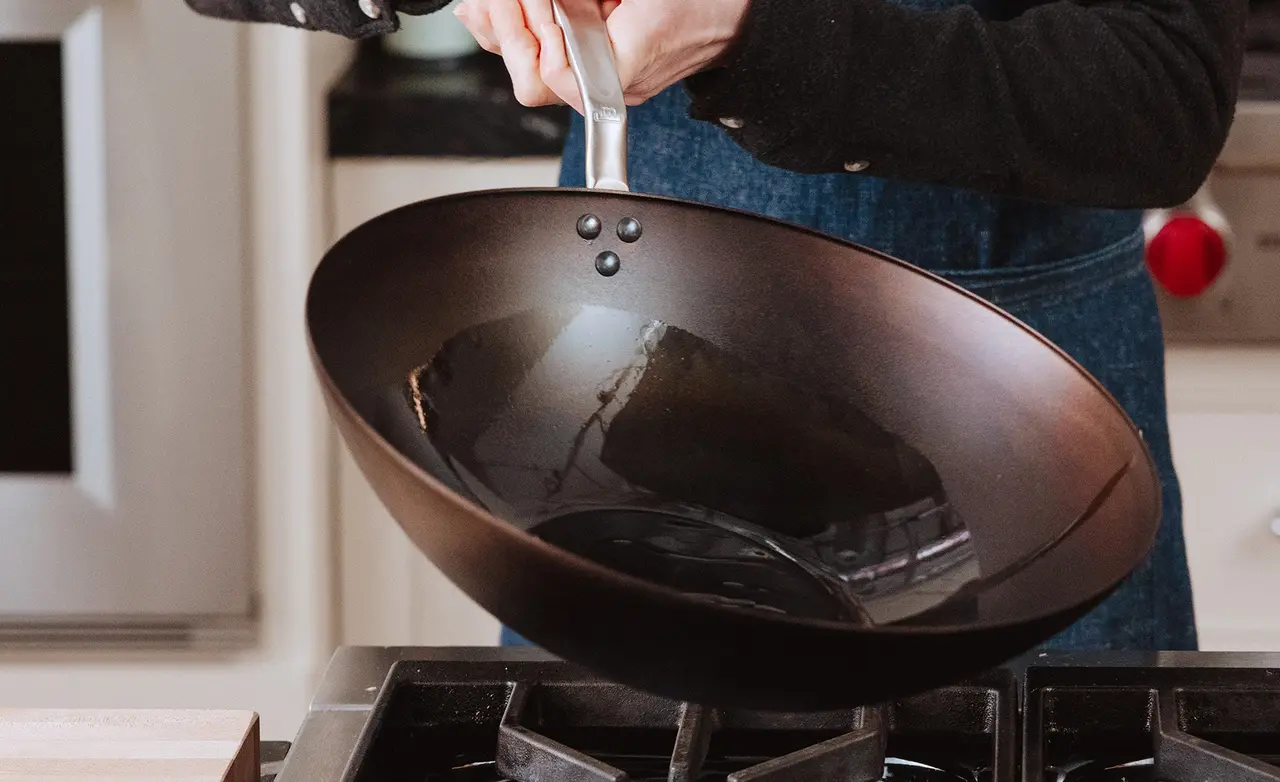
Heat and oil the wok
Seasoning is the process of polymerizing oil onto the metal surface. You are not just coating the wok; you are baking a hard, slick shell that prevents food from sticking. This first layer is the foundation for everything that follows.
Start by placing the clean, dry wok on your stove burner. Turn the heat to medium-high. You need the metal hot enough to break down the oil molecules so they bond with the steel. If you skip the heat, the oil will just sit on top and turn rancid. If the wok is too cool, the layer will be sticky and uneven.
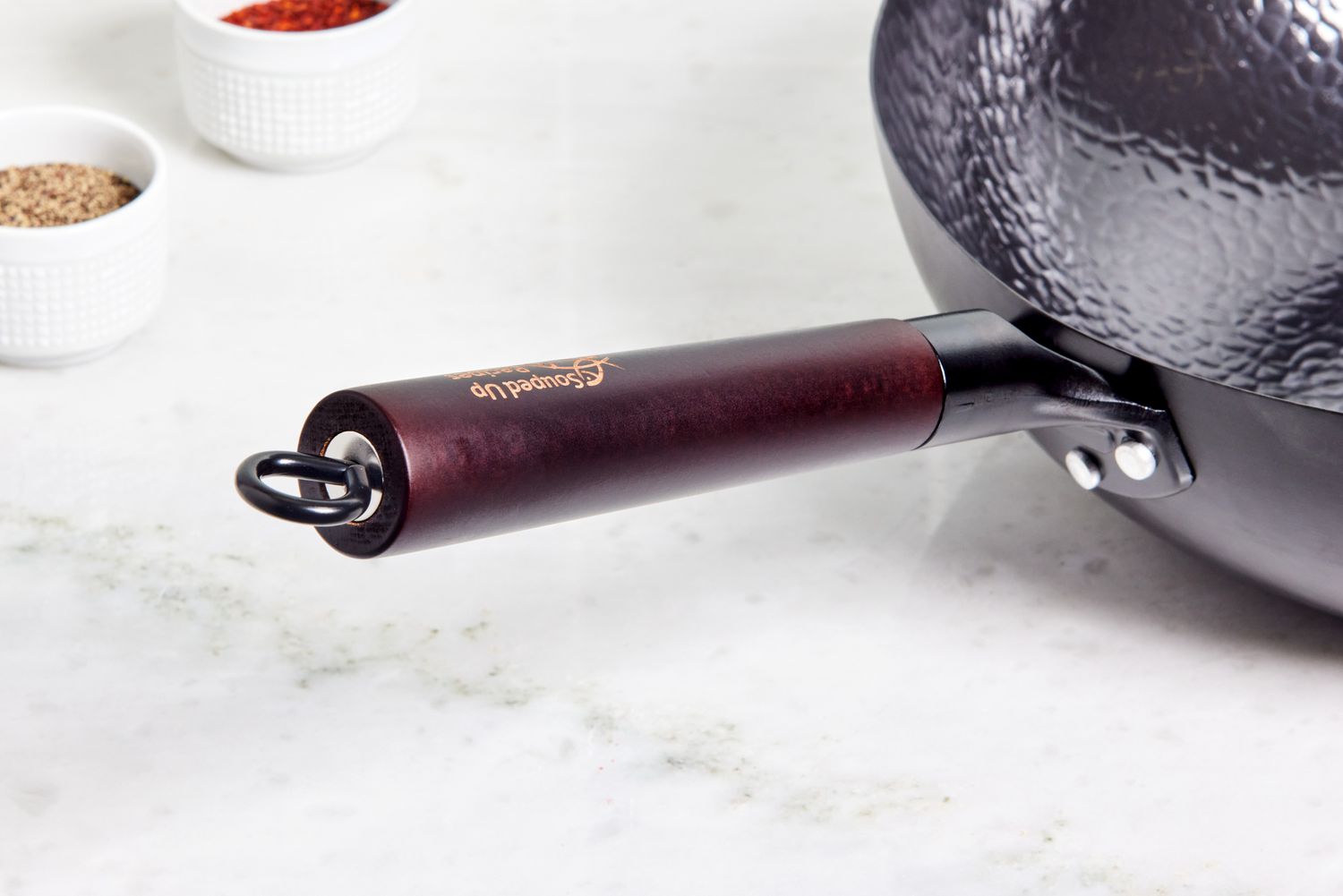
Turn the burner to medium-high. Wait until you see thin wisps of smoke rising from the metal. This indicates the steel has reached the smoking point of your oil. The surface should be uniformly hot, not just in the center.
Reduce the heat to medium. Using a folded paper towel or a silicone brush, apply a very small amount of high-smoke-point oil (like grapeseed, canola, or flaxseed). Spread it across the entire interior surface, including the sides. Wipe away any excess; the wok should look barely shiny, not wet.
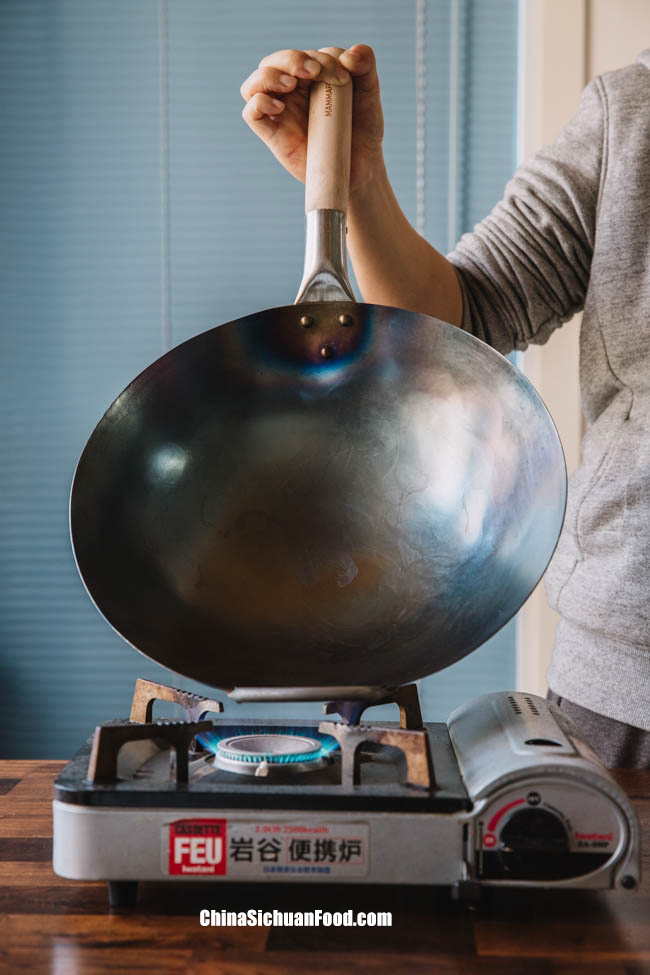
Return the heat to medium-high. Swirl the oil around the sides as it heats. The oil will begin to smoke heavily and change color from clear to amber, then to a dark brown or black. This is the polymerization happening. Continue until the oil stops sputtering and the surface looks uniform and dark.
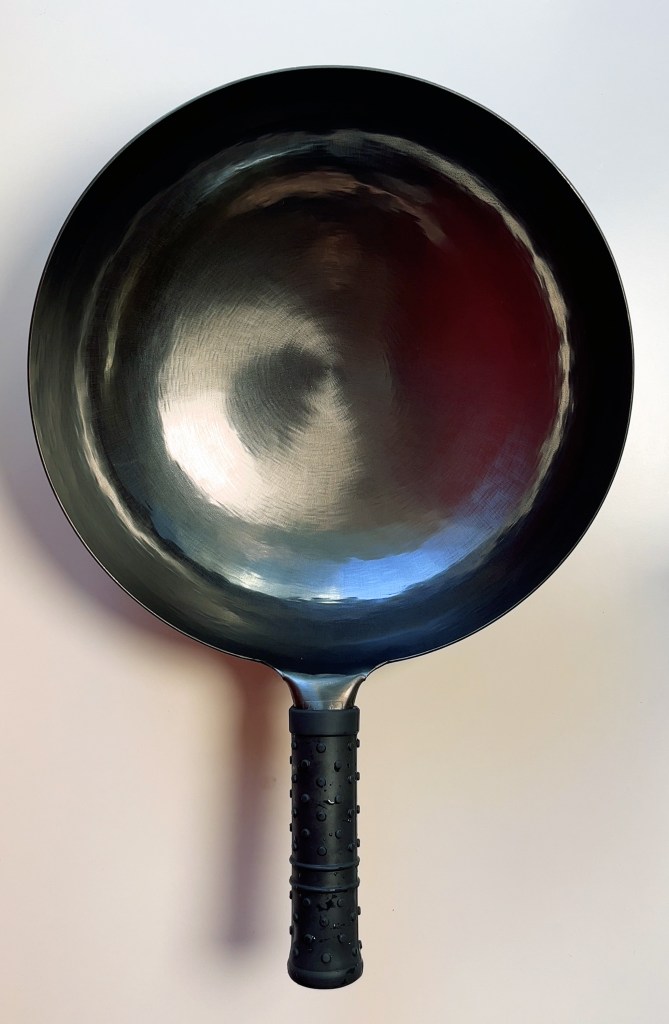
Turn off the burner. Let the wok cool down on the stove or move it to a heat-safe surface. Do not rush this step by running cold water over it, as thermal shock can warp the metal. Once cool, the first polymer layer is set.
The goal is a uniform, darkened surface. If you see light patches after cooling, you didn't apply enough oil or didn't heat those spots enough. A good rule of thumb is less is more. A thick layer of oil will create a sticky, gummy residue instead of a hard, non-stick surface. Repeat this process two or three times to build a durable foundation.
Build the patina layer
Seasoning is not a one-time event; it is a layering process. The initial polymerized coating from your first oil application is just the foundation. To create a truly non-stick surface, you must build up layers of carbon steel patina through repeated cooking and oiling. Think of this as painting a wall: a single coat looks streaky and thin, but multiple coats create a smooth, durable finish.
The iterative cycle
After the initial seasoning is complete, return to the wok for regular cooking. Foods with natural fats—like bacon, chicken skin, or fatty cuts of beef—are ideal for this stage. As you cook, heat the wok until the oils in the food break down and bond to the steel, filling in the microscopic pores of the existing layer. This process naturally darkens the wok and increases its non-stick properties.
If you notice any shiny or sticky spots, or if food begins to stick, it is time to reinforce the coating. After cleaning and thoroughly drying the wok, apply a very thin layer of high-smoke-point oil (such as flaxseed, grapeseed, or canola) using a paper towel. Heat the wok over medium-high heat until it just begins to smoke, then let it cool. This adds another microscopic layer of polymerized oil to the surface.
Cooking for condition
You do not need to oil the wok after every single meal, but you should monitor its condition. A well-built patina will be dark black or dark brown and feel slick to the touch. If the wok looks gray, patchy, or feels rough, it needs more oil layers. Frequent use is the best maintenance. The more you cook, the stronger the patina becomes, reducing the need for artificial interventions.
Avoid washing the wok with harsh detergents or scrubbing pads that strip the polymerized layer. Warm water and a soft sponge are sufficient. If you must use soap, a tiny amount is acceptable, but rinse and dry immediately, then apply a thin coat of oil to protect the new layer while it cures.
Clean without stripping
Most carbon steel woks survive daily use with just hot water and a stiff brush. Food residue lifts easily when the pan is hot, and rinsing it immediately prevents stickiness. The goal is to remove debris without sanding away the polymerized layer that gives the wok its nonstick character.
The soap myth
You can use dish soap on a well-seasoned wok. The idea that soap destroys seasoning is an outdated myth. Modern detergents do not contain lye, the harsh ingredient that once broke down cured oil layers. Soap simply lifts grease and food particles. It does not touch the chemical bond between the oil and the metal.
If you prefer a gentler approach, coarse salt works as an abrasive scrubber. Sprinkle salt into a warm wok and scrub with a damp cloth or paper towel. The salt absorbs oil and lifts stuck bits without scratching the surface. Rinse and dry thoroughly.
Drying and oiling
Water is the enemy of bare carbon steel. After washing, dry the wok immediately with a towel. Place it on the stove over low heat for two minutes to evaporate any hidden moisture. This step prevents rust before you even reach for the oil.
Once dry, add a teaspoon of neutral oil to the warm pan. Use a paper towel to spread a thin film across the entire interior surface, including the sides. Wipe out any excess oil with a clean cloth. You should not see pooled liquid; a faint sheen is enough.
Fix common mistakes
Even with careful preparation, carbon steel woks can develop sticky spots, patchy seasoning, or a gray, uneven finish. These issues usually stem from two culprits: too much oil applied at once, or insufficient heat during the polymerization process. Fixing them is straightforward and requires only a few extra minutes of attention.
Sticky or Tacky Surface
If your wok feels sticky to the touch, you applied too much oil during seasoning. The oil hasn't fully bonded to the metal and remains gummy. To fix this, heat the wok over medium-high heat until it smokes lightly. Use a paper towel or clean cloth to wipe away the excess oil. Reapply a very thin layer of oil and heat again until the surface is dry and smooth. Repeat this process until the tackiness disappears.
Patchy or Gray Seasoning
Patchy seasoning occurs when oil is applied unevenly or the wok wasn't heated uniformly. Gray spots indicate incomplete polymerization. The fix is to sand those areas lightly with fine steel wool or a scouring pad to remove the weak layer. Then, re-season the entire wok using the standard oiling method, ensuring every inch receives a thin, consistent coat. Focus on heating the wok evenly, rotating it on the burner to distribute heat uniformly.
Preventing Future Issues
To avoid these mistakes, remember that less is more. A few drops of oil spread thinly across the surface is better than a tablespoon pooled in the bottom. Always heat the wok until it smokes slightly before adding oil, and wipe out any residue after cooking. Regular maintenance keeps the seasoning strong and prevents sticky buildup.
Wok seasoning: what to check next
Seasoning a wok is less about delicate maintenance and more about building a durable, non-stick surface through heat and oil. Here are the most common questions about keeping that surface intact.
Can I use soap on a carbon steel wok?
Yes. Modern dish detergents like Dawn are safe to use on a seasoned wok. The seasoning you build is not raw oil; it is polymerized carbon that has bonded chemically to the metal. Gentle soap and a soft sponge will remove food residue without stripping this layer. Reserve harsh scrubbing pads only for when you are intentionally removing burnt-on debris or starting over.
Why does my wok look patchy or rainbow-colored?
Patchiness is normal during the first few weeks of use. As you cook different foods at varying temperatures, the polymerized oil layers build unevenly. The "rainbow" or blue hues come from iron oxidation, which happens when the steel gets very hot. This is not rust; it is a sign that the metal is reacting to high heat. Continue cooking fatty foods to help even out the color and deepen the black finish.
How do I fix rust spots on my wok?
If you leave your wok wet or store it in a humid environment, flash rust can appear. Scrub the rust off with steel wool or a stiff brush, then rinse and dry it completely over low heat. Apply a thin layer of oil and heat it until it smokes, then let it cool. This spot-seasoning restores the protective layer. To prevent future rust, always dry your wok thoroughly on the stove after washing and apply a light coat of oil before storing.
No comments yet. Be the first to share your thoughts!